











The integration of Artificial Intelligence (AI) into the United States healthcare ecosystem represents one of the most significant technological shifts in modern medicine. As the Department of Health and Human Services (HHS) works to define the boundaries of this new frontier, the agency faces a delicate balancing act: fostering rapid, life-saving innovation while mitigating the systemic risks inherent in algorithmic decision-making.
In a recent presentation, federal leaders underscored that AI is no longer a luxury for the healthcare sector—it is a necessity. With an aging population and mounting administrative burdens, AI is being positioned as a critical tool to enhance clinical efficiency, reduce costs, and improve patient outcomes. However, as the industry clamors for federal guidance, the path forward remains clouded by concerns over accuracy, bias, and the regulatory "lag" between technological evolution and government oversight.
The Strategic Imperative: Why Healthcare Needs AI
The argument for AI adoption in healthcare is rooted in both clinical necessity and economic reality. As the U.S. health spending trajectory continues to climb—reaching staggering projections of $5.7 trillion by 2025—policymakers are looking to technology to curb inefficiency.
Clinical and Administrative Applications
AI-driven solutions are currently being deployed to handle high-volume, low-value tasks that contribute to physician burnout. These include:
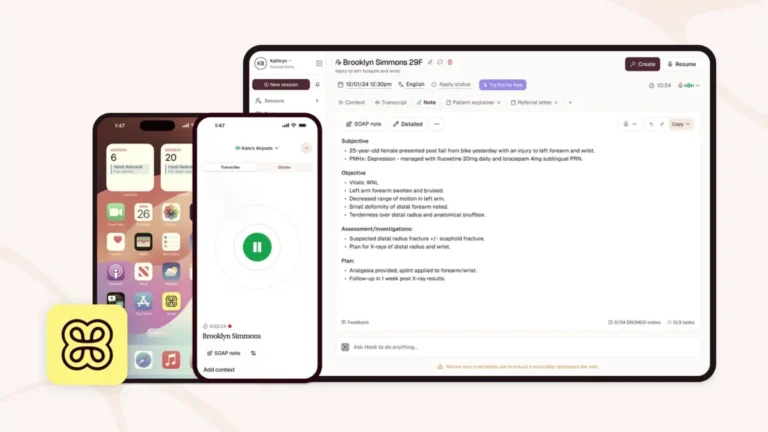
- Clinical Documentation: Ambient AI scribes are increasingly used to record patient encounters, automatically drafting electronic health record (EHR) notes and allowing providers to focus on the patient rather than the screen.
- Data Synthesis: AI models are being utilized to analyze massive datasets, identifying patterns in patient health that might escape human observation, such as early indicators of chronic disease progression.
- Research Acceleration: By helping providers navigate complex clinical research databases, AI can bridge the gap between bench science and bedside practice, ensuring that the latest treatment protocols are accessible in real-time.
- Patient Engagement: Generative AI tools are being used to draft personalized care guidance and educational messages, empowering patients to manage their conditions at home.
HHS leadership emphasized that without these technological interventions, the healthcare system risks buckling under the pressure of an aging demographic that requires more frequent, intensive care.
A Chronology of the Regulatory Landscape
The journey toward a formal federal AI strategy has been marked by a series of incremental, yet impactful, steps.
- Late 2024: As AI tools began proliferating across hospitals, the lack of standardized guidance created a "Wild West" environment, leading to industry-wide anxiety regarding liability and data security.
- December 2025: In a pivotal move, the HHS issued a Request for Information (RFI) to gather input from stakeholders. The department sought to understand the specific needs of providers, researchers, and technology developers regarding federal oversight.
- Early 2026: The Administration for Community Living (ACL) launched the "Caregiver AI Prize Competition," incentivizing developers to create tools that assist caregivers of the elderly and individuals with disabilities.
- Mid-2026 to Present: The HHS has been synthesizing the hundreds of public comments received from the RFI. The current phase is defined by "active listening" and the development of a cohesive inter-agency framework.
The Risks of Rapid Deployment
Despite the optimism surrounding AI, the path to implementation is fraught with significant hurdles. Experts have consistently warned that "moving fast and breaking things"—the hallmark of the tech sector—is a philosophy that does not translate well to the bedside.
Key Risk Factors:
- Algorithmic Bias: If the data used to train an AI model is not representative of diverse populations, the tool may perpetuate or exacerbate health disparities.
- Model Degradation: Unlike static medical software, AI models can "drift" or degrade over time as the environment and data inputs change, necessitating constant monitoring.
- Accuracy and Reliability: Recent studies have highlighted instances of "hallucinations" in generative models, where AI provides plausible but entirely incorrect clinical advice.
- Privacy and Security: The rise of "shadow AI"—tools deployed within hospital systems without IT approval—presents significant cybersecurity vulnerabilities and potential HIPAA violations.
- Deskilling: There is a growing concern that over-reliance on AI could lead to a degradation of human clinical judgment, where practitioners lose the ability to perform tasks without machine assistance.
Official Responses and Industry Expectations
During the recent HHS presentation, officials acknowledged the urgency of the situation. The feedback gathered from the industry suggests a clear roadmap for what providers need from the government.
The "Wish List" for Federal Guidance
Healthcare organizations are moving beyond the question of if they should use AI to how they should govern it. According to departmental feedback, the three primary demands from the field are:
- Practical Governance Frameworks: Providers want "playbooks" for how to set up internal AI ethics committees, conduct risk assessments, and establish accountability for algorithmic failures.
- Benchmarking and Evaluation Tools: Organizations are struggling to vet the multitude of AI vendors. They are calling on the HHS to provide standardized testing protocols to determine which products are clinically valid.
- Inter-Agency Coordination: There is a palpable frustration with the current fragmented approach. Industry leaders are calling for the HHS, the FDA, the Office of the National Coordinator for Health IT (ONC), and other agencies to speak with one voice.
"Too often in government, the right hand doesn’t talk to the left hand," noted an HHS representative. "The opportunity for healthcare AI is simply too important for us to get lost in ourselves."
The FDA’s Balancing Act: Proportionate Oversight
The Food and Drug Administration (FDA) occupies a central role in this evolution. Dr. Rick Abramson, director of the FDA’s Digital Health Center of Excellence, highlighted the agency’s struggle to match the velocity of technological change.
"It’s been said that technology evolves on a scale of weeks to months, while regulation evolves on a scale of months to years," Dr. Abramson remarked. The agency is currently moving toward a strategy of proportionate oversight. This means that a low-risk AI tool—such as one used for administrative scheduling—would face less stringent scrutiny than a high-risk tool, such as an AI system that autonomously diagnoses cardiovascular disease.
The FDA is also evaluating the "Total Product Lifecycle" approach. Instead of merely approving a tool at a single point in time, the agency is exploring how to maintain oversight throughout the product’s life, ensuring that software updates and iterative learning do not introduce new, unforeseen hazards.
Future Implications: The Road Ahead
The tension between the Trump administration’s largely deregulatory stance and the industry’s call for structured guidance remains the central conflict of this transition. While deregulation is intended to spur development, the healthcare sector is signaling that without clear guardrails, the potential for harm may outweigh the benefits.
The Shift Toward Autonomous Systems
As we look toward the future, the focus is shifting from "AI as an assistant" to "AI as an agent." Projects like those being funded by the Advanced Research Projects Agency for Health (ARPA-H)—which aim to develop agents capable of autonomously managing chronic conditions—represent the next leap in medicine.
However, this transition will require a robust legal and ethical framework that does not yet exist. Who is liable when an autonomous AI agent makes a decision that leads to an adverse patient outcome? How do we ensure that AI remains a tool for equitable care rather than a gatekeeper that limits access to treatment?
Conclusion
The promise of AI in healthcare is immense, offering the potential to transform a strained system into a proactive, efficient, and patient-centered environment. Yet, the consensus among policymakers and providers is clear: technology is only as valuable as it is trustworthy.
As the HHS continues to synthesize industry feedback and the FDA works to refine its regulatory lens, the next 24 months will be decisive. The goal is no longer just to adopt AI, but to institutionalize it in a way that protects the sanctity of the patient-physician relationship while leveraging the full power of modern computational intelligence. The digital revolution in medicine is here; the challenge now is to steer it safely.