










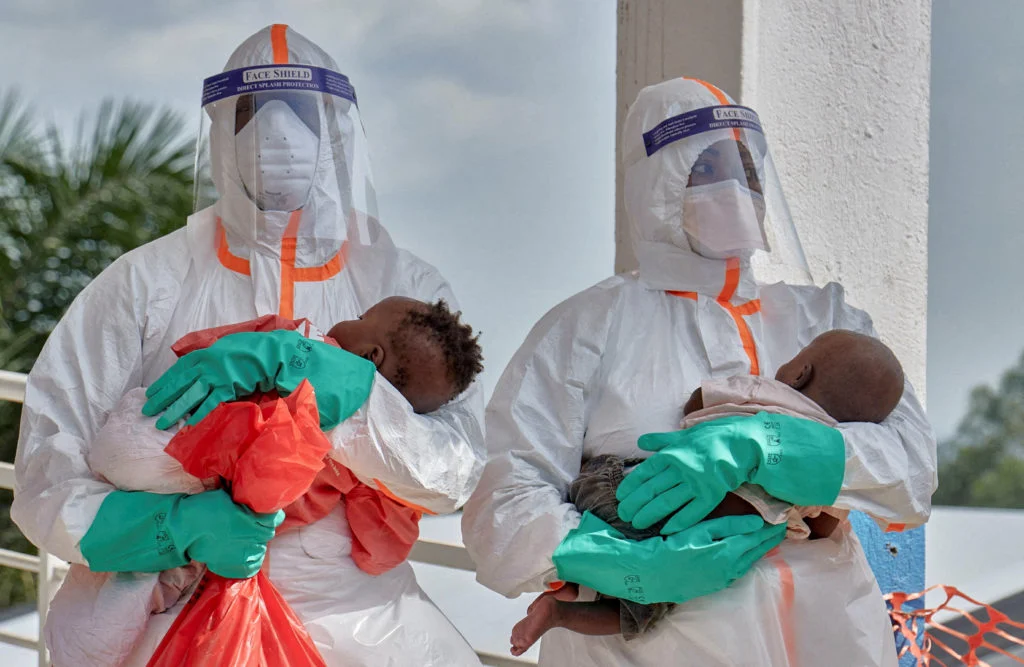
BUNIA, Democratic Republic of Congo — In the shadow of the ongoing health crisis in the Ituri province, the sound of a Catholic prayer offered a fragile veneer of dignity to a scene of profound desolation. On Friday, June 19, 2026, a small, somber procession gathered to lay to rest a six-month-old infant—the third child to perish at a local orphanage following an infection with the deadly Ebola virus.
The burial was a stark reminder of the impersonal, mechanical reality of fighting a viral epidemic. Mourners were required to stand at a distance, watching as masked and gloved health workers lowered the casket into the earth. There were no traditional funeral rites, no comforting touches, and no intimacy in death.
"It’s a feeling of sadness because we have lost one of our own, a daughter of the church," said Father Innocent Ndogo, his voice barely audible over the somber silence of the burial site. "As we have always said, the Lord gives, and the Lord takes away."
This tragedy is not an isolated event but a grim punctuation mark in an outbreak that has defied containment efforts, claimed hundreds of lives, and pushed the healthcare infrastructure of eastern Congo to the brink of collapse.
Main Facts: A Crisis Without a Safety Net
The current outbreak, identified as the Bundibugyo strain of the Ebola virus, presents a uniquely dangerous challenge for the Democratic Republic of Congo (DRC). Unlike the more common Zaire strain—which has been the culprit in the majority of the nation’s previous 16 outbreaks and for which effective vaccines and treatments have been developed—the Bundibugyo variant lacks both a proven vaccine and an approved pharmaceutical treatment.
As of mid-June 2026, the official tally stands at 894 confirmed cases and more than 200 deaths. However, health experts at the Africa Centres for Disease Control and Prevention (Africa CDC) warn that these numbers are likely just the tip of the iceberg, with approximately 35,000 potential contacts currently being traced.
The Ituri region remains the epicenter, accounting for more than 90% of all reported cases. The situation has been exacerbated by a severe shortage of basic medical supplies. Even healthcare professionals, who are on the front lines of the containment effort, report a desperate lack of essential protective equipment, including masks, gloves, and gowns, leaving them vulnerable to the very virus they are attempting to eradicate.
Chronology: A Failure of Early Detection
The rapid spread of this outbreak can be traced back to the initial weeks of the crisis, when the lack of testing for the specific Bundibugyo strain allowed the virus to gain a foothold in the population.
- Initial Detection: The outbreak began with little fanfare, as clinicians were initially looking for the Zaire strain, which has dominated Congo’s epidemic history. Because the diagnostic protocols were not immediately aligned with the Bundibugyo variant, the virus moved through communities undetected.
- Expansion: By late spring, the disease had spread beyond the initial clusters in Ituri, reaching the provinces of North and South Kivu.
- International Crossing: The virus eventually crossed the border into Uganda, where 19 confirmed cases and two deaths have been reported, triggering alarms regarding regional stability and public health across Central Africa.
- June 2026: As the death toll climbed, the Congolese government and international aid agencies increased their militarized response to burial management, sparking friction with local communities who feel alienated by the cold, restrictive protocols of "safe and dignified burials."
Supporting Data: By the Numbers
The scale of the current crisis is a source of significant concern for global health authorities. While it has not yet reached the apocalyptic proportions of the 2014 West African epidemic, which claimed over 11,000 lives, its current trajectory is alarming.
- Growth Rate: The current outbreak is already three times more deadly than the 2000 Uganda outbreak, the most significant historical reference point for the Bundibugyo strain.
- Infection Risk: The Africa CDC has identified 35,000 contacts, a number that threatens to overwhelm current tracing capacities.
- Geographic Spread: While Ituri remains the primary focus, the presence of the virus in three separate provinces and across an international border suggests that the containment zone is failing to hold.
The lack of early diagnostic testing has created a "hidden" transmission period, allowing the virus to establish reservoirs in densely populated urban centers and remote rural villages alike.
Official Responses and The "Militarization" of Health
The response to the Ebola outbreak has been anything but conventional. Due to the high transmission risk and the volatile nature of the region, the effort has been heavily militarized. This approach has led to significant civil unrest.
Residents in Bunia and surrounding areas have frequently clashed with health workers, protesting the "impersonal" and "invasive" nature of safe burial practices. In many cases, families are barred from seeing their loved ones before they are buried by strangers in protective gear. This disconnect has fueled mistrust, rumors, and, in some instances, violence against medical personnel.
Alex Lock, a Communications Officer at the International Federation of Red Cross and Red Crescent Societies (IFRC), has urged the public to move past apathy and anger, emphasizing the humanity lost in the clinical statistics.
"She was a baby. She had her whole life ahead of her," Lock said, referring to the six-month-old victim buried Friday. "Unfortunately, she was taken by the disease, a disease that, as you know, is transmitted from one person to another. We cannot allow ourselves to become numb to this."
International aid agencies, including USAID and various UN bodies, have struggled to maintain a consistent presence. Reports suggest that funding instability and the physical danger to staff have led to gaps in the supply chain, resulting in the critical shortage of personal protective equipment (PPE) noted by local clinics.
Implications: The Long-Term Consequences
The ongoing Ebola crisis has profound implications for the Democratic Republic of Congo and the broader region.
1. The Erosion of Public Trust
The most immediate consequence is the deepening divide between the state and the people. When the government’s primary interaction with its citizens during a health crisis is through the lens of military-backed burials and quarantine, the result is a collapse in public trust. This makes future public health initiatives—such as vaccination campaigns for other diseases—significantly harder to implement.
2. Economic and Social Stagnation
The epidemic has brought trade in the eastern provinces to a near-standstill. Markets are restricted, cross-border movement is monitored, and schools have faced intermittent closures. For a region already struggling with poverty and internal conflict, the economic toll of the Ebola crisis may be felt for years, if not decades, to come.
3. The Need for Diagnostic Innovation
The failure to test for the Bundibugyo strain early in the outbreak highlights a critical weakness in regional health systems. If Central African nations are to manage future outbreaks, they must develop more versatile diagnostic capabilities. Relying on "known" strains while ignoring the potential for genetic variants has proven to be a fatal oversight.
4. A Call for Global Solidarity
The loss of USAID funding and the withdrawal of various international actors have left a void that local NGOs are struggling to fill. The international community is facing a moral imperative: to provide not only funds but the specialized equipment and medical expertise required to tackle a strain of Ebola that does not yet yield to the standard tools of modern medicine.
Conclusion
As the sun sets over Bunia, the tragedy of the last few days serves as a grim marker of the challenges ahead. The death of a six-month-old child is not just a statistical increase in a morbidity report; it is a symptom of a larger, systemic failure to protect the most vulnerable.
Until the international community and local authorities can bridge the gap between clinical necessity and community reality, and until the scientific community can bridge the gap in treatments for the Bundibugyo strain, the cycle of loss in eastern Congo is likely to continue. For now, the people of Ituri wait, hoping for a breakthrough that has yet to arrive, while the shadow of Ebola continues to loom large over their future.