




In a landmark achievement for global health security, a novel universal coronavirus vaccine has successfully cleared its first human clinical trial. Developed by researchers at the University of Cambridge and the university spinout DIOSynVax (DVX) Ltd, this experimental vaccine represents a paradigm shift in how humanity prepares for viral threats. By utilizing artificial intelligence to create a "super-antigen," the team has successfully demonstrated a method that could render the traditional, reactive approach to vaccine development obsolete, offering a robust shield against both current and future coronavirus outbreaks.
The study, published in the Journal of Infection, confirms that the vaccine is not only safe for human use but also capable of triggering a broad immune response. This success marks the first time a vaccine with an active ingredient designed entirely through computer simulations has been tested in a human cohort, signaling a new era of "digital-first" medicine.
The Core Innovation: Moving Beyond Reactive Immunology
For decades, the global strategy for vaccination—most notably seen during the COVID-19 pandemic—has been reactive. As viruses like SARS-CoV-2, influenza, and various respiratory pathogens mutate, scientists have been forced to play a constant game of catch-up. This involves monitoring circulating strains, reformulating vaccines, and launching massive immunization campaigns to match the latest variants.
The Problem with "Chasing the Tail"
Professor Jonathan Heeney, who leads the Lab of Viral Zoonotics at the University of Cambridge’s Department of Veterinary Medicine and spearheaded the research, describes the current status quo as a failing cycle. "We’ve been trapped in a reactive loop," Heeney explains. "Traditional vaccines have limited protection, forcing us into a pattern akin to a dog chasing its tail—updating vaccines to address variants only after they have already spread through the human population."
The AI-Driven "Super-Antigen" Solution
To break this cycle, the DIOSynVax team turned to machine learning. Instead of isolating a single strain of a virus, the researchers fed genetic data from the entire Sarbeco coronavirus family—which includes SARS-CoV-2, the original SARS virus, and numerous bat-derived coronaviruses—into an AI model.
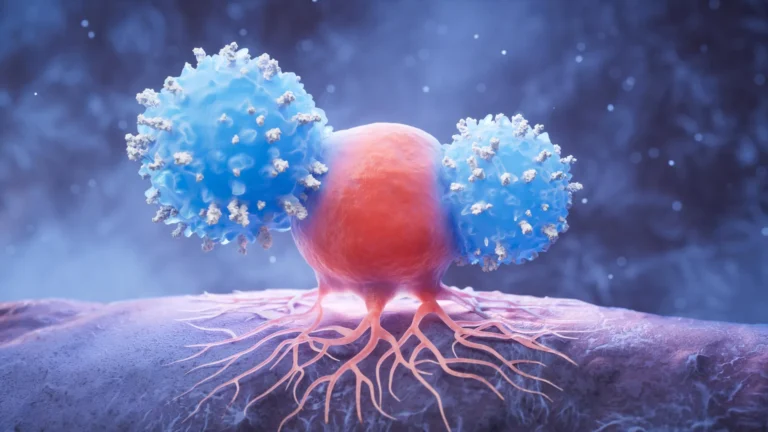
The AI analyzed these vast genetic datasets to identify "conserved regions"—the structural features that remain consistent across the entire family of viruses, even as they evolve. By synthesizing these shared characteristics, the AI designed a "super-antigen." This synthetic component serves as a universal training module for the human immune system, teaching it to recognize the architectural "fingerprint" of the entire Sarbeco group. The goal is to provide preemptive, broad-spectrum protection that remains effective even when a virus mutates into a novel strain.
Chronology of Development: From Concept to Clinical Trial
The journey from a digital simulation to a clinical reality involved years of rigorous interdisciplinary work.
- 2017: DIOSynVax (Digitally Immune Optimised Synthetic Vaccines) is founded as a spinout from the University of Cambridge, supported by Cambridge Enterprise, with the mission to revolutionize vaccine design using digital optimization.
- Pre-Clinical Phase: Researchers conduct extensive animal studies, demonstrating that the AI-designed antigen could generate strong, durable immune responses against multiple coronaviruses, including those that had not yet crossed the species barrier into humans.
- Trial Preparation: Supported by funding from Innovate UK and utilizing the world-class infrastructure of the National Institute for Health and Care Research (NIHR), the team prepares for the first phase of human testing.
- The Trial (Phase 1): Thirty-nine healthy volunteers, aged 18 to 50, are recruited at NIHR Clinical Research Facilities in Southampton and Cambridge. The trial is sponsored by the University Hospital Southampton NHS Foundation Trust (UHSFT).
- Current Status: The successful completion of this initial safety trial is announced, confirming that the vaccine is safe and well-tolerated, paving the way for larger-scale efficacy studies.
Supporting Data: Safety, Efficacy, and Novel Delivery
The clinical trial, while small in scale, provided critical data that validates the underlying technology.
Safety Profile
The primary endpoint of the Phase 1 trial was safety. Volunteers reported no significant side effects, proving that the synthetic super-antigen is well-tolerated by the human immune system. This is a critical hurdle for any new vaccine technology, particularly one that utilizes AI-generated protein structures.
The Micro-Fluid Jet Delivery System
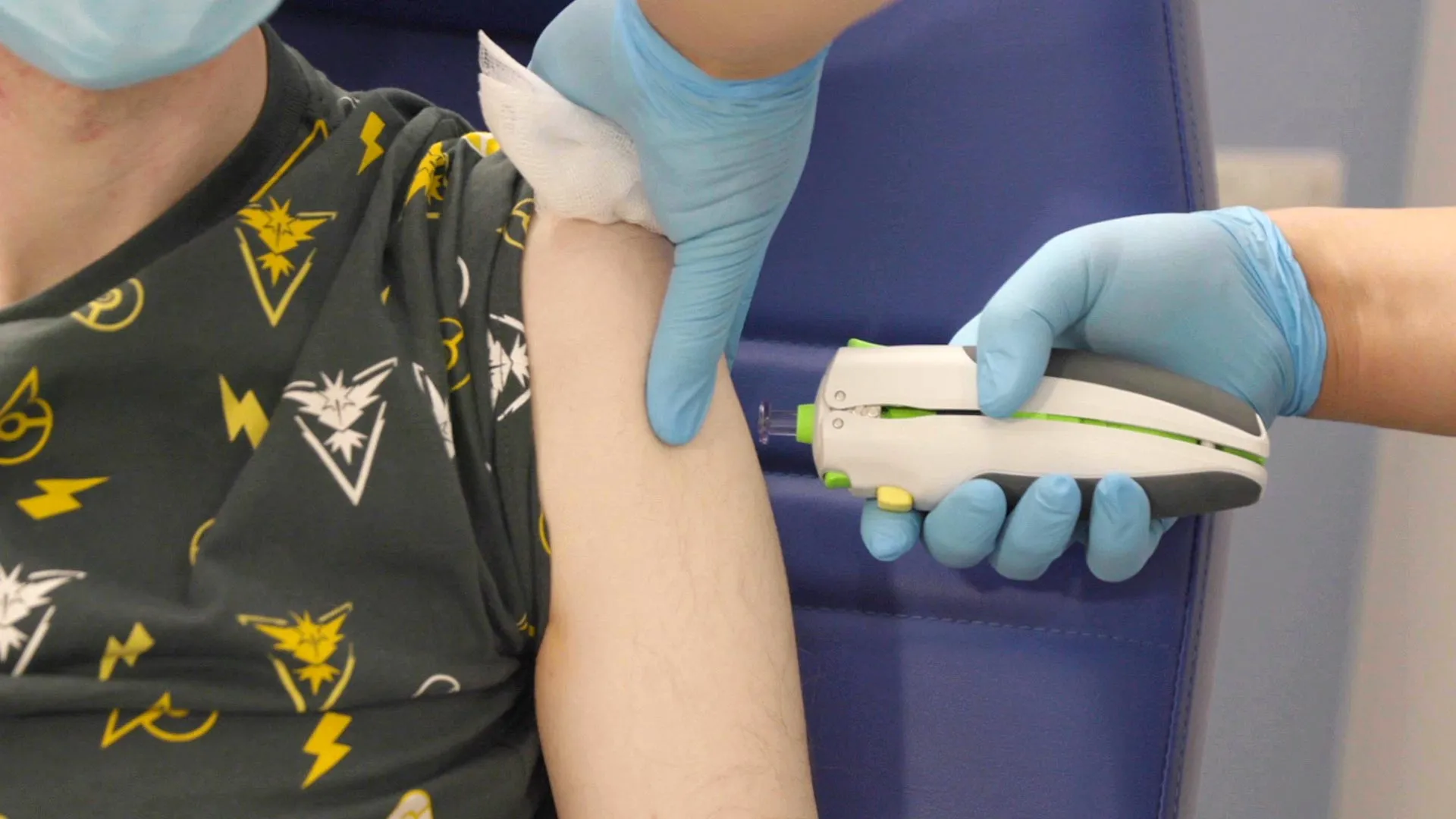
Beyond the vaccine’s chemical makeup, the study tested a modern delivery platform. The super-antigen was administered as a DNA vaccine using a needle-free micro-fluid jet system. This delivery mechanism offers several advantages:
- Patient Comfort: It eliminates the "needle phobia" that can discourage vaccine uptake.
- Scalability: In the event of a pandemic, mass administration is often slowed by the logistical burden of needle disposal and the requirement for highly trained staff to administer injections. A jet-based system could streamline deployment in resource-limited settings or during emergency surges.
- Enhanced Stability: By using DNA-based technology, the vaccine may eventually offer improved shelf-life and storage requirements compared to traditional protein or mRNA vaccines.
Official Perspectives: A Pivotal Leap Forward
The implications of this study have drawn praise from the highest levels of the UK’s scientific and medical research communities.
Professor Saul Faust, the trial’s chief investigator from the University of Southampton, emphasized the strategic importance of the work. "These new classes of universal vaccines are future-proofed," Faust stated. "They don’t just protect against known variants; they offer potential coverage against related viruses that haven’t even emerged yet. If we can advance these vaccines before a major outbreak begins, we aren’t just saving lives—we are potentially avoiding the catastrophic economic damage and societal lockdowns associated with future pandemics."
Professor Marian Knight, Scientific Director for NIHR Infrastructure, noted that the success was a testament to the power of cross-sector partnership. "This milestone was only made possible through the collaboration between the life sciences sector and our world-class NIHR infrastructure. This is a pivotal leap forward in our ability to deliver broad, lasting viral protection," she said.
Implications: A New Architecture for Global Health
The success of the DIOSynVax trial is not limited to the fight against coronaviruses. The researchers believe this "platform technology"—using AI to identify conserved viral features—can be applied to almost any virus family.
Broadening the Scope
The DIOSynVax pipeline already includes candidates targeting:
- Influenza: Both seasonal and pandemic-threat strains.
- Hemorrhagic Fevers: Including the Ebola virus group.
- Emerging Pathogens: Future-proofing against zoonotic threats that currently circulate in wildlife.
The Economic and Social Impact
The economic argument for universal vaccines is compelling. The cost of developing, manufacturing, and distributing new vaccines in response to every new variant is immense. By investing in "future-proof" technology, governments could potentially shift spending from emergency crisis management to proactive, preventative health infrastructure.
Moreover, the psychological and social benefits of a "one-and-done" or "long-term" vaccination strategy cannot be overstated. Reducing the frequency of required boosters and the anxiety surrounding viral mutations could significantly improve public trust in vaccination programs.
The Path Ahead
While the Phase 1 results are highly promising, the researchers remain cautious and methodical. The next steps involve a larger, more diverse Phase 2 study designed to evaluate the depth and breadth of the immune response across different demographics. This will be the true test of the vaccine’s clinical utility—confirming that the AI-designed antigen produces the kind of long-lasting, wide-ranging immunity required to suppress a pandemic before it starts.
As the scientific community looks to the future, the integration of AI into vaccine development has moved from a theoretical possibility to a demonstrated reality. The University of Cambridge and DIOSynVax have set a new standard, proving that when human ingenuity is augmented by the processing power of artificial intelligence, the timeline for human health advancement can be radically accelerated. The "dog chasing its tail" may finally be coming to a stop, replaced by a strategy that anticipates the next viral threat long before it arrives.