










By Global Affairs Desk
The fragile peace that descended upon the Strait of Hormuz following the June 17 Memorandum of Understanding (MOU) has been shattered. In a rapid escalation that threatens to plunge the Middle East back into active conflict, the United States and Iran traded direct military strikes on Friday, ending a brief period of diplomatic optimism. The exchange, which targeted both naval transit routes and critical infrastructure, represents the most significant breakdown in communication between the two powers since the February confrontations.
As the global shipping industry watches with bated breath, the incident has once again highlighted the volatility of the world’s most vital maritime chokepoint, through which a significant portion of the world’s daily oil and liquid natural gas supply flows.
The Chronology of Escalation: From Ceasefire to Combat
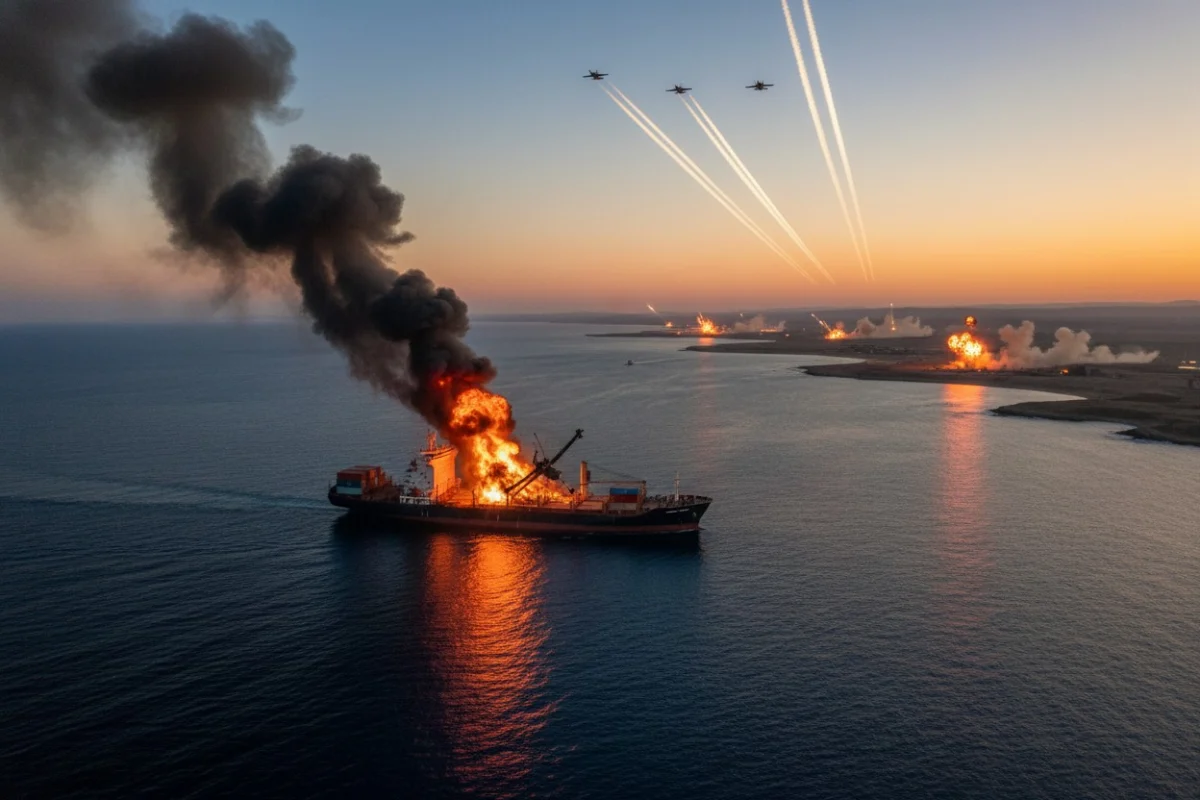
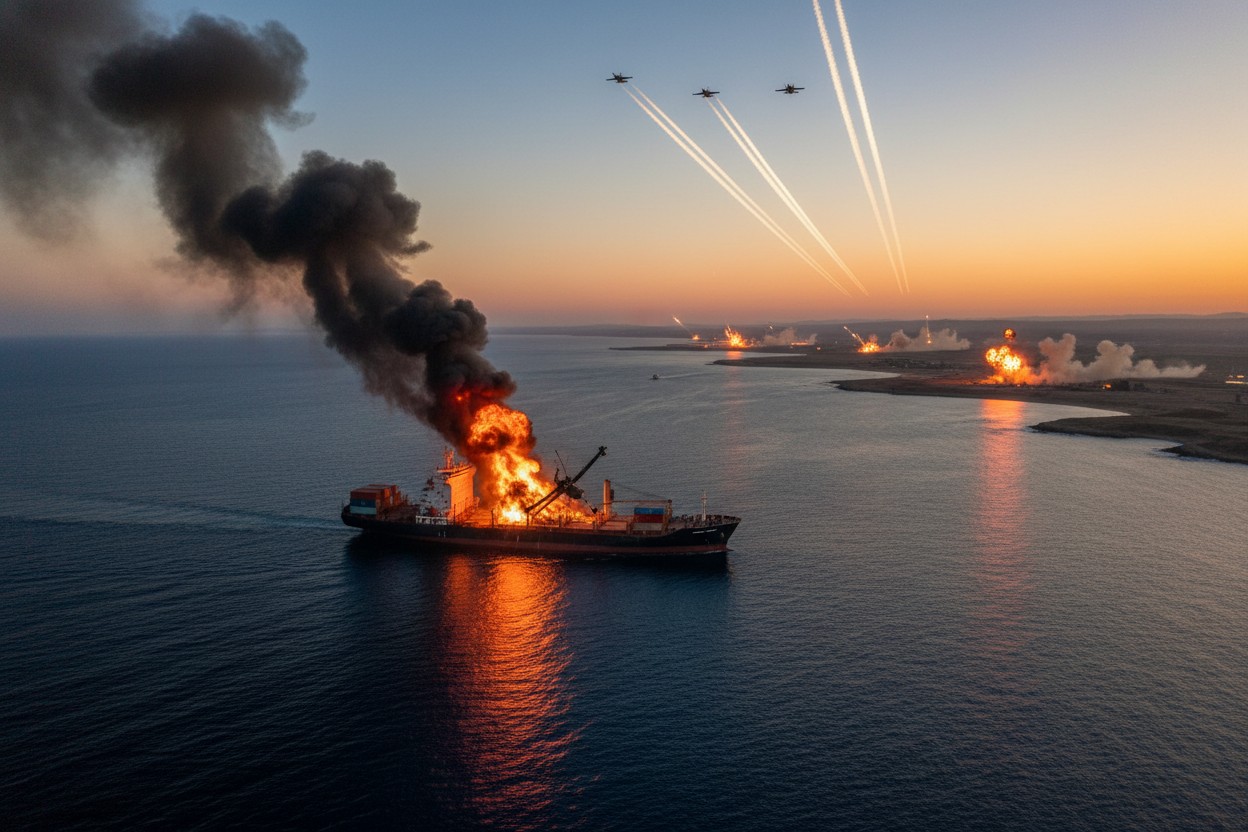
The descent into hostilities began on Thursday when the Ever Lovely, a Singapore-flagged container vessel, became the focal point of the crisis. According to reports from the Trump administration, the vessel was targeted by a swarm of four drones while navigating the Strait of Hormuz. U.S. forces operating in the region successfully intercepted three of the projectiles, but the fourth impacted the ship, causing an international alarm.
The U.S. government immediately attributed the attack to Iranian forces, citing intelligence that suggested the drones originated from Iranian-controlled territory. This incident occurred outside of the maritime transit lanes previously approved by Tehran, reigniting a long-standing dispute over the navigation of the waterway. Iran’s newly-formed Persian Gulf Strait Authority had issued warnings earlier in the week, stating that it could not guarantee the safety of any vessels that deviated from the designated courses hugging the Iranian coastline.
By Friday, the situation shifted from localized harassment to direct military engagement. U.S. Central Command (CENTCOM) launched a retaliatory operation, utilizing American warplanes to strike key strategic targets within Iran. These strikes focused on missile storage sites, drone assembly and storage facilities, and critical coastal radar installations. Explosions were reported on Sirik Island in the Hormozgan province, confirming the precision and scale of the U.S. operation.
In a swift counter-response, the Islamic Revolutionary Guard Corps (IRGC) announced that it had targeted "deployment sites of the U.S. terrorist military in the region." This reciprocal action confirmed the collapse of the June 17 MOU, which had been designed to provide a 60-day window for negotiations regarding nuclear transparency, sanctions relief, and the thawing of Iranian assets.
The June 17 Memorandum: A Fragile Foundation
The June 17 MOU was initially hailed as a breakthrough. Following the destructive U.S.-Israeli strikes in late February, the Strait of Hormuz had been effectively closed to normal commercial traffic. The agreement was intended to normalize these operations, and for a short time, it succeeded.
Maritime tracking data indicated that in the week following the signing of the MOU, approximately 125 ships successfully transited the waterway. This resumption of traffic provided a momentary sigh of relief for global energy markets, which had been bracing for a prolonged supply chain crisis. However, the agreement was always fragile, contingent on both parties adhering to strict navigation and security protocols. With the deadline for a final settlement now looming—and the current violence casting a long shadow over the proceedings—the likelihood of a long-term diplomatic resolution appears increasingly remote.
Official Responses: A Rhetorical War
The escalation has sparked a flurry of condemnatory statements from the highest levels of government in Washington and Tehran.
President Donald Trump characterized the drone attack as a "foolish violation" of the ceasefire, utilizing his Truth Social platform to warn of consequences. His rhetoric was echoed by Vice President J.D. Vance, who posted on X: "Iran signed a ceasefire agreement. We have honored it. If they have disagreements about how the MOU is being applied, they can pick up the phone. Violence will be met with violence."
The Iranian response, however, was framed through the lens of sovereignty and anti-American sentiment. Mohsen Rezaei, a senior military adviser to Iran’s Supreme Leader, offered a defiant stance in an interview with NewsNation. "The Strait of Hormuz has nothing to do with the U.S.," Rezaei stated, suggesting that the waterway should be managed exclusively by Iran and its neighbor, Oman. He further escalated the tension by warning that any continued U.S. aggression would lead to a war that "will not resemble the previous one," hinting at significant human and economic costs for Washington.
The IRGC, in an official statement, accused the United States of weaponizing the Ever Lovely incident to justify pre-planned aggression, asserting that the U.S. has a long-standing "pattern of breaching its commitments."
Supporting Data: The Economic Reality of the Strait
Despite the violence, the Strait of Hormuz has not been fully shuttered, though traffic patterns remain highly irregular. On Wednesday, the day prior to the drone attack, 62 commercial vessels navigated the strait. While this was the highest daily volume since the conflict began, it remains 53% below the traffic recorded on the same day in 2025, according to AXSMarine data.
The dispute is not merely about drone attacks; it is about the fundamental control of the waterway. Tehran has proposed the implementation of a toll system for all ships traversing the strait—a move the U.S. and its Gulf allies have dismissed as an illegal violation of international maritime law. This proposal, scheduled to be debated after the 60-day MOU window expires, is viewed by many analysts as a strategic attempt by Iran to exert leverage over the international community.
As noted by authors Gerald McNerney and Martin Cheek in Clean Energy Nation, the Strait of Hormuz is the world’s most critical energy chokepoint. The global reliance on Middle Eastern hydrocarbons ensures that any disruption in this 21-mile-wide passage has immediate, far-reaching consequences for global inflation and energy security.
The Geopolitical Context: Historical Friction
The current conflict is the latest chapter in a decades-long saga of U.S.-Iranian friction. In his book Target Iran, analyst Scott Ritter argues that Washington’s long-term pursuit of regime change has been the primary driver of these confrontations. This historical context provides a lens through which the current standoff can be understood: the Strait of Hormuz is not just a commercial route, but a theater of influence where the U.S. seeks to maintain a "rules-based" international order, and Iran seeks to re-establish regional hegemony.
Previous incidents, including the documented Iranian missile attacks on Kuwait and the indiscriminate targeting of commercial shipping highlighted by analyst Patrick Lewis, have created a deep well of distrust. Both sides now find themselves in a cycle of action and reaction where the margins for error are razor-thin.
Implications for the Future
As the dust settles on Friday’s strikes, the international community faces a precarious future. The immediate risk is a "tit-for-tat" escalation that could inadvertently draw regional powers into a broader, more destructive conflict.
- Energy Market Volatility: The immediate effect of continued instability is a surge in oil prices. Insurance premiums for vessels entering the Persian Gulf are likely to skyrocket, potentially causing some shipping companies to pause operations entirely, regardless of military status.
- Diplomatic Deadlock: The collapse of the June 17 MOU leaves the underlying issues—nuclear proliferation, sanctions, and asset unfreezing—unresolved. Without a neutral intermediary to facilitate dialogue, the "phone-call diplomacy" suggested by Vice President Vance seems unlikely to materialize.
- Navigational Risk: The dispute over "approved routes" creates a dangerous "gray zone" where commercial vessels become collateral damage. As long as Iran demands adherence to its specific corridors and the U.S. asserts the right to navigate international waters near Oman, the risk of miscalculation remains high.
The Strait of Hormuz stands today as a reminder of how quickly global stability can be undermined. While both the United States and Iran have signaled that they are prepared to defend their interests, the path to a de-escalation remains obscured by the fog of war. As the world watches, the question is not just whether the next ship will make it through, but whether the current geopolitical order in the Middle East can withstand the pressure of a sustained, direct conflict.