











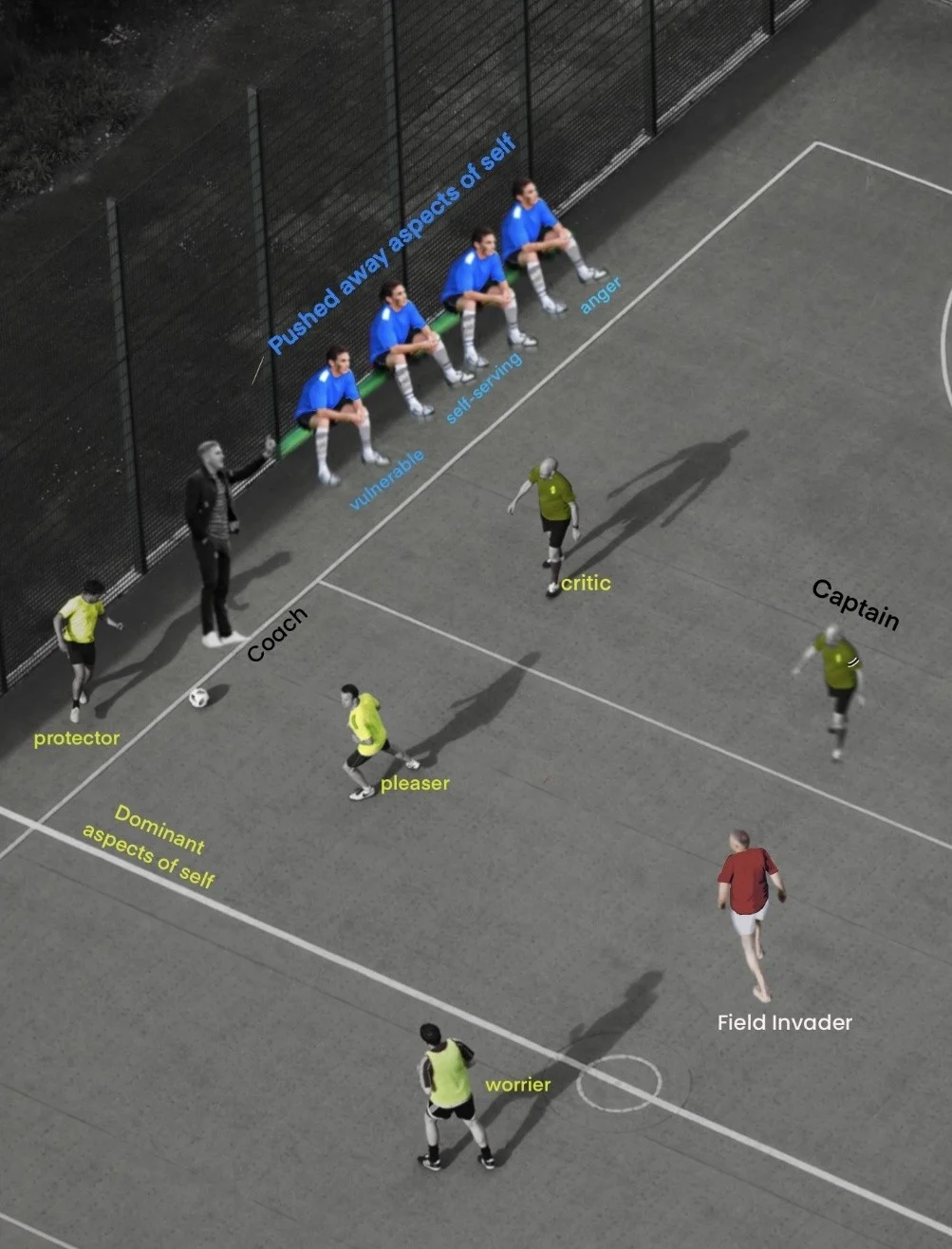
In the traditional psychiatric landscape, hearing voices—clinically termed auditory verbal hallucinations—has long been viewed through a purely pathological lens. For decades, the prevailing medical model categorized these experiences as symptoms of biological dysfunction, primarily associated with schizophrenia. However, a growing movement of psychologists and "voice-hearers" is championing a radical shift in perspective. By reframing the human psyche as a complex "team" of sub-personalities, practitioners are finding success in helping individuals manage their voices not through suppression, but through dialogue and social cohesion.
At the heart of this evolving therapeutic framework is a relatable and increasingly popular analogy: the soccer team. Developed and championed by psychologists Rufus May and Kate Middleton, this metaphor provides a structured way for individuals to understand the "Aware Ego" and its relationship to the various "selves" and voices that inhabit their internal world.
Main Facts: The "Talking with Voices" Framework
The "Talking with Voices" approach is an adaptation of "Voice Dialogue," a technique that posits the human personality is not a monolithic entity but a cluster of sub-personalities. When this model is applied to voice hearing, it suggests that voices—often critical, domineering, or frightening—are not random "glitches" in the brain. Instead, they are conceptualized as symbolic representations of "disowned" or "pushed-away" aspects of the self.
The soccer metaphor breaks down the psyche into several key roles:
- The Team Coach (The Aware Ego): The central consciousness responsible for managing all parts of the self.
- The Team Captain (The Protector/Controller): An influential sub-personality that tries to keep the person safe, often by controlling which other "players" get to speak.
- The Players on the Field (Dominant Selves): Traits and personalities that are socially acceptable and consciously recognized by the individual.
- The Players on the Bench (Disowned Selves): Vulnerable or discouraged traits that have been suppressed due to trauma or social conditioning.
- The Disaffected Players/Fans (The Voices): Parts of the self so alienated or "dropped from the squad" that they appear as external, separate entities, often disrupting the "game" to be heard.
By using this imagery, clinicians help voice-hearers move from a position of victimhood—where they are bullied by their voices—to a position of leadership, effectively becoming the "coach" of their own minds.
Chronology: The Evolution of Voice Dialogue
The journey toward this metaphorical approach spans over fifty years, bridging the gap between traditional psychology and grassroots activism.
The 1970s: The Birth of Voice Dialogue
Psychologists Hal and Sidra Stone developed the Voice Dialogue approach as a self-development tool. Their work introduced the concept of the "Aware Ego" and the idea that inner conflict arises when certain sub-personalities are allowed to dominate while others are suppressed.
The Late 1980s: The Hearing Voices Movement
In Holland and England, a collaboration between psychiatrist Marius Romme, researcher Sandra Escher, and voice-hearer Patsy Hage led to the birth of the Hearing Voices Movement (HVM). This movement challenged the medical consensus by asserting that hearing voices is a meaningful experience often linked to life history and trauma, rather than just a biological "error."

The 1990s: Convergence and Innovation
During this decade, the HVM began integrating Voice Dialogue techniques. Figures like Ron Coleman and Dirk Corstens started using "chair work"—where a person physically moves between chairs to represent different internal parts—to facilitate direct communication with voices. This period marked the shift from trying to eliminate voices to trying to understand them.
2000s to Present: Clinical Validation
The 21st century has seen the formalization of these techniques into the "Talking with Voices" approach. Psychologists like Rufus May, who drew from his own 1980s experience of being treated for psychosis, began implementing these metaphors in clinical practice. Between 2012 and 2023, a series of research trials (notably by Eleanor Longden and colleagues) began evaluating the efficacy of dialogical engagement, providing a scientific foundation for what was once a grassroots self-help technique.
Supporting Data: Evidence and Therapeutic Mechanisms
The transition toward the "Talking with Voices" model is backed by an increasing body of qualitative and quantitative research. A core tenet of this approach is the link between trauma and dissociation.
According to research by Moskowitz and Corstens (2007), auditory hallucinations can be framed as dissociative experiences. When a person undergoes trauma, they may "disown" certain emotions—such as anger or extreme vulnerability—to survive. These disowned parts do not disappear; instead, they may manifest later as voices.
Research Outcomes
Several studies have highlighted the benefits of this approach:
- Belief Change: Csipke and Kinderman (2006) found that a person’s beliefs about their voices are the primary predictors of distress. When a person views a voice as a "disaffected player" rather than an omnipotent demon, their distress levels significantly drop.
- The "Talking with Voices" Trials: Pilot trials led by Longden et al. (2021, 2022) have demonstrated that dialogical engagement is feasible and acceptable within clinical settings. Participants reported that "mapping out" their internal squad helped them feel more in control.
- Therapist Perspectives: Qualitative data from therapists (Longden et al., 2022) suggests that talking directly to a voice allows the therapist to uncover the "symbolic message" behind the voice’s aggression, often revealing a protective intent that was previously obscured.
Official Responses and Theoretical Context
The medical community’s response to the soccer metaphor and Voice Dialogue is a mix of growing interest and cautious integration. While the traditional "biomedical" wing of psychiatry remains focused on pharmaceutical intervention, the psychological wing is increasingly embracing "pluralistic" models of the mind.
Integration with Internal Family Systems (IFS)
The soccer metaphor shares significant DNA with Internal Family Systems (IFS), a therapy model developed by Richard Schwartz that has gained massive popularity in the last 20 years. IFS also views the mind as a system of "parts" (Managers, Firefighters, and Exiles) led by a central "Self." Recent dialogues between IFS practitioners and voice-hearing experts suggest a merging of these frameworks to provide a more robust toolkit for complex psychosis.
Compassion Focused Therapy (CFT)
Practitioners like Charlie Heriot-Maitland have integrated the soccer metaphor into Compassion Focused Therapy. In this context, the "Coach" is encouraged to develop a "Compassionate Self" that can relate to the "angry" or "critical" voices with assertive kindness rather than fear. This shifts the internal dynamic from a "battle" to a "negotiation."

Cultural and Spiritual Considerations
Experts acknowledge that the "parts of self" model isn’t universal. Some cultures view voices as ancestors, djinns, or external spirits. Rufus May and Kate Middleton argue that the soccer coach metaphor is flexible enough to accommodate these views. Even if a person sees their voices as external entities, the "Coach" (the individual) still needs to manage those relationships and set boundaries, much like a manager handles a stadium full of different stakeholders.
Implications: A New Era for Mental Health Care
The shift toward a metaphorical, dialogical understanding of voice hearing has profound implications for the future of mental health treatment.
1. Empowerment Over Pathologization
By using the soccer metaphor, the "patient" is transformed into a "manager." This restores agency to the individual. Instead of being a passive recipient of medication to "silence" the brain, the individual becomes an active participant in their recovery, learning the skills of internal diplomacy.
2. Reducing Social Stigma
Framing voices as "disaffected players" or "protesters" makes the experience relatable to the general public. It moves the conversation away from "madness" and toward "internal conflict," something every human experiences to some degree. This normalization is a key goal of the Hearing Voices Movement.
3. Long-term Social Cohesion
The goal of the soccer metaphor is not to "win" a game and then go home, but to create "social cohesion" within the psyche. As May and Middleton note, you cannot simply "fire" a part of your psyche or "arrest" a voice permanently. The implication for clinical practice is a move toward long-term management and harmony rather than a short-term "cure."
4. Training and Peer Support
The simplicity of the soccer metaphor allows it to be used outside of high-level clinical settings. It is being adopted by peer-support groups and trainees, providing a "reference paper" for how to navigate complex internal experiences without needing a medical degree.
In conclusion, the soccer team metaphor represents more than just a clever analogy; it is a bridge between the clinical and the experiential. By viewing the mind as a squad that requires a confident, compassionate coach, individuals are finding new ways to play the game of life—not by silencing the players they don’t like, but by bringing the whole team into the conversation.