









For many individuals navigating their sixties and beyond, the pursuit of physical fitness is often hampered by concerns over balance, joint health, and the daunting nature of traditional gym equipment. However, a growing body of fitness research suggests that the most effective tool for building core strength and reducing midsection concerns may already be in your living room: a sturdy chair.
Turning a simple piece of furniture into a dedicated training station is not merely a convenience; it is a strategic approach to functional longevity. By providing a stable base, chair-based exercises allow older adults to isolate muscle groups, improve posture, and engage the core without the constant, exhausting struggle to maintain equilibrium that often accompanies standing floor exercises.
The Physiology of Midsection Strength After 60
As we age, the body undergoes natural physiological changes, including a decrease in muscle mass (sarcopenia) and a redistribution of adipose tissue, often leading to the "belly overhang" many older adults find frustrating. The goal for those over 60 should not be "spot reduction"—which is physiologically impossible—but rather a two-pronged attack: increasing lean muscle mass to boost metabolic rate and strengthening the deep abdominal muscles to improve structural support and waist control.
Chair exercises are uniquely suited for this demographic. They allow for a high degree of "clean effort," meaning the trainee can focus entirely on the contraction of the target muscle rather than fighting for balance. This leads to more effective reps, reduced risk of injury, and higher adherence to fitness routines.
Chronology of a Chair-Based Routine
To maximize the benefits of this protocol, consistency is the primary driver of success. The following five-move sequence is designed to be performed three to four times per week.
1. The Chair Squat: The Foundation of Lower Body Power
The squat is the "king of exercises," and for good reason. It engages the largest muscle groups—the quads, glutes, and hamstrings—which are essential for metabolic output.
- The Mechanics: By using a chair as a target, you ensure proper depth and safety. As you descend, the chair provides a tactile cue, preventing you from overextending the knees.
- Implication: Strengthening the lower body improves daily mobility, making activities like rising from a sofa or getting out of a car significantly easier.
2. Seated Knee Drives: Deep Core Activation
When you drive your knee toward your chest while seated, you are forcing the rectus abdominis and the hip flexors to engage against gravity.
- The Mechanics: The secret here is to keep the torso upright. If you lean back, the core is disengaged. By maintaining a tall posture, you force the abdominals to stabilize the spine throughout the entire range of motion.
3. Incline Chair Push-Ups: Upper Body Stability
Upper body strength is often neglected, yet it is vital for posture and shoulder health. The incline push-up reduces the weight-bearing load compared to floor push-ups, making it accessible for those with wrist or shoulder sensitivities.
- The Mechanics: Ensure the chair is placed against a wall to prevent sliding. By keeping the body in a straight line, you activate the core as a "plank," turning an upper-body move into a total-body challenge.
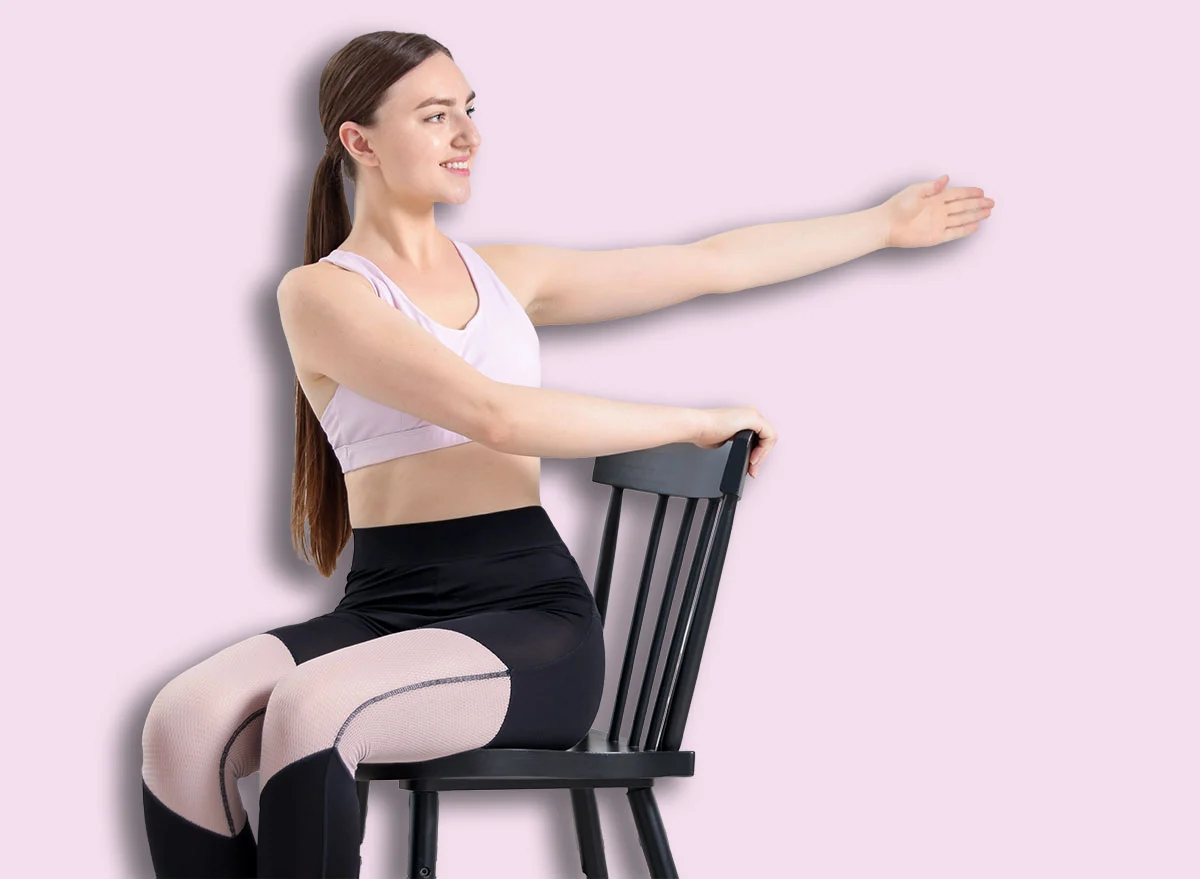
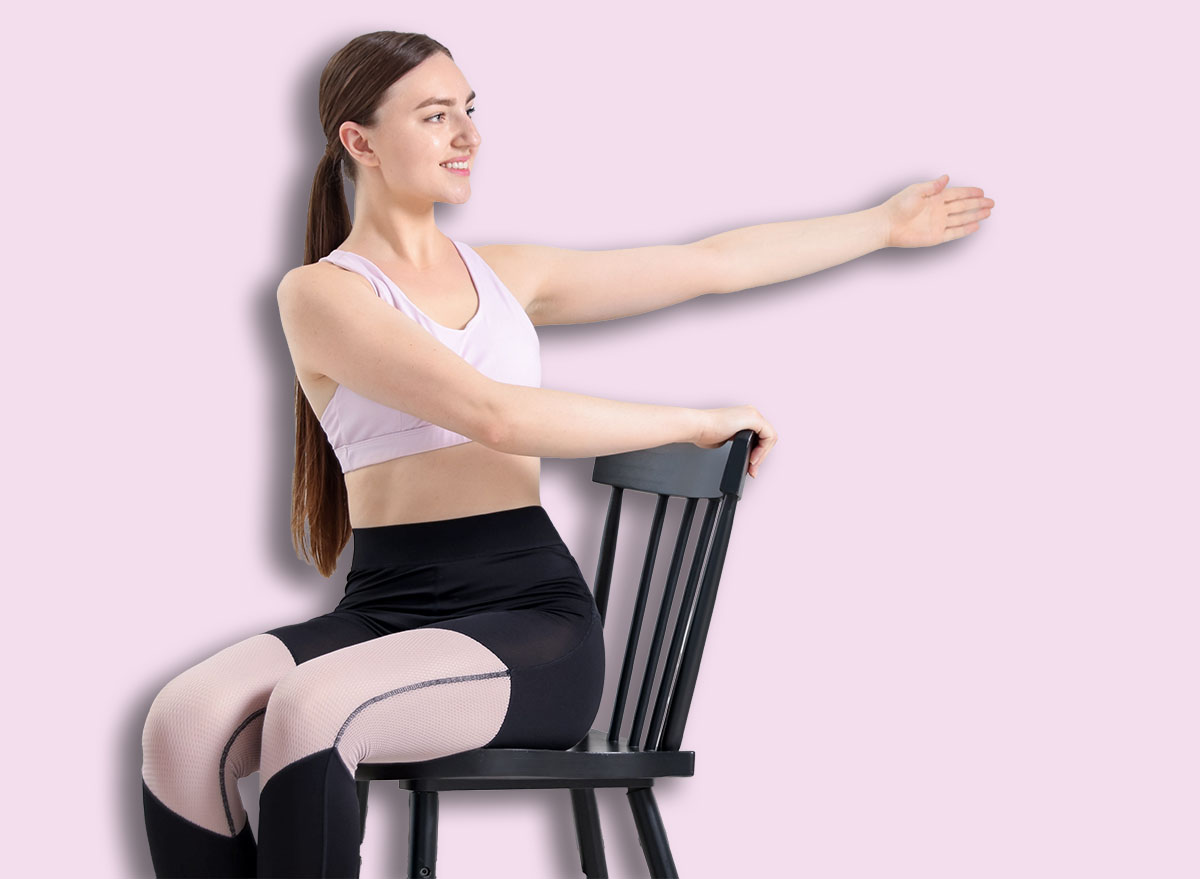
4. Seated Oblique Twists: Sculpting the Waist
The obliques are responsible for the rotational strength required for everyday life, such as reaching for a seatbelt or turning to look behind you.
- The Mechanics: This move is about controlled rotation, not momentum. By keeping the hips glued to the seat, you isolate the muscles of the waist, creating a tighter, more supported midsection.
5. Seated Flutter Kicks: Targeting the Lower Abdomen
Lower abdominal work is notoriously difficult, but the seated flutter kick offers a solution. By keeping the legs extended and moving in small, controlled oscillations, you target the lower fibers of the abdominals and the deep pelvic stabilizers.
Supporting Data: Why "Support" Matters
Data from the American College of Sports Medicine (ACSM) highlights that for older adults, the biggest barrier to exercise is the fear of falling. By utilizing a chair, the "fear factor" is removed. When the nervous system feels secure, it can recruit more motor units. This means your muscles work harder during a seated squat than they might during a wobbly, unassisted squat.
Furthermore, a study published in the Journal of Aging and Physical Activity indicated that resistance training in older populations significantly improves insulin sensitivity and glycemic control, both of which are critical in managing body composition and reducing visceral fat in the abdominal region.
Official Perspectives from the Fitness Community
Physical therapists and geriatric fitness experts emphasize that the "watered down" approach to senior fitness is a mistake. "We don’t need to make exercises easier; we need to make them smarter," says one industry expert. The chair is not a crutch; it is a precision instrument. By adjusting the seat height or adding small hand weights, the intensity of these exercises can be scaled indefinitely, ensuring that as you get stronger, the workout continues to challenge your physiology.
Implications for Long-Term Health
1. Metabolic Health
Building muscle through these five exercises increases your Basal Metabolic Rate (BMR). Simply put, you burn more calories at rest, which is the most effective long-term strategy for managing body fat.
2. Functional Independence
The strength gained from these movements directly translates to "Activities of Daily Living" (ADLs). Whether it is carrying groceries, playing with grandchildren, or traveling, a strong core and stable lower body are the primary determinants of independence.
3. Postural Correction
Many of the issues associated with a "protruding" midsection are actually issues of posture. When the deep core muscles (the transverse abdominis) are weak, the pelvis tilts forward, causing the stomach to push outward. Strengthening these deep muscles "cinches" the waist and improves spinal alignment, resulting in a more upright, youthful appearance.
Implementation Guide: The Road to Success
To achieve the best results, do not treat these exercises as a one-time event. Integrate them into your daily rhythm:
- Week 1-2 (Acclimation): Focus purely on form. Use no weight and move at a slow, controlled tempo.
- Week 3-6 (Progression): Introduce light resistance—a water bottle for the twists, or a slightly slower tempo for the flutter kicks to increase time under tension.
- Week 7+ (Maintenance): Increase the number of sets and reduce rest intervals to 30 seconds to turn this into a cardiovascular, high-intensity circuit.
Conclusion
Trimming the waistline and building core strength after 60 is entirely achievable. It does not require expensive gym memberships, complex machinery, or the risk of high-impact training. It requires a chair, a plan, and the discipline to move with purpose.
By treating your chair as a legitimate piece of fitness equipment, you are doing more than just training your muscles; you are investing in your mobility, your confidence, and your health for the decades to come. Stand tall, sit strong, and let the process of transformation begin from the comfort of your own home.