





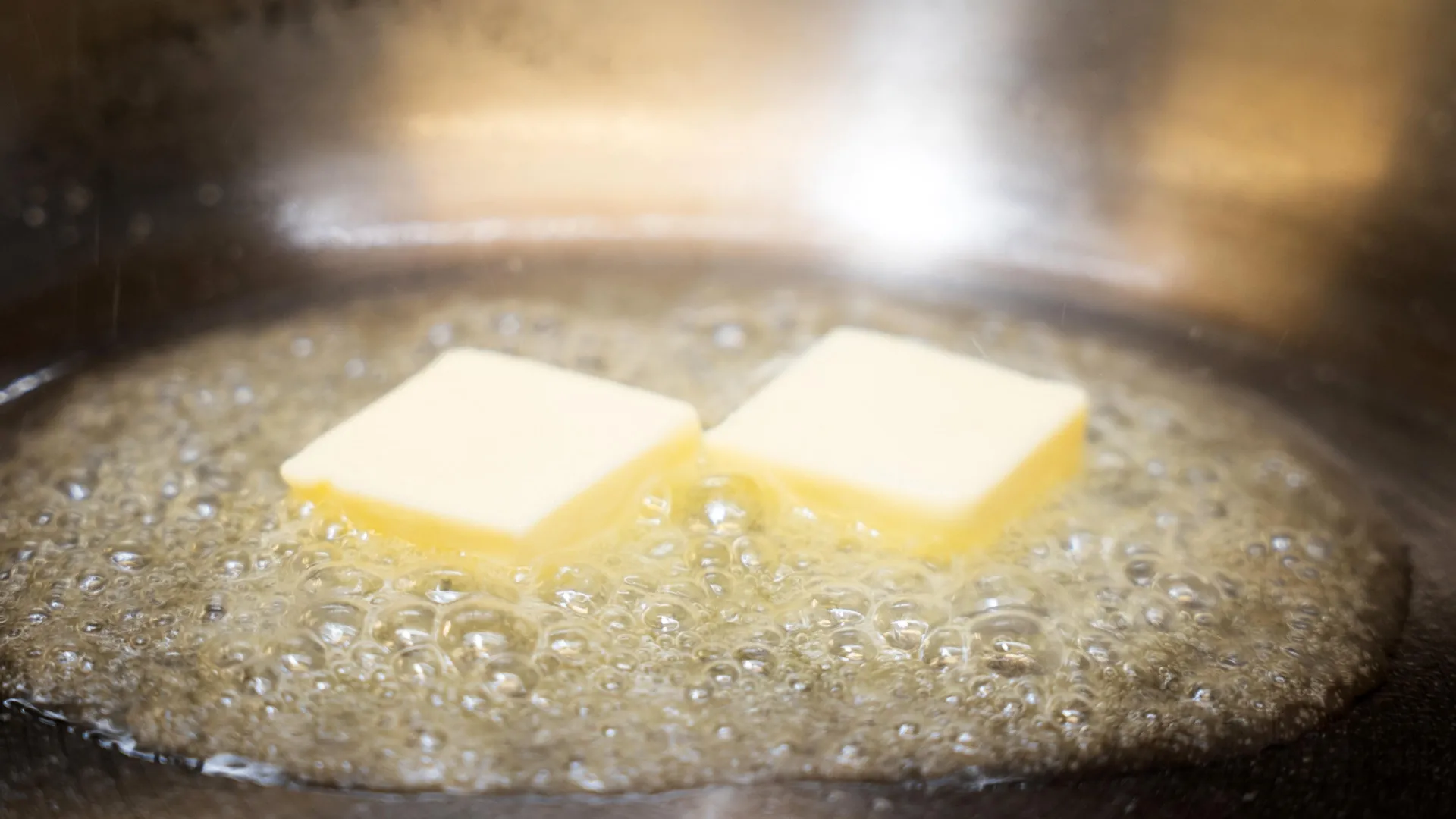
For generations, the kitchen has been a laboratory of tradition. For many, the childhood memory of a thick slab of butter melting into a hot potato or coating a slice of crusty bread is foundational. It is a staple of culinary comfort. However, the modern kitchen is also a place of industrial innovation, where margarine—a product engineered to mimic the characteristics of butter—has carved out a permanent place in our refrigerators.
As a food scientist, I often find that the most mundane ingredients possess the most fascinating chemical architecture. While butter and margarine may look, feel, and taste similar, they are fundamentally different substances. Understanding their chemical nature is not just an academic exercise; it is the key to mastering the science of baking and nutrition.
The Chemistry of Fat: A Structural Breakdown
At their core, both butter and margarine are emulsions: stable mixtures of tiny water droplets suspended within a continuous fat matrix. This matrix is composed primarily of triglycerides, the most common form of dietary fat.
A triglyceride molecule is elegantly simple: a three-carbon glycerol backbone attached to three fatty acid chains. While the backbone remains constant, the identity of the fatty acids—the long chains of carbon surrounded by hydrogen—varies, dictating the physical properties of the fat.
Saturated vs. Unsaturated: The "Kink" Factor
The primary difference between butter and margarine lies in the saturation of these fatty acid chains. Butter is dominated by saturated fats, which lack double bonds between carbon atoms. This allows the molecules to stack together with geometric precision, resulting in a firm, crystalline structure.
In contrast, margarine is derived from plant oils rich in unsaturated fats. The double bonds between the carbons in these chains introduce "kinks" in the molecular structure. Like a pile of tangled garden hoses, these kinked molecules cannot pack together neatly. This molecular irregularity is precisely why plant-based oils remain liquid at room temperature, whereas butter remains solid.
A Chronology of Culinary Evolution
The history of the "butter vs. margarine" debate is a journey through industrial advancement and shifting health paradigms.
19th Century Origins: Margarine was born out of necessity. In the 1860s, Emperor Napoleon III of France offered a prize for a cheaper, more stable alternative to butter to feed his armed forces and the working class. Hippolyte Mège-Mouriès responded with "oleomargarine," a blend of beef tallow and milk.
The Early 20th Century: As technology progressed, the industry shifted toward plant-based oils. However, these oils were liquid. To create a solid, spreadable product, scientists utilized hydrogenation, a process that converted liquid oils into solids by adding hydrogen. This breakthrough allowed for the mass production of shelf-stable, inexpensive margarine.
The Health Pivot: By the late 20th century, the medical community began to link high levels of saturated fat—the hallmark of butter—with cardiovascular disease. Margarine was marketed as the "heart-healthy" alternative. However, the scientific community soon realized that the partial hydrogenation process used to harden these oils created trans fats, which proved even more detrimental to heart health than the saturated fats they replaced.
The Modern Era: Today, the industry has largely moved away from partial hydrogenation. Modern margarine is crafted using a process known as interesterification, which rearranges fatty acids on the glycerol backbone to create a solid structure without the need for harmful trans fats.
Supporting Data: Composition and Standards
To be legally labeled as "butter" in the United States, a product must adhere to a strict standard of identity, one of the oldest in the U.S. food regulatory framework.
The Regulatory Definition
- Butter: Must contain at least 80% milkfat. Some premium European-style butters push this to 85%. The remaining 15–20% consists of water, lactose, minerals, and milk proteins.
- Margarine: Similarly, margarine is required to be at least 80% fat. However, because the source is plant-based, the remaining percentage is comprised of water, emulsifiers, preservatives, and coloring agents.
The Melting Point Advantage
The crystalline structure of butter gives it a unique melting profile. It remains firm in the refrigerator but softens gradually as it reaches room temperature. When creamed with sugar, the fat crystals trap air, creating the airy, porous structure desired in cookies and cakes.
Margarine, through interesterification, offers a more predictable melting point. Because producers can calibrate the ratio of solid fats, they can create a product that remains spreadable even at lower temperatures, a feat natural butter struggles to achieve.
Industrial Engineering: The Making of a Spread
The production of butter and margarine follows two distinct technological paths.
The Churning of Butter
Butter is a mechanical marvel. By vigorously shaking or churning heavy cream (which must be at least 36% fat), the protective membranes of the fat globules are ruptured. The fat molecules collide and coalesce, forming semi-solid grains that separate from the watery buttermilk. The resulting mass is kneaded and pressed to remove excess moisture. If the butter is "cultured," lactic acid bacteria are introduced to ferment the lactose, creating the complex, tangy flavor profile characteristic of high-end European butters.
The Modification of Margarine
Margarine production is a masterclass in chemical manipulation. Since plant oils are liquid, producers use interesterification to enzymatically rearrange the triglycerides. This creates a uniform distribution of fatty acids, resulting in a solid structure.
To bridge the gap between "industrial product" and "culinary ingredient," manufacturers perform several additional steps:
- Coloring: Since plant oils are colorless, synthetic beta-carotene is added to replicate the natural golden hue of grass-fed butter.
- Flavoring: To mimic the "toasty" notes of butter, companies add diacetyl—a chemical compound responsible for the iconic butter aroma.
- Stability: Emulsifiers like lecithin are added to ensure the water and oil components do not separate during storage.
The Culinary Implications: Baking Science
In the kitchen, butter and margarine are not always interchangeable. The chemistry of the ingredients dictates the success of a recipe.
The Browning Factor
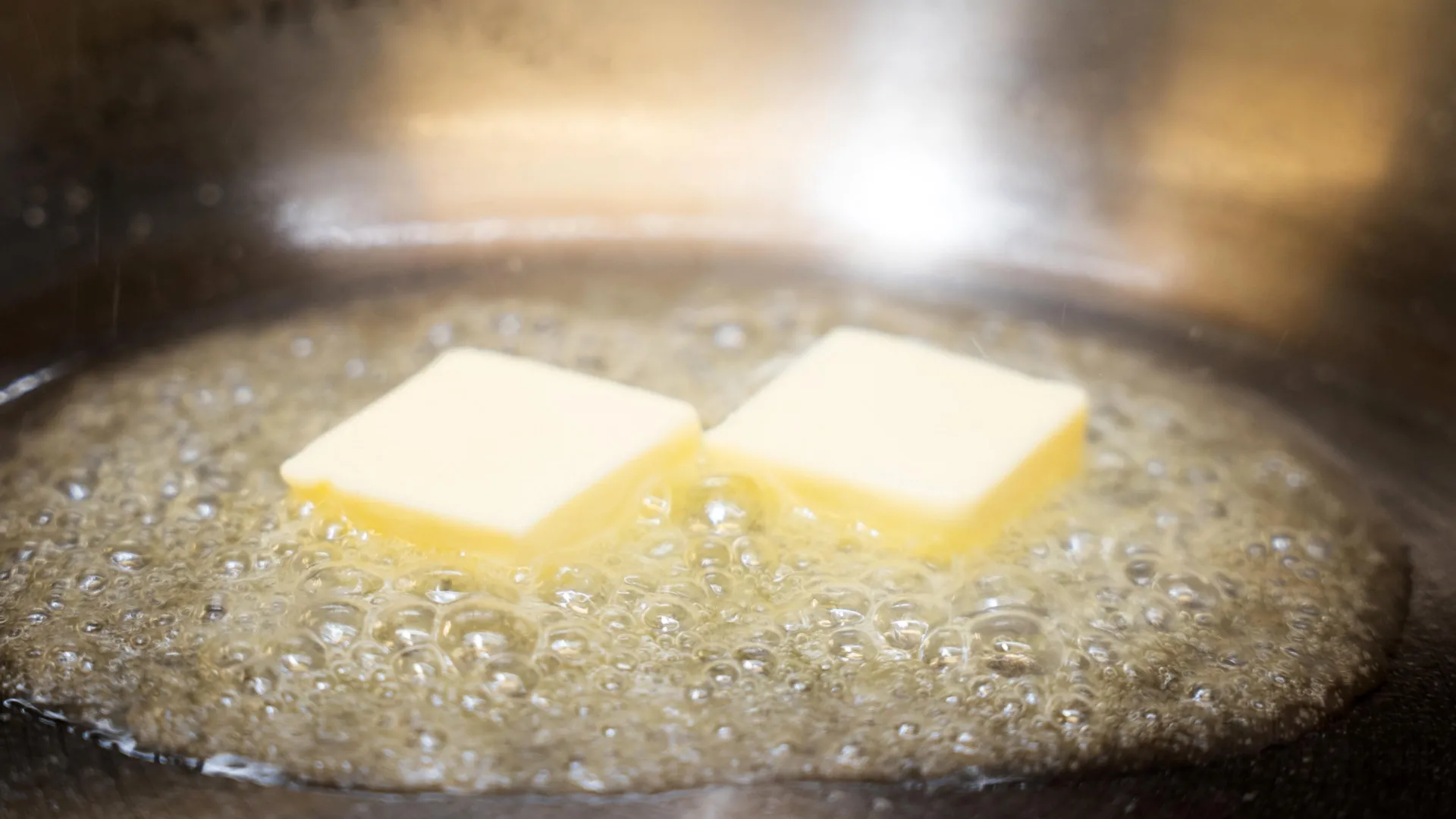
The most significant culinary difference is the presence of milk solids. When butter is heated, the proteins and lactose undergo the Maillard reaction—a chemical interaction between amino acids and reducing sugars. This creates a rich, nutty, caramelized flavor and a signature brown color. Margarine, lacking these dairy-derived compounds, does not brown. It will heat and melt, but it will never achieve the aromatic complexity of browned butter.
The Power of Steam
In pastry work, particularly for puff pastry or croissants, butter is indispensable. The water content in butter turns to steam when exposed to high heat, creating distinct, flaky layers in the dough. While some margarines have been engineered to contain specific water ratios for baking, most "spreadable" margarines are high in water and low in fat, which can lead to soggy, dense results in recipes formulated for butter.
Conclusion: The Scientist’s Perspective
The choice between butter and margarine is often framed as a battle of health versus taste, but it is ultimately a question of functional chemistry. Butter offers an irreplaceable flavor profile and structural performance due to its unique protein and lactose content. Margarine, conversely, represents the triumph of food science in creating a consistent, shelf-stable, and customizable fat source.
As a food scientist, I do not advocate for one over the other in a vacuum. Instead, I encourage home cooks to view these ingredients as tools. Use butter when you want the depth of the Maillard reaction or the lift of steam-leavened pastries. Use margarine when you require precise, controlled melting or a soft, spreadable texture for your daily toast.
In the modern kitchen, the most successful baker is not the one who adheres to tradition alone, but the one who understands the molecular architecture of the ingredients they use. Whether it is the natural, golden churn of cow’s milk or the precisely engineered matrix of plant oils, each fat serves a purpose—and understanding that purpose is the secret ingredient in every great recipe.