











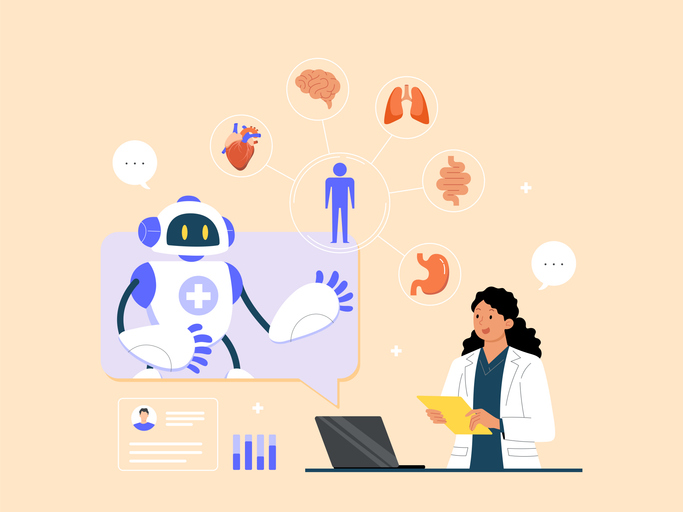
For the past decade, the healthcare consumer’s digital experience has been defined by a singular, persistent frustration: the "dumb" chatbot. Whether attempting to reset a patient portal password, verify a clinic’s address, or check an appointment status, users have become accustomed to a digital wall. These systems, while proficient at parsing simple keywords, inevitably stall when faced with nuance, looping users in circles before—often reluctantly—handing them off to a human agent.
This disconnect between the promise of digital health and the reality of fragmented, inefficient systems is precisely where the industry is undergoing a paradigm shift. We are moving from the era of static, script-based chatbots to the rise of Agentic AI. Unlike its predecessors, which are designed to respond, agentic systems are built to act.
The Evolution: From Static Scripts to Autonomous Agents
To understand the magnitude of this shift, one must first distinguish between the two technologies. Traditional chatbots operate on decision trees—predefined pathways that collapse the moment a user deviates from the script. They are essentially digital filing cabinets that only open if you say the exact right word.
Agentic AI, by contrast, operates on intent. Powered by Large Language Models (LLMs) and integrated with enterprise data architecture, these agents can interpret a complex request, decompose it into a sequence of logical steps, and execute those steps across disparate systems.
Chronology of the Shift
- The Early 2010s: The advent of rule-based "if-then" chatbots, primarily used for basic FAQ deflection.
- The Mid-2010s to 2020: The integration of Natural Language Processing (NLP) allowed for better intent recognition, but these systems remained bound by static content libraries.
- 2023–2024: The emergence of LLM-based agents capable of tool-calling and multi-step reasoning.
- 2025 and Beyond: The current transition toward "Agentic Workflows," where AI systems act as orchestrators across Electronic Health Records (EHR), billing platforms, and clinical decision support tools.
Supporting Data and the Patient Experience Gap
The necessity for this evolution is backed by significant market data. According to insights from McKinsey on healthcare consumerism, patients now demand a level of digital fluidity that mirrors their experiences in retail and banking. When a banking app allows a user to move money, dispute a transaction, and update account details in one session, the inability of a healthcare provider to coordinate a prescription refill without three phone calls feels archaic.
Furthermore, research from the Stanford HAI (Human-Centered AI) 2024 Index highlights a pivotal change in how we measure success. Industry benchmarks are shifting away from "accuracy of response"—a metric that favors conversational wit—toward "task completion rate." In healthcare, a chatbot that correctly defines a billing code but fails to actually update the insurance provider is a failure. An agentic system that resolves the billing dispute without human intervention, however, is a success.
Operational Implications: Coordination Over Automation
The true value of agentic AI lies not in automation, but in coordination. Healthcare is notoriously fragmented, with data siloed across legacy EHRs, third-party labs, and billing clearinghouses.
In a practical application, an agentic system does not simply acknowledge a request to reschedule an appointment. It:
- Audits the patient’s existing insurance policy for coverage constraints.
- Cross-references provider calendars across multiple clinics.
- Suggests a time slot that aligns with both clinical guidelines and patient availability.
- Updates the EHR and sends a confirmation—all while maintaining a secure, audit-trailed log of the interaction.
This represents a radical departure from the "hand-off" model. By integrating deeply with transcripts, clinical notes, and device error codes, these systems can provide real-time assistance during live patient calls, guiding human agents through complex edge cases and ensuring that critical context is never lost.
The High-Stakes Environment: Risk and Oversight
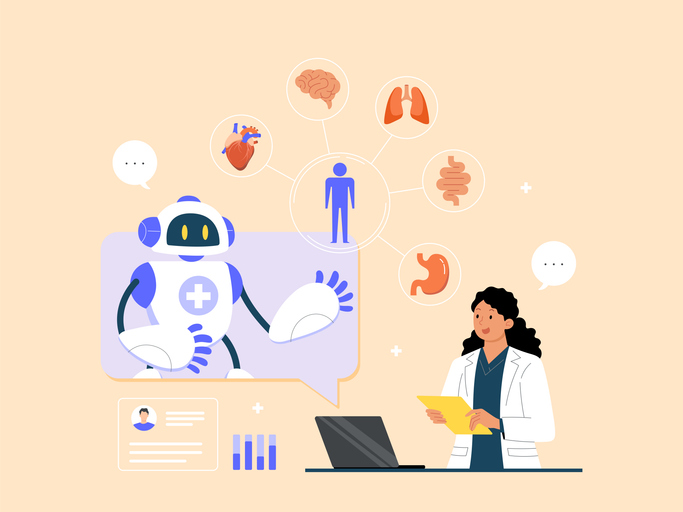
In the healthcare sector, the stakes are not merely financial—they are clinical. A missed appointment or a misinterpreted instruction can result in gaps in care, which, in turn, can lead to adverse patient outcomes. Consequently, the deployment of agentic AI necessitates a rigorous framework for governance.
The Regulatory Landscape
The U.S. Food and Drug Administration (FDA) has been clear regarding AI in clinical settings: innovation must be balanced with transparency and risk management. As organizations deploy these systems, the focus has shifted toward "Explainability." It is no longer enough for an AI to be correct; it must be able to demonstrate why it reached a specific conclusion.
Key Pillars of Safe Implementation:
- Structured Logging: Every decision made by an agent must be traceable to a data source or a clinical guideline.
- Human-in-the-Loop (HITL): There must be clear, non-negotiable boundaries for escalation. If an agent detects high-urgency keywords or sentiment markers, the protocol must mandate an immediate transition to a clinical professional.
- Containerized Deployment: To ensure consistency and safety, AI agents should be deployed within controlled, reproducible environments that allow for rapid patching if unexpected behaviors occur.
Real-World Applications: Where Adoption is Taking Root
While the media narrative often focuses on "full-scale transformation," the reality on the ground is more measured. Most healthcare organizations are currently adopting a "targeted use case" approach.
1. Patient Intake and Navigation
By automating the collection of intake data, verifying insurance, and checking against clinical prerequisites, hospitals are reducing the administrative burden on front-desk staff. This allows human personnel to focus on the high-touch, empathetic aspects of patient care that AI cannot replicate.
2. Clinical Assistance for Vulnerable Populations
Emerging technologies, such as AI-powered smart glasses, are beginning to provide unprecedented independence for individuals with conditions like Alzheimer’s. By interpreting visual inputs—such as a doctor’s note or a pill bottle label—and triggering automated reminders, these systems function as "cognitive agents," directly improving the quality of life for patients.
3. Real-Time Call Center Support
The first sixty seconds of a patient call are often the most critical. Agentic systems are being deployed to "listen" in real-time, assessing the urgency of the patient’s concern and routing the call to the appropriate clinical department. This ensures that the patient is not just heard, but immediately triaged.
Conclusion: The Path Forward
The transition to agentic AI is not merely a technical upgrade; it is an organizational shift in how healthcare providers view accountability. The gap between what is technically possible and what is operationally deployed is narrowing at a velocity that threatens to outpace the regulatory and safety frameworks of many institutions.
The organizations that will succeed in this new era are those that prioritize discipline over speed. They are the ones treating AI not as a "magic bullet," but as a sophisticated tool that requires rigorous monitoring, clear escalation pathways, and a foundation of data integrity.
As we look toward the next few years, the measure of success will be the quiet efficiency of our systems. When a patient can navigate their care journey with the same ease that they navigate their digital lives, and when providers can rely on their systems to handle the logistical weight of that journey, we will know that the promise of agentic AI has been fulfilled. We are moving beyond the era of the chatbot—the era of the autonomous agent has arrived.
About the Author
Jahnavi Kachhia is a global product owner for AI and ML with deep experience in regulated healthcare environments and large-scale LLM platforms. Her research focuses on explainable AI, human-in-the-loop systems, and responsible deployment in clinical settings. She is a frequent contributor to international AI and healthcare forums and an advocate for the integration of safety and ethics in autonomous digital health tools.