





In the modern landscape of high-performance wellness, the concept of "biological age" has transcended niche biohacking circles to become a household obsession. Fueled by high-profile figures like tech billionaire Bryan Johnson—the star of the Netflix documentary Don’t Die—the quest to quantify and reverse the aging process has turned into a multi-million-dollar industry. Johnson claims to have shaved over five years off his biological clock through a rigorous, multimillion-dollar regimen of daily supplements, hyperbaric oxygen therapy, and controversial plasma infusions.
But as the trend gains momentum, a critical question emerges: Are these tests a window into our cellular future, or are they merely a high-tech mirror reflecting our own anxieties about mortality?
The Science of Aging: Chronological vs. Biological
To understand the current obsession, one must distinguish between the two ways we track time. Chronological age is simple: it is the number of candles on your birthday cake. Biological age (bio age), conversely, refers to the functional state of your cells and tissues.
Consider two 50-year-old men. The first leads a sedentary, high-stress lifestyle, consumes processed foods, and ignores exercise. The second engages in regular strength training, follows a nutrient-dense diet, manages stress, and maintains a clean environment. Even though both share the same chronological age, the second man’s cellular machinery—his "biological age"—is likely significantly younger.
A Chronology of the Bio-Age Trend
The rise of bio-age testing didn’t happen overnight. It is the culmination of decades of research into cellular markers.
- 1980s–1990s: Scientists began identifying "biomarkers"—measurable indicators of biological processes—such as cholesterol levels and blood pressure, as predictors of cardiovascular health.
- 2013: Researcher Steve Horvath published the "Horvath Clock," a method for estimating biological age based on DNA methylation patterns. This milestone shifted the industry from tracking disease markers to tracking the "pace of aging" itself.
- 2020s: With the maturation of consumer-grade biotechnology, mail-order blood and urine kits hit the mainstream market. Popular health podcasts hosted by figures like Peter Attia, Joe Rogan, and Andrew Huberman brought these tools into the public consciousness, normalizing the idea that one could "hack" their longevity.
- Present Day: The market is flooded with direct-to-consumer tests, ranging from $100 DNA methylation panels to high-end clinical VO2 max assessments, promising to tell consumers exactly how fast they are aging.
Supporting Data: What Are We Actually Measuring?
When you purchase a bio-age test, you are typically paying for an analysis of one or more specific biomarkers:
DNA Methylation (The "Epigenetic Clock")
DNA methylation is a chemical process that alters how your genes are expressed. As we age, these patterns change in predictable ways. Tests like the DunedinPACE and the Horvath Clock interpret these patterns to provide a "biological age" estimate. While fascinating, researchers caution that these clocks are still in their infancy; they are research tools, not diagnostic medical certainties.
Telomere Analysis
Telomeres are the protective caps at the ends of your chromosomes. They naturally shorten as cells divide. While short telomeres are associated with disease, the "qPCR" tests sold to consumers are often criticized for their lack of clinical utility compared to the "flow-FISH" tests used in formal medical diagnostics.
VO2 Max
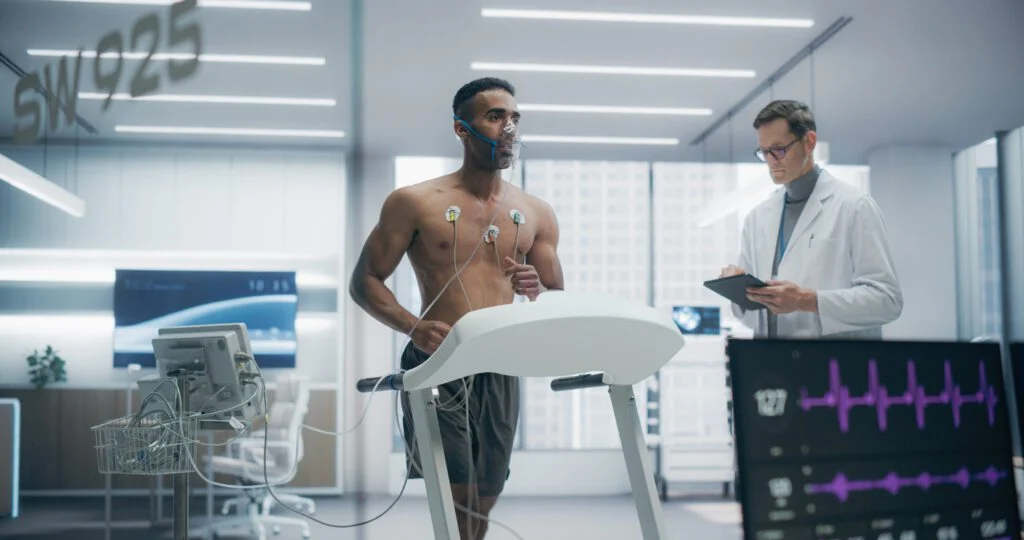
Widely considered the "gold standard" for cardiovascular longevity, VO2 max measures how effectively your body utilizes oxygen during intense exercise. Data indicates that a higher VO2 max is strongly correlated with a reduced risk of all-cause mortality. Unlike genetic tests, this is a metric that is highly responsive to lifestyle intervention.
The "Free" Biomarker Assessment
You don’t need a billionaire’s budget to track your health. Several scientifically validated tests can be performed at home or in a gym to assess your physical "age."
- The Sitting-Rising Test (SRT): A measure of strength and balance. Getting to the floor and back up without using your hands or knees as leverage is a strong indicator of musculoskeletal integrity.
- Grip Strength: Research suggests grip strength is a better predictor of longevity than blood pressure. A strong grip is a proxy for overall muscle mass and neuromuscular health.
- One-Leg Balance: The ability to stand on one foot for over 40 seconds (depending on age) is linked to lower fall risk and improved nervous system function.
- The Pittsburgh Fatigability Scale: A subjective measure of how exhausted you feel after daily tasks, which acts as an early warning system for systemic health issues.
- Body Composition via Tape Measure: Waist-to-hip ratios and overall body fat percentages are more indicative of long-term health risks than the number on a bathroom scale.
Official Responses and Clinical Skepticism
The medical establishment remains cautious. A New York Times investigation into Bryan Johnson’s methods highlighted a major point of contention: discrepancies in testing. While some markers indicated "rejuvenation," others suggested he had actually aged by a decade.
The primary critique from physicians is that biological age is not uniform. Your heart might be aging at a different rate than your kidneys or your brain. Furthermore, there is a dangerous trend of "over-testing." When consumers receive a number—"You are 45, but your bio age is 52"—it can cause psychological stress, which itself is a driver of biological aging. Most healthcare professionals argue that these tests are a distraction from the "Big Rocks" of health: sleep, nutrition, strength training, and stress management.
The Implications: Moving From Data to Action
The most common mistake people make is viewing their bio-age score as a "grade" rather than a piece of information. Data without action is useless. If a test tells you that your cardiovascular age is high, the solution isn’t necessarily a new supplement; it is likely an increase in zone-2 aerobic training or a refinement of your dietary fiber intake.
The "Big Rock" Strategies
Before splurging on experimental anti-aging protocols, the fundamentals remain the most effective interventions:
- Strength Training: Preserves muscle mass, which is a major metabolic engine for longevity.
- Aerobic Capacity: Regular, moderate-to-vigorous exercise remains the single most effective way to slow biological decay.
- Sleep Hygiene: Chronic sleep deprivation is a known accelerator of cellular aging.
- Nutrition: Focusing on whole, nutrient-dense foods rather than chasing "longevity super-pills."
- Smoking Cessation and Alcohol Reduction: Eliminating known toxins is more effective than any "rejuvenation" therapy currently on the market.
Conclusion: Is It Worth It?
If you have the financial means and are already mastering the fundamentals of health, commercial bio-age tests can be a fun, albeit imperfect, way to track your progress. However, they should never replace standard medical screenings like annual blood panels, bone density scans (DEXA), or blood pressure checks.
For the average person, the "bio-age" is not something to be found in a lab report; it is something you build every day in the kitchen, the gym, and the bedroom. Don’t let the quest for a lower number on a screen distract you from the work of living a longer, healthier life. Your chronological age is inevitable, but your biological health remains, to a significant extent, in your own hands.
For those looking to optimize their health, working with a certified health coach trained in behavior change and recovery management can provide the necessary bridge between data and lasting results. True longevity isn’t just about not dying—it’s about living with vitality, strength, and purpose.