











The landscape of bipolar disorder treatment is undergoing a seismic shift, moving away from a traditional "trial-and-error" approach toward a future defined by precision psychiatry. For decades, both clinicians and patients have navigated the complexities of mood stabilization with limited data-driven guidance. However, a trio of groundbreaking studies recently published in leading medical journals—Nature Mental Health, the International Journal of Bipolar Disorders, and the Journal of Affective Disorders—is leveraging artificial intelligence (AI), machine learning, and massive longitudinal datasets to provide long-awaited answers.
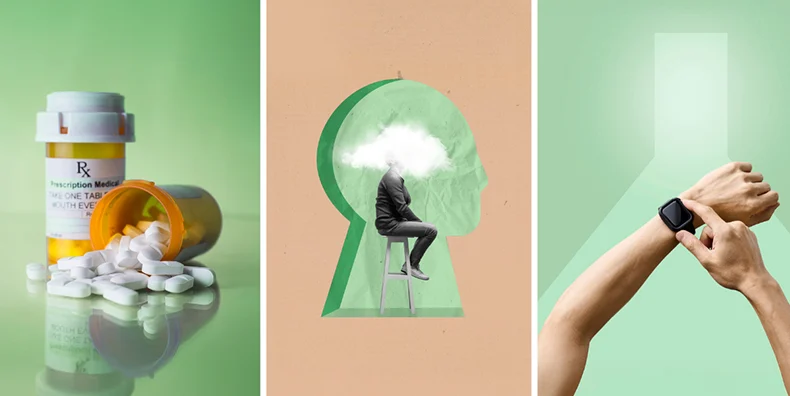
These new findings address three critical pillars of life with bipolar disorder: the efficacy of secondary medication strategies when standard treatments fail, the impact of psychiatric drugs on cognitive function (often referred to as "brain fog"), and the potential for consumer wearables to serve as early-warning systems for impending mood episodes.
Main Facts: A Data-Driven Leap in Psychiatric Research
The common thread across these studies is the use of "Big Data." By processing information from hundreds of thousands of patients and utilizing machine learning algorithms, researchers are now able to detect patterns that were previously invisible to the human eye.
The first major finding comes from a massive Nordic study involving over 160,000 patients. It identifies specific medication combinations that significantly reduce the risk of psychiatric hospitalization. The study highlights that for many patients, lithium alone may not be the ceiling of care, but rather the foundation for more effective "polypharmacy" (the use of multiple medications).
The second study tackles the pervasive issue of cognitive impairment. By analyzing 567 adults through a machine-learning lens, researchers have identified specific drugs—most notably benztropine, clonazepam, and ziprasidone—that are linked to diminished memory and attention. Conversely, the study provides a "clean bill of health" for lithium regarding its impact on thinking, debunking a common patient fear.
The third study explores the "quantified self" movement, testing whether Fitbits and other wearables can predict hypomanic or depressive shifts. While still in the pilot phase, the research suggests that changes in heart rate variability (HRV) and daily step counts can signal a mood episode before the patient even realizes it is happening.
Chronology: From the Lithium Revolution to the AI Era
To understand the weight of these studies, one must look at the timeline of bipolar treatment.
- 1949–1970: The "Lithium Era" began with John Cade’s discovery of the element’s mood-stabilizing properties. For decades, lithium remained the undisputed gold standard, though its narrow therapeutic window and side-effect profile left many patients searching for alternatives.
- 1990s–2010s: The "Atypical Antipsychotic Boom" introduced drugs like quetiapine (Seroquel) and olanzapine (Zyprexa). While these provided more options, they also introduced new concerns regarding metabolic side effects and cognitive "dulling."
- 2020–Present: The "Data Era" has arrived. With the advent of electronic health records and wearable technology, researchers no longer rely solely on small-scale clinical trials. They are now using real-world evidence from decades of patient history to refine treatment protocols.
This chronology marks a transition from simply "stopping the mania" to "optimizing the life" of the patient, focusing on long-term stability and cognitive preservation.
Supporting Data: A Deep Dive into the Research
1. Reducing Hospitalizations: The Power of Combinations
The Nordic research team, publishing in Nature Mental Health, conducted an "intra-individual" study. This method is statistically rigorous because it compares a patient’s outcomes during periods when they were taking a specific medication against periods when they were not. This eliminates variables like genetics or socioeconomic status that often cloud comparative studies.
The Findings:
The study found that three specific combinations were more effective at preventing hospitalization than lithium monotherapy:
- Lithium + Quetiapine (Seroquel)
- Lithium + Valproate (Depakote)
- Lithium + Olanzapine (Zyprexa)
For those who had discontinued lithium due to side effects or lack of efficacy, the most successful alternatives for preventing re-hospitalization were the combinations of quetiapine with lamotrigine (Lamictal) and olanzapine with valproate.
2. The Cognitive Cost: Identifying "Brain Fog" Culprits
Cognitive dysfunction is a leading cause of disability in bipolar disorder, affecting a patient’s ability to work and maintain relationships. The Maryland-based study published in the International Journal of Bipolar Disorders sought to isolate the effect of medications from the effect of the illness itself.
The Findings:
After adjusting for illness duration and symptom severity, the machine-learning model identified three medications with a statistically significant negative impact on cognitive scores:
- Benztropine (Cogentin): Showed the strongest "dose-response" relationship; higher doses led to significantly lower cognitive scores.
- Clonazepam (Klonopin): Linked to slower processing speeds and memory issues.
- Ziprasidone (Geodon): Associated with lower scores in visual-spatial skills.
Significantly, the study found no association between lithium and cognitive decline, suggesting that the "mental fog" many patients attribute to lithium may actually be a symptom of the disorder itself or a result of other co-prescribed medications.
3. The Wearable Sentinel: Predicting Episodes via Fitbit
In a pilot study published in the Journal of Affective Disorders, French researchers monitored 10 participants for six months. This study represents the "frontier" of passive monitoring—using technology to detect illness without the patient having to fill out a single form.
The Findings:
The machine learning models were trained to recognize the "baseline" of each individual.
- Depression Detection: Models were most effective at spotting depression by analyzing heart rate variability (HRV) and a decrease in step counts.
- Hypomania Detection: Models utilized sleep patterns and resting heart rate. While less accurate than the depression models, they still outperformed random chance.
- The "Early Warning" Gap: While the devices could detect an episode once it began, the ability to predict an episode before it started remains the "Holy Grail" that requires further refinement and larger datasets.
Official Responses and Clinical Caveats
While the scientific community has welcomed these findings, experts urge a measured approach to their implementation.
Medical contributors to bpHope and other psychiatric forums emphasize that these studies are "population-level" data. In psychiatry, what works for 160,000 people may not work for the individual in the consulting room. "The Nordic study is a landmark because of its scale," says one clinical commentator, "but it doesn’t account for the subjective ‘quality of life’ side effects that might lead a patient to stop a medication even if it keeps them out of the hospital."
Regarding the wearable study, researchers emphasize that a Fitbit is not a medical device. The French team noted that their study was a "test balloon." Until these algorithms are validated in thousands of patients across diverse demographics, they should be viewed as supplementary tools rather than diagnostic ones.
Furthermore, the Maryland study on cognition has prompted calls for "medication reconciliation." Clinicians are being encouraged to review the use of "legacy drugs" like benztropine, which is often prescribed to treat side effects of other meds but may be causing more cognitive harm than therapeutic good.
Implications: The Future of "Precision Psychiatry"
The implications of this research are profound, signaling a shift toward a more personalized and proactive model of care.
For Patients:
The findings provide a new vocabulary for self-advocacy. A patient experiencing cognitive decline can now point to specific data regarding benztropine or clonazepam when discussing alternatives with their doctor. Furthermore, the validation of lithium’s safety regarding cognition may alleviate the "lithium stigma" that prevents many from trying this effective treatment.
For Clinicians:
The data provides a roadmap for "Step 2" treatment. When lithium monotherapy fails, the Nordic study provides evidence-based combinations to try next, reducing the reliance on anecdotal "prescriber’s judgment."
For the Healthcare System:
The integration of wearables suggests a future where "passive monitoring" could alert a care team to a patient’s declining state before a crisis occurs. This could shift the burden of care from expensive emergency hospitalizations to early, outpatient interventions.
As AI and machine learning continue to mature, the goal of bipolar research is clear: to move from reacting to episodes to preventing them entirely. These three studies represent a significant step toward that reality, offering a future where data-driven insights provide a steadier path for those living with the volatility of bipolar disorder.
Editorial Sources and Fact-Checking
- Müller-Oerlinghausen, B., et al. (2026). "Medication combinations and hospitalization risk in bipolar disorder: A Nordic population-based study." Nature Mental Health.
- Erickson, E. P. G. (2026). "Cognitive impacts of psychiatric medications in community-treated bipolar patients." International Journal of Bipolar Disorders.
- French Research Consortium. (2026). "Passive monitoring of mood episodes via consumer wearables: A machine learning approach." Journal of Affective Disorders.