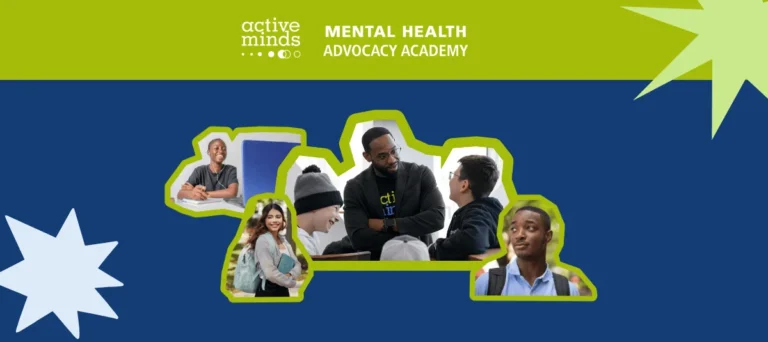








WASHINGTON, D.C. — In a legislative landscape often dominated by seasoned lobbyists and career politicians, a different kind of authority took center stage at the Rayburn House Office Building this May. As the nation transitioned into Mental Health Awareness Month, five young advocates representing the organization Active Minds stood before Congressional staffers and legislators to deliver a clear, uncompromising message: the crisis in youth mental health cannot be solved without the direct input of those living through it.
The centerpiece of their advocacy is the Campus Lifeline Act (H.B. 8657), a landmark piece of legislation authored by Active Minds. The bill seeks to institutionalize mental health support by requiring the 988 Suicide & Crisis Lifeline to be printed on all newly issued student identification cards and expanding federal investment in youth-informed mental health strategies.
Main Facts: The Legislative Push for Student Safety
The Campus Lifeline Act represents a strategic pivot in how the federal government approaches collegiate mental health. Rather than focusing solely on clinical expansions, which often face bureaucratic hurdles, the bill prioritizes immediate, low-barrier access to crisis intervention.
The Core Objectives of H.B. 8657
- Visibility and Accessibility: By placing the 988 Lifeline on student IDs—both physical and digital—the bill ensures that every student has a life-saving resource literally in their pocket.
- Federal Investment: The act calls for increased funding specifically earmarked for mental health strategies that are "youth-informed," meaning they are designed with the feedback and leadership of students themselves.
- Bipartisan Support: Designed as a non-partisan issue of public safety, the bill aims to bridge the gap between various political factions by framing mental health as a fundamental component of educational success and national health.
Active Minds, the organization behind the bill, has long maintained that leadership begins with youth and young adults. With over 600 chapters across the country, the organization serves as a pipeline for advocacy, transforming personal struggle into policy change.
Chronology: From Grassroots Organizing to the Rayburn Building
The journey to the May 5th panel on Capitol Hill was years in the making, fueled by a growing sense of urgency among the Gen Z population.
- 2018–2022: The Catalyst Period. Many of the panelists began their advocacy following personal losses or diagnoses. The launch of the 988 Suicide & Crisis Lifeline in July 2022 provided a national framework that advocates began to rally around.
- Late 2023: The Drafting of the Campus Lifeline Act. Active Minds worked with legislative experts to draft a bill that addressed the specific gaps in campus mental health coverage, specifically the "information gap" where students in crisis are unaware of where to turn.
- May 5, 2024: The Capitol Hill Briefing. To kick off Mental Health Awareness Month, five young leaders—Ayaan Moledina, Amy Senkerik, Naomi Hines, Michael Landu, and Carson Domey—arrived in Washington. They shared their lived experiences in the Rayburn Building, speaking directly to House of Representatives staffers and legislators.
- Present Day: National Mobilization. Following the panel, Active Minds launched a national "Action Alert" campaign, encouraging students and parents across all 50 states to contact their representatives to co-sponsor the bill.
Supporting Data: The Growing Crisis and the 988 Solution
The urgency behind the Campus Lifeline Act is underscored by sobering statistics regarding the state of youth mental health in the United States.
The Scope of the Problem
According to the Centers for Disease Control and Prevention (CDC), suicide remains the second leading cause of death for individuals aged 10–24. Furthermore, data from the Healthy Minds Study indicates that nearly 40% of college students report experiencing significant depression, yet a substantial portion do not seek help due to stigma or a lack of knowledge about available resources.
The Efficacy of 988
Since its transition from the 10-digit National Suicide Prevention Lifeline to the three-digit "988" code in 2022, the service has seen a dramatic increase in volume. However, awareness remains a hurdle.
- Connection Speed: 988 has reduced average wait times for callers significantly compared to the old system.
- Demographic Reach: Studies show that younger populations are more likely to use text and chat features of the 988 system, making its inclusion on digital IDs particularly effective.
The Impact of ID Card Initiatives
In states where similar "Lifeline on ID" laws have been passed at the state level (such as California and South Carolina), campus counseling centers have reported a "normalization" of crisis resources. When the number is as ubiquitous as a library barcode, the stigma associated with calling for help begins to dissipate.
Profiles in Advocacy: The Panelists’ Perspectives
The May 5th panel was not merely a presentation of data; it was a testament to the power of lived experience. Each of the five leaders brought a unique perspective on why federal intervention is necessary.
Ayaan Moledina: The Grassroots Organizer
At just 17 years old, Ayaan Moledina is already a formidable force in Texas politics. As the director of Students Engaged in Advancing Texas (SEAT) and a candidate for his local school board, Moledina spoke to the necessity of "nothing about us without us."
"You can’t make effective mental health policy for young people without young people," Moledina told the room. Diagnosed with depression at age 10, his trajectory into advocacy was born from a realization that students are the "subject matter experts" of their own struggles.
Amy Senkerik: Scaling the Solution
Representing Arizona State University, the largest public university in the U.S., Amy Senkerik provided a blueprint for success. She successfully lobbied for 988 to be included on ASU’s digital IDs.
"They don’t have to google anything; the option is right in front of them," Senkerik explained. Her advocacy is fueled by the loss of her best friend to suicide, a tragedy that she believes could have been averted if help had been "clear, immediate, and accessible."
Naomi Hines: Intersectionality and Underserved Communities
A soon-to-be graduate of Bowie State University (an HBCU), Naomi Hines focused on the "Acts of Kindness Project" and the specific needs of underserved communities. As a certified mental health first aid provider, she highlighted the comfort gap.
"We need to figure out a way to connect students to resources and make them feel comfortable utilizing them," Hines said. Her focus remains on destigmatizing help-seeking behaviors in communities where mental health has historically been a taboo subject.
Michael Landu: Destigmatizing Medical Treatment
Michael Landu, who lives with Major Depressive Disorder (MDD), brought a clinical perspective to the panel. He advocated for treating psychiatric prescriptions with the same medical legitimacy as medications for chronic physical conditions like high blood pressure.
"988 would have been a really helpful resource for me back when I didn’t know it existed," Landu noted, emphasizing that awareness is the first step toward medical equity.
Carson Domey: The Veteran Advocate
Massachusetts native Carson Domey has been in the advocacy space since age 12. Initially focused on telehealth accessibility due to his own medical challenges, he shifted toward mental health after losing a friend in 2018. Domey has been instrumental in redefining physical education standards to include mental health, arguing that the two are inextricably linked.
Official Responses and Legislative Path Forward
The reception on Capitol Hill has been cautiously optimistic. Staffers from both sides of the aisle attended the briefing, noting the pragmatic nature of the Campus Lifeline Act.
Bipartisan Appeal
Legislative aides noted that the bill avoids many of the "culture war" pitfalls that often stall health-related legislation. By focusing on a three-digit number that already exists (988) and utilizing existing infrastructure (student IDs), the bill is seen as a high-impact, low-cost solution.
Congressional Support
While the bill continues to gather co-sponsors, the advocacy of Active Minds has already shifted the conversation. Congressional mental health caucuses have begun to cite the "youth-led model" as a preferred method for developing future legislation. The bipartisan nature of the bill is its strongest asset, as suicide prevention remains a rare point of consensus in a polarized Congress.
Implications: A Paradigm Shift in Policy Making
The presence of Moledina, Senkerik, Hines, Landu, and Domey in the Rayburn Building signifies a broader shift in the American political fabric. It marks the transition of youth from "subjects of policy" to "authors of policy."
The "Youth-Informed" Mandate
If passed, the Campus Lifeline Act will mandate that federal investments in mental health be "youth-informed." This could fundamentally change how grants are awarded by the Department of Health and Human Services (HHS) and the Department of Education, requiring agencies to prove they have consulted with student populations before implementing programs.
Normalizing the Crisis Response
By integrating the 988 Lifeline into the daily lives of students, the act aims to achieve what decades of posters and assemblies could not: the normalization of the mental health crisis. When a student sees a crisis number every time they swipe into a dining hall or check out a library book, the message is clear: It is okay to not be okay, and help is always within reach.
The Future of Active Minds
The success of this panel serves as a proof-of-concept for Active Minds’ broader mission. The organization continues to prove that when young people are given the tools and the platform, they can move the needle on national policy.
As Mental Health Awareness Month continues, the call to action remains urgent. Active Minds is urging the public to reach out to their representatives via their online portal, a process that takes less than three minutes but could result in a lifetime of change for students across America.
In the words of the panelists, the goal is simple yet profound: to ensure that no student has to suffer in silence when the solution is as close as the card in their pocket. For these five leaders, the trip to Washington was not just a photo opportunity—it was a mission to save lives through the power of the law.