





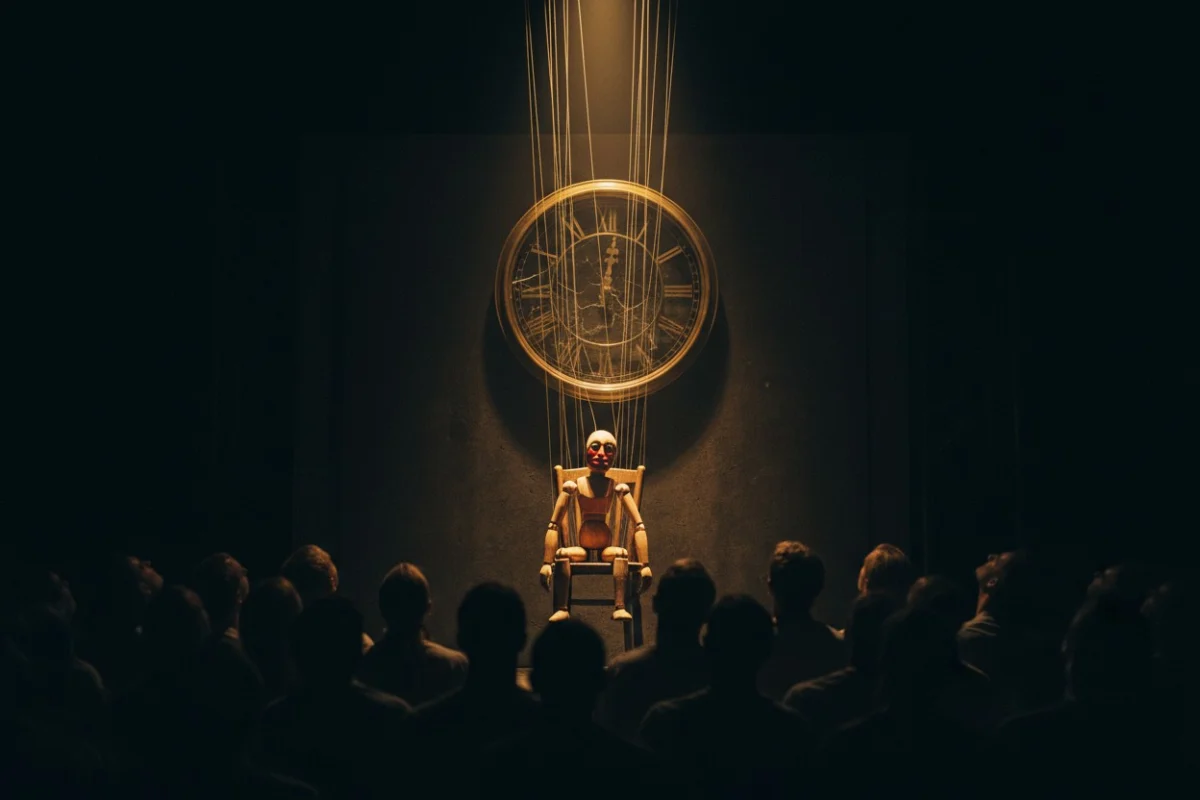
In the landscape of modern American political discourse, few slogans have proven as potent—or as polarizing—as the mantra "Trust the Plan." Emerging from the depths of anonymous message boards and metastasizing into a cornerstone of the MAGA movement, this phrase functions less as a political rallying cry and more as a psychological sedative. Critics and historians are increasingly drawing parallels between this contemporary phenomenon and a century-old Soviet counter-intelligence operation known as Operation Trust. By examining the mechanics of both, a disturbing pattern emerges: the use of manufactured hope to pacify dissent and consolidate power.
The Historical Blueprint: Operation Trust (1921–1926)
To understand the current obsession with "The Plan," one must first examine the historical precedent of the Bolsheviks. Following the Russian Civil War, the new Soviet regime faced a fractured but dangerous opposition. Rather than engaging in an unwinnable kinetic war against every dissident faction, the Soviet state security agency, the GPU, launched a sophisticated psychological operation.
They fabricated a phantom organization: the "Monarchist Union of Central Russia." This fake entity purported to be a secret, high-level resistance movement working from within to topple the Bolsheviks. For five years, the "Trust" operated with the regime’s blessing, luring anti-Bolshevik exiles and internal dissidents into the open. By promising that a grand, secret strategy was already in motion, the GPU effectively convinced opposition leaders to cease independent, grassroots resistance. Instead of organizing or fleeing, dissidents waited for the "Trust" to deliver their salvation. When the operation concluded, the GPU had successfully identified, exposed, and liquidated the core of the intellectual and military resistance.
The Anatomy of the Modern Psyop
The parallels to the current political climate are not merely coincidental; they reflect a refined methodology of population control. In the contemporary iteration, the role of the "Monarchist Union" is filled by a nebulous, decentralized belief system centered on the idea that political leaders—specifically Donald Trump—are engaged in a multi-dimensional chess match against a "Deep State."
The Psychology of Passive Resistance
The efficacy of "Trust the Plan" lies in its ability to convert potential activists into passive spectators. By framing every political setback, administrative failure, or legislative compromise as a "necessary move" in a grander design, the narrative inoculates the movement against disillusionment. If a policy seems harmful or a promise is broken, it is simply "part of the plan." This creates a closed-loop system of cognitive dissonance where evidence to the contrary only serves to deepen the follower’s commitment.
The Role of Influencers and Algorithmic Echo Chambers
Modern "Trust" narratives are bolstered by an ecosystem of influencers who profit from the perpetuation of the hope-cycle. Much like the scammers identified by financial researchers in the "Quantum Financial System" (QFS) circles, these figures maintain engagement by constantly shifting the goalposts. When one date for "mass arrests" or a "currency reset" passes, a new date is projected. This ensures that the audience remains in a state of high-arousal expectancy, which is far more profitable—and easier to control—than a population focused on local, tangible political action.
Chronology of Disillusionment: A Record of Broken Promises
The argument against the validity of "The Plan" is best illustrated by the divergence between rhetoric and reality during the Trump administration and its subsequent iterations.
- The War Powers Discrepancy: Despite populist promises to end "forever wars," the administration oversaw a significant escalation in tensions with Iran, resulting in geopolitical instability and trillions in global economic impact.
- The Regulatory Paradox: Campaign promises to "drain the swamp" and dismantle the regulatory state often clashed with the reality of administrative appointments. The continued approval of glyphosate-based pesticides and the lack of accountability for figures like Anthony Fauci remain primary friction points for the movement’s base.
- The Legal Stagnation: The anticipation of "mass arrests" regarding election fraud or administrative corruption has been a staple of the movement for years. To date, these arrests have failed to materialize, leading to a recurring cycle of frustration that is consistently managed by the narrative that "the timing isn’t right."
Supporting Data: The Economics of Hopium
The political "hopium" industry—a term used to describe the addiction to false political hope—operates with the efficiency of a predatory financial model. Investigations into various "reset" scams reveal a common trajectory:
- The Hook: A promise of imminent, revolutionary change (financial or political).
- The Delay: The promise is pushed back, citing "security" or "the need to wait for the perfect moment."
- The Extraction: As the audience grows desperate, they are encouraged to invest in specific products, memberships, or "patriotic" financial vehicles, under the guise that they are helping the cause or preparing for the new system.
This model is not limited to politics; it is a recurring theme in fringe religious movements and crypto-currency scams. The objective is to keep the "mark" in a state of hopeful compliance, preventing them from seeking real-world solutions or organizing outside the influence of the operation.
Official Responses and Institutional Silencing
The institutional response to these movements has been one of managed dismissiveness. By labeling the entire "Trust the Plan" cohort as a fringe group, the two-tier justice system and the administrative state have successfully avoided engaging with the underlying grievances that led people to these narratives in the first place.
When citizens feel that the legal system is inaccessible or corrupt, they inevitably look for a "strongman" to rectify the imbalance. The danger of "Trust the Plan" is that it validates the need for a savior while simultaneously ensuring that no actual pressure is placed on the system. It is a perfect feedback loop for the status quo: the people are kept occupied with waiting, and the power structure remains undisturbed.
Implications: The Shift Toward Sovereignty
The long-term danger of this psychological operation is the atrophy of civic responsibility. If a population believes that a leader will solve all their problems, they lose the incentive to engage in the tedious, difficult work of local governance, agricultural self-sufficiency, and community building.
Moving Beyond the Cult of Personality
To break the cycle, one must recognize that reliance on any single individual to fix the structural issues of a nation is a fundamental error. Empowerment comes from:
- Decentralization: Reducing dependence on federal systems for basic needs. Growing one’s own food, securing tangible assets like precious metals, and investing in localized infrastructure are the antithesis of the "wait and see" approach.
- Critical Inquiry: Rejecting any movement that demands blind faith. A healthy political movement should encourage skepticism and require accountability, not request "trust" as a substitute for results.
- Tangible Action: The history of the Republic was built on participation, not passive observation. True resistance to government overreach is found in the exercise of rights and the building of resilient, independent communities.
Conclusion: The Path to Real Liberation
The comparison to Operation Trust serves as a sobering reminder that psychological operations are not relics of the Cold War; they are sophisticated tools of social engineering that evolve with the times. Whether through the Soviet GPU or modern digital algorithms, the goal remains the same: to keep the population passive, compliant, and waiting for a savior who will never arrive.
The "Trust the Plan" mantra is, at its core, an invitation to surrender one’s agency. It is a psychological trap that extracts energy, money, and time from those who are genuinely concerned about the direction of the country. The only way to escape this cycle is to reject the premise of the "plan" entirely. By shifting focus from the theater of national politics to the concrete reality of one’s own life, family, and community, the individual regains the power that these operations seek to suppress.
The truth is rarely found in a secret message or a grand strategy. It is found in the verifiable, the tangible, and the local. It is time to stop waiting for a savior and start building the foundations of a resilient, self-governing society. The "Plan" is a distraction; the real work begins when you decide to take responsibility for your own future.