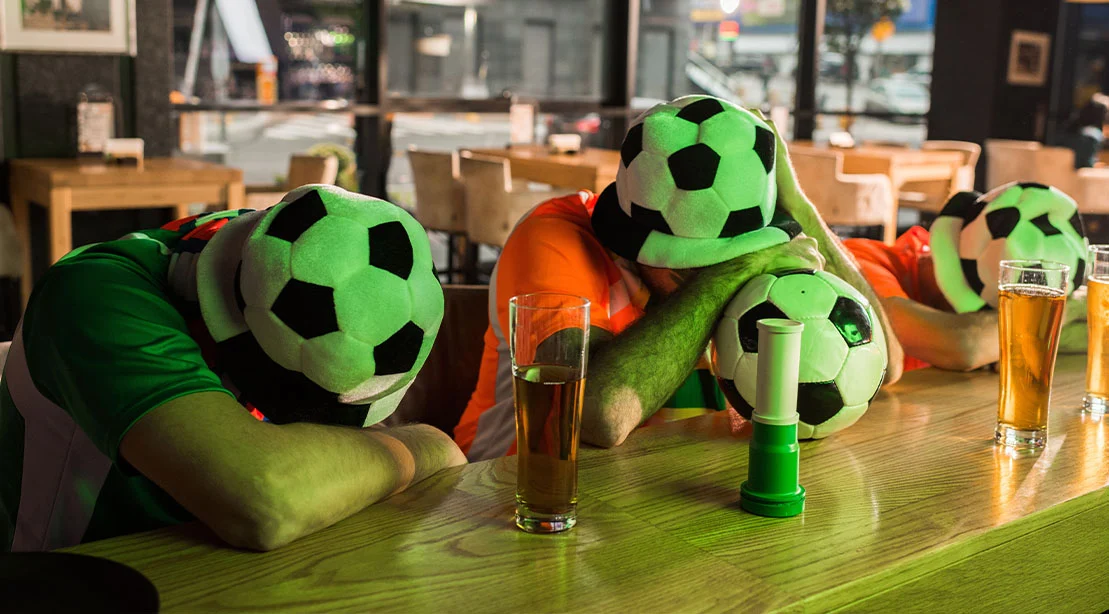
As North America plays host to the largest iteration of the FIFA World Cup in history, a unique phenomenon has swept across the globe: the "World Cup Sleep Deficit." While the host cities in Canada, Mexico, and the United States enjoy the spectacle in prime time, millions of supporters abroad are finding themselves locked in a high-stakes battle against their own circadian rhythms.
For the modern football fanatic, the tournament is no longer just about the 90 minutes on the pitch; it is an exercise in endurance, strategy, and sheer caffeine-fueled willpower. As match kick-offs are dictated by North American time zones, the world’s most dedicated fans are discovering that cheering on their local heroes often comes at the steep cost of their nightly rest.
The Cost of Fandom: Analyzing the Sleep Deficit
To quantify the impact of this global sporting event, the data analysts at LiveScore.com conducted a comprehensive study examining the 48 teams competing in the 2026 group stages. By mapping the tournament schedule against standardized sleep patterns, researchers were able to identify which fanbases faced the most significant disruption to their natural rest.
The study utilized a standardized "sleep opportunity" window—defined as 11:00 p.m. to 7:00 a.m. local time. When a match encroached on this window, the team calculated a deduction of 2 hours and 45 minutes. This specific timeframe accounts for the 15-minute pre-match build-up, the two-hour regulation match, and a 30-minute post-match analysis period. For nations spanning multiple time zones, the researchers averaged the civil time of the primary population centers.
The results offer a sobering look at the sacrifice required to witness the beautiful game in real-time. Leading the charge in lost sleep is Algeria, whose supporters faced a staggering 8.25 hours of potential sleep disruption during the group stages alone. They are followed closely by Tunisia (7.75 hours) and Iraq (7 hours), as fans in North Africa and the Middle East found their nights repeatedly interrupted by matches unfolding across the Atlantic.
The "Sleep Opportunity Lost" Leaderboard
| Rank | Team | Group | Disrupted Sleeps | Total Sleep Opportunity Lost |
|---|---|---|---|---|
| 1 | Algeria | J | 3 | 8.25 hours |
| 2 | Tunisia | F | 2 | 7.75 hours |
| 3 | Iraq | I | 2 | 7.00 hours |
| 4 | Norway | I | 2 | 6.00 hours |
| 5 | Czechia | A | 2 | 5.50 hours |
| 6 | Sweden | F | 2 | 5.50 hours |
| 7 | DR Congo | K | 2 | 5.50 hours |
| 8 | Saudi Arabia | H | 2 | 5.50 hours |
A Chronology of Disruption: Why Geography Matters
The geography of the 2026 World Cup has created a fascinating "Goldilocks" effect for international viewers. The most significant disruption is felt by nations situated in time zones that are roughly 6 to 9 hours ahead of North American Eastern Time.
In the case of Algeria, the scheduling was particularly punishing. All three of their group-stage matches were contested during the late-night hours of North Africa. For the loyal "Fennecs" supporters, this meant a recurring routine: setting an alarm for the middle of the night, brewing strong coffee, and bracing for the emotional highs and lows of the match, only to attempt to return to work or school just hours later.
Conversely, some nations found themselves in a peculiar "geographical sweet spot." Australia, New Zealand, and South Korea, while incredibly far from the host stadiums, often benefited from kick-off times that aligned more favorably with their morning or early afternoon schedules. While they are on the opposite side of the planet, the rotation of the Earth works in their favor, allowing them to catch matches at hours that do not necessarily require the complete sacrifice of their nocturnal cycles.
The Human Element: Beyond the Statistics
While the numbers provided by LiveScore.com represent a standardized metric, they do not fully capture the cultural significance of the sleep loss. In nations like Algeria and Tunisia, football is not merely a hobby; it is a vital pillar of national identity. The decision to stay awake is rarely a calculation of health, but rather a non-negotiable commitment to the team.
"It is an endurance test for the fans as much as it is for the players," one observer noted. For many, the "disrupted sleep" is a badge of honor. However, the physical toll is undeniable. Medical experts have long warned that chronic sleep deprivation can lead to cognitive impairment, irritability, and decreased immune function. Yet, for the duration of the tournament, the "World Cup fever" acts as a potent stimulant, temporarily overriding the biological need for rest.
Knockout Stage: The Stakes Get Higher
As the tournament progresses into the knockout rounds, the intensity—and the schedule—becomes even more unforgiving. For teams like Algeria, who successfully advanced to the round of 32, the journey has become increasingly difficult.
A prime example is the scheduled clash between Algeria and Switzerland. Set to take place on Friday, July 3, in Vancouver, the 8:00 p.m. local time start translates to a brutal 4:00 a.m. kick-off in Algiers. For the average Algerian worker or student, this is not a matter of "staying up late"—it is a matter of waking up in the dead of night, potentially compromising their professional performance the following day.
While teams like Tunisia and Iraq have been eliminated, sparing their fans further nocturnal stress, the remaining nations in the bracket are braced for a challenging conclusion to the tournament. The knockout rounds do not allow for the tactical draws or conservative play often seen in the group stage; every match is a winner-take-all event, ensuring that the tension—and the likelihood of extra time or penalty shootouts—will keep fans glued to their screens well into the early hours.
Implications for Future Tournaments
The 2026 World Cup serves as a masterclass in the complexities of hosting a truly global event in the modern era. FIFA’s decision to expand the tournament to 48 teams has provided unprecedented access for smaller nations, but it has also created a logistical and physiological challenge for the global fanbase.
Broadcasters and football authorities are increasingly aware of these disparities. In the future, scheduling committees may face more pressure to balance the "prime time" needs of the host nation’s domestic market with the global viewing habits of the participating countries. However, with the physical constraints of three distinct time zones across North America, there is no perfect solution.
Furthermore, the rise of digital streaming and on-demand content has shifted the nature of "watching live." While some fans choose to record matches and avoid spoilers, the "fear of missing out" (FOMO) remains a powerful driver. In an age of social media, where a goal is broadcast instantly to the world via notification, the pressure to watch in real-time is stronger than ever.
Conclusion: The Final Whistle
As the 2026 World Cup hurtles toward its conclusion, the story remains one of profound dedication. The data provided by LiveScore.com illustrates that while the players are the ones running on the pitch, the fans are the ones running on fumes.
Whether it is the 8.25 hours lost by the Algerian faithful or the scattered disrupted nights of European supporters, the tournament has proven that global fandom comes with a biological price tag. For now, millions of fans across the globe will continue to set their alarms, endure the exhaustion, and question their team’s tactics in the dim light of 4:00 a.m. Because when the world’s greatest sporting event is on the line, sleep is, for most, a secondary concern. The trophy is the prize, but for the fans, the real victory is simply having the stamina to see it all happen live.