




While daily walking remains a cornerstone of cardiovascular health—offering a simple, accessible way to manage blood pressure and maintain baseline mobility—modern exercise science is increasingly pointing toward a more stationary, yet grueling, movement as a superior metric for long-term health: the wall sit.
Often relegated to the end of high school physical education classes or forgotten in the corner of a gym, the wall sit is undergoing a resurgence. Research suggests that this isometric exercise is nearly two times more effective at lowering blood pressure than traditional aerobic activities. Beyond heart health, the wall sit serves as a vital diagnostic tool for assessing lower-body power, core stability, and postural integrity—essential pillars for anyone looking to maintain their independence and vitality well past the age of 50.
The Science of Isometric Strength
To understand the efficacy of the wall sit, one must look at the physiology of "isometric" training. Unlike isotonic exercises, such as squats or lunges, which involve moving a joint through a range of motion, an isometric exercise requires the muscle to maintain tension without changing its length.
When you hold a wall sit, your quadriceps, glutes, and calves are forced to contract against gravity for a prolonged period. This creates a unique physiological demand. Recent clinical studies have highlighted that this specific type of muscle engagement is particularly potent for vascular health. By maintaining constant tension, the muscles compress the blood vessels, which, upon releasing the pose, promotes a significant surge in blood flow and improved endothelial function. This "flush" of circulation is widely credited for the exercise’s superior ability to regulate systemic blood pressure compared to the repetitive motion of steady-state cardio.
Defining the "Relative Strength" Benchmark
The utility of the wall sit extends far beyond cardiovascular benefits. According to Casey Lee, owner of Purposeful Strength, LLC, a private personal training studio in Vermont, the wall sit is the definitive test of "relative strength."

"Relative strength is the measurement of your physical output in relation to your own body mass and structure," Lee explains. "When we test strength, we have to account for limb length, body height, and total body mass. Two people can be the same age and weight, but their limb ratios will dictate how ‘hard’ a wall sit feels. Being strong for your specific body type is arguably more important than raw, absolute strength, especially as we age."
Because the wall sit is a bodyweight-only movement, it removes the variables of external equipment. You are not lifting a barbell that may or may not fit your biomechanics; you are navigating your own physical geometry. This makes it an equitable benchmark for comparing one’s fitness level against the general population.
Chronology of the Move: From Rehab to Daily Routine
The history of the wall sit in physical culture is rooted in rehabilitative medicine. Originally prescribed by physical therapists to help patients regain strength after knee surgeries or ACL reconstructions, the move was prized for its ability to isolate the quadriceps without placing shearing force on the joint.
Over the decades, the exercise migrated from the clinical setting to the athletic training room. Coaches recognized that the "time-under-tension" provided by the wall sit was unparalleled for developing the muscular endurance required for sports like skiing, cycling, and soccer.
In the current era, the focus has shifted toward longevity. As the global population ages, the "functional threshold"—the ability to perform daily tasks like standing up from a chair, climbing stairs, or carrying groceries—has become a primary health indicator. The wall sit has thus been rebranded as a "longevity test." If you can hold a proper wall sit for a significant duration, you are demonstrating a level of lower-body power that surpasses 90% of your peers, signaling a lower risk of falls and a higher capacity for independent living in later years.
Supporting Data: Why Muscles Matter After 50
The necessity of leg strength cannot be overstated. After age 50, humans begin to lose muscle mass at an accelerated rate—a condition known as sarcopenia. The quadriceps and glutes are the largest muscle groups in the body; when they weaken, the body compensates by putting undue stress on the lower back and the knee joints.
Data suggests that individuals who maintain a high level of lower-body endurance perform better on "functional movement screens." These screens measure the ability to rise from a seated position without using the hands, a movement that is biomechanically identical to the bottom phase of a wall sit. When you hold a wall sit, you are training the exact motor patterns required to navigate the world safely.
Furthermore, because the wall sit requires a rigid spine and engaged abdominals to maintain the position, it functions as a stealthy core workout. You cannot maintain a perfect 90-degree angle at the knees and hips while slumped; your core must fire to keep your upper body upright against the wall.
Official Perspectives: The Mechanics of the "Rock and Hard Spot"
Casey Lee emphasizes that the wall sit is a "bilateral" exercise, meaning both sides of the body must work in perfect synchronicity. This balance is critical for preventing injury.
"When you perform a wall sit, you are effectively pinned between a rock and a hard spot," Lee notes. "The wall provides the resistance, and the floor provides the stability. These two contact points allow you to ‘wedge’ your body into a position of high tension. It is a masterclass in learning how to produce force."
Lee advises against trying to turn the wall sit into a "one-rep max" scenario. Unlike a deadlift or a bench press, where you might load heavy weight to see how much you can move, the wall sit is designed for duration. "No one should be trying to load a wall sit with heavy plates on their lap," he warns. "It isn’t a movement meant for maximal loading. It is a movement meant for muscular endurance and, more importantly, stability."
Real-World Implications: Beyond the Wall
What does a 60-second or 90-second wall sit actually get you in the real world? The benefits are tangible:
- Stair Climbing: Stronger quads make the transition from step to step fluid and effortless, reducing the "burn" often felt on the second or third flight.
- Balance and Proprioception: By strengthening the stabilizers around the knee, the wall sit helps the brain better understand where the body is in space, which is the primary defense against trips and falls.
- Postural Correction: The wall sit forces the shoulders to stay against the wall, acting as a corrective exercise for those who spend hours hunched over computers or smartphones.
- Metabolic Health: Engaging the large muscles of the legs for a sustained period increases glucose uptake, helping to manage blood sugar levels more effectively than light walking alone.
How to Perform the Perfect Wall Sit
To reap these benefits, form is paramount. A sloppy wall sit provides little utility and may cause knee discomfort.
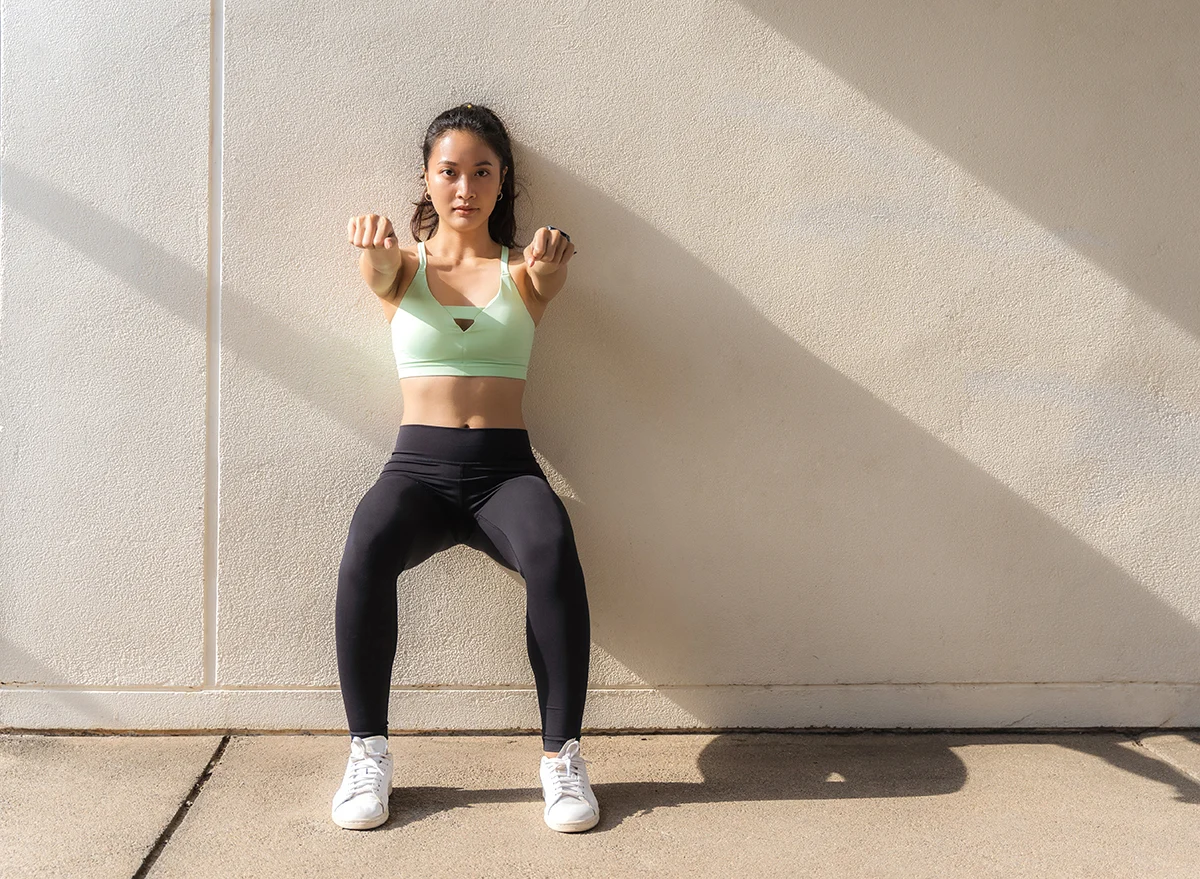
- The Setup: Stand with your back flat against a sturdy wall. Step your feet out about two feet from the wall, shoulder-width apart.
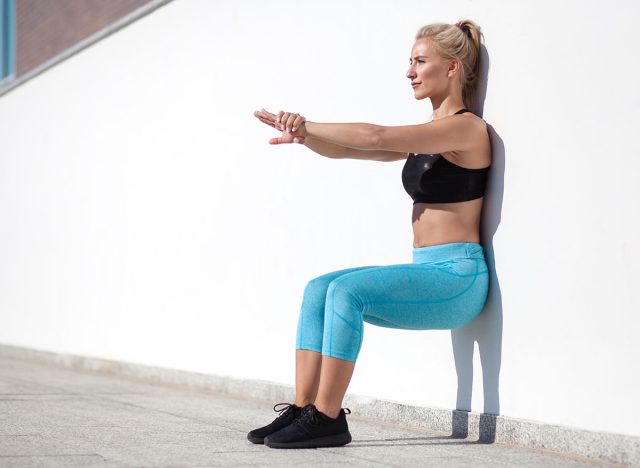
- The Descent: Slowly slide your back down the wall until your knees are bent at a 90-degree angle. Your thighs should be parallel to the floor.
- The Alignment: Ensure your knees are directly over your ankles. Do not let them cave inward or extend past your toes. Your feet should be flat on the ground.
- The Engagement: Press your lower back into the wall. Engage your core as if you are bracing for a punch. Keep your head against the wall and your gaze forward.
- The Hold: Start with 20–30 seconds. As you improve, aim for the "elite" category.
Conclusion: The Quiet Revolution of Isometric Training
The beauty of the wall sit lies in its simplicity. It requires no equipment, no gym membership, and no specialized attire. Yet, it challenges the body in ways that high-tech gym machines cannot. By integrating this move into your daily routine—perhaps while waiting for the coffee to brew or as a break between work tasks—you are doing more than just building leg strength. You are investing in your long-term mobility, protecting your cardiovascular system, and building a foundation of "relative strength" that will serve you for decades to come.
As we age, the complexity of our fitness routine often decreases, but the necessity of foundational strength only increases. In the quiet, shaking muscles of a wall sit, we find the answer to staying active, balanced, and strong.