










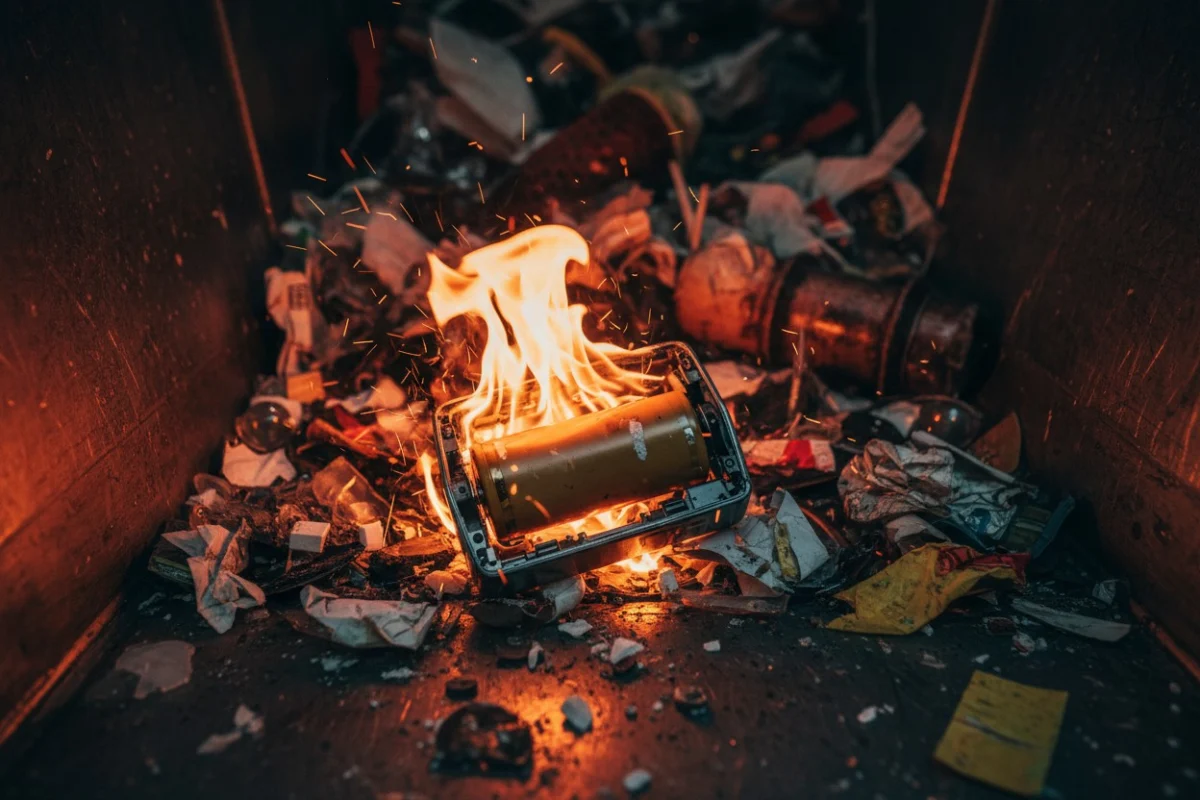
The modern convenience of the disposable electronic cigarette has ushered in an era of public health challenges, but a more immediate, physical danger is now smoldering beneath the surface of the UK’s waste management infrastructure. Waste management firms and fire services across the country are sounding the alarm: lithium-ion batteries—the volatile power cells that drive modern vaping devices—are triggering an unprecedented spike in fires within garbage trucks and material recovery facilities.
Despite a legislative ban on disposable vapes enacted a year ago, the industry remains in a precarious position. What was intended to curb waste and promote public health has instead highlighted a systemic failure in consumer education and hazardous waste disposal. As these devices continue to end up in general refuse bins, they pose a lethal threat to sanitation workers and infrastructure alike, leading to calls for drastic regulatory intervention, including a mandatory deposit return scheme (DRS).
The Anatomy of the Threat: Why Lithium-Ion Batteries Fail
At the heart of the crisis lies the lithium-ion battery. These energy-dense power sources are marvels of modern engineering, capable of powering smartphones, electric vehicles, and handheld vapes. However, they are inherently sensitive to physical trauma.
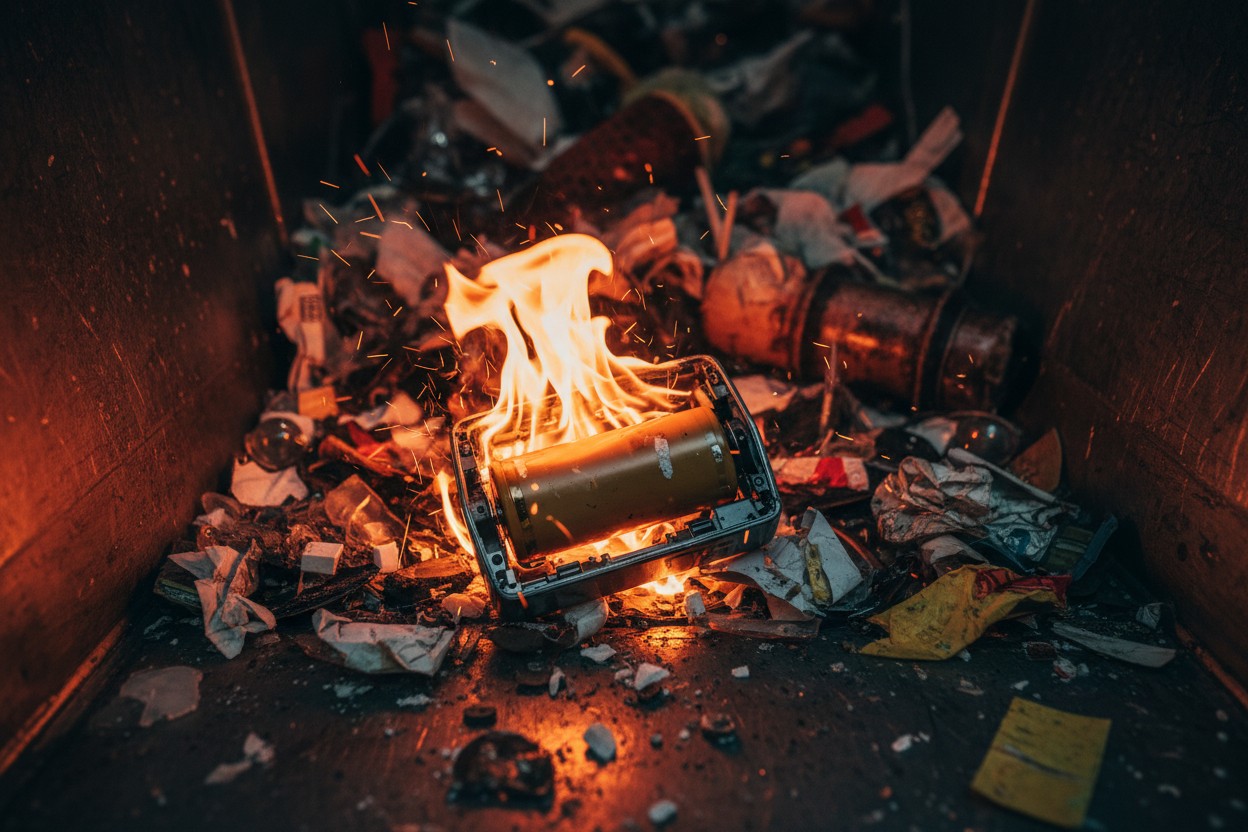
When a vape is discarded in a household bin, it enters a harsh mechanical environment. Waste collection vehicles utilize high-pressure compaction systems to maximize capacity. When a lithium-ion battery is crushed, punctured, or bent within these compactors, it triggers a phenomenon known as "thermal runaway."
In this state, the battery’s internal separator fails, causing a short circuit. The energy stored in the battery is released almost instantaneously as heat, which in turn causes the electrolyte to ignite. Because these batteries contain their own oxygen source, the resulting fires are notoriously difficult to extinguish, often reigniting hours or even days after initial containment. This volatility has led aviation regulators to label lithium-ion batteries the "number one fire risk" in air travel, a warning now being echoed by fire brigades on the ground.
A Chronology of Escalation
The escalation of this crisis has been steady and alarming. While anecdotal reports of "popping" in garbage trucks date back several years, the surge in vape usage—with approximately 3.6 million Britons now using e-cigarettes—has turned a manageable issue into a systemic hazard.
- Pre-2025: Local fire services began noting an uptick in "unexplained" fires in refuse collection vehicles. Waste industry bodies started lobbying for clearer labeling on electronic devices.
- 2025: The UK government implemented a formal ban on the sale of disposable vapes, citing both environmental concerns and the rising fire risk in waste streams.
- March 2026: A landmark incident occurred on Glasgow’s Union Street. A fire, which investigators linked to a vape shop, rapidly spiraled out of control. The blaze destroyed a four-story Victorian building and forced the indefinite closure of Glasgow Central, one of the nation’s busiest transport hubs. The fire required days of intensive labor from emergency crews to suppress.
- Late 2026: Waste management leaders, frustrated by the lack of improvement in disposal habits post-ban, began formalizing the call for a £5 deposit scheme.
Supporting Data: The Scale of the Hazard
The data paint a stark picture. South Yorkshire Fire and Rescue has officially designated lithium-ion batteries as a leading cause of fires in their jurisdiction, a trend mirrored by municipal waste departments across the UK.
The industry body for waste management companies reports that hundreds of fires annually are now directly attributable to improperly discarded vapes. The hazard is not limited to the collection phase; it extends to the sorting facilities where waste is tipped and processed. In these environments, a single battery can ignite a mountain of refuse, leading to facility closures, multi-million pound damages, and significant risks to the lives of staff.
Furthermore, the Civil Aviation Authority (CAA) has noted that the number of lithium-ion devices discovered in hold luggage—where they are strictly prohibited—has nearly doubled in the past twelve months. This data point serves as a proxy for the broader, societal challenge of managing these devices: the public remains largely unaware of, or indifferent to, the extreme volatility of these batteries.
Official Responses and the "Deposit" Debate
The waste management sector, led by firms such as SUEZ Recycling and Recovery UK, is no longer satisfied with passive awareness campaigns. They argue that the current system of "voluntary recycling" is insufficient.
The Case for a Deposit Return Scheme (DRS)
The industry is proposing a mandatory deposit of up to £5 at the point of purchase. The logic is twofold:
- Financial Incentive: A £5 charge is significant enough to compel the average consumer to return the device to a designated collection point to recoup their money.
- Cost-Neutrality: The industry argues that such a scheme could be structured to be cost-neutral, shifting the burden of disposal from the taxpayer-funded municipal waste system to the consumer and manufacturer.
"The current ban on disposable vapes has not gone far enough to mitigate the risk to our staff and our facilities," says a spokesperson for a leading waste management firm. "We need a mechanism that ensures these batteries are captured in a closed-loop system, away from the general refuse stream."
Regulatory Stagnation
Despite the mounting pressure, the Department for Environment, Food and Rural Affairs (Defra) has remained hesitant to commit to a new, industry-wide deposit scheme. While officials acknowledge the fire risk, there is significant debate regarding the administrative complexity of implementing a £5 deposit on small electronics, particularly when compared to existing plastic bottle deposit schemes.
Meanwhile, companies like SUEZ are urging the government to adopt a "hard-line" approach toward enforcement. They suggest that the influx of illegal, unregulated vapes—which often lack safety certifications—is compounding the problem. These devices are frequently constructed with lower-quality batteries that are even more prone to failure, creating a secondary "black market" fire risk that current waste infrastructure is not equipped to handle.
Implications for Public Safety and Infrastructure
The broader implications of this crisis are far-reaching.
The Risk to Essential Services
As demonstrated by the Glasgow Central station incident, the impact of a battery-induced fire is not limited to the waste industry. It can cripple critical national infrastructure. When a fire breaks out in a dense urban center, the resources required to fight it—often involving multiple fire engines, hazardous materials teams, and extended road closures—represent a significant drain on public funds and emergency response capacity.
The Shift Toward Rechargeable Devices
A critical finding in the industry report is that the shift away from disposables toward "rechargeable" vapes does not necessarily eliminate the risk. While rechargeable devices have a longer lifespan, they contain larger, more powerful batteries. When these eventually reach their end-of-life and are tossed into a bin rather than a dedicated battery recycling point, the resulting fire is often more intense and more difficult to suppress than those caused by smaller disposable units.
Public Awareness vs. Structural Change
The current strategy relies heavily on public awareness, with councils placing stickers on bins and posters in public spaces. However, behavioral change is notoriously difficult to achieve. Industry experts suggest that without a "nudge" in the form of a financial incentive, the public will continue to prioritize convenience over safety.
Conclusion: A Call for Action
The smoldering fires in our garbage trucks are a symptom of a larger, systemic failure in how we integrate high-energy technology into our daily lives. We have adopted lithium-ion technology at a pace that has vastly outstripped our ability to safely manage its end-of-life cycle.
The message from the waste industry and fire services is clear: the current trajectory is unsustainable. The potential for a catastrophic fire in a residential area or a critical piece of national infrastructure is not a matter of "if," but "when."
Whether through a £5 deposit return scheme, stricter enforcement against the sale of illegal devices, or a massive investment in specialized hazardous waste collection, the government must move beyond deliberation. The safety of the public and the integrity of the nation’s waste management infrastructure depend on treating the humble vape not as a piece of litter, but as the high-risk hazardous item it truly is. As the industry continues to press for regulatory change, the public is reminded of a simple, lifesaving rule: never place any device containing a battery into a general waste bin.