For decades, the standard paradigm of nutritional health has been governed by a relatively rigid mathematical framework: the calorie. Whether focused on weight management, metabolic stability, or athletic performance, the primary metrics for dietary success have traditionally been the precise calculation of energy intake versus expenditure, alongside the rigorous tracking of macronutrient ratios—carbohydrates, proteins, and fats.
However, a paradigm shift is currently underway in the halls of nutritional research. As our understanding of the human gut microbiome evolves, scientists are moving away from reductionist approaches that view food as mere fuel, shifting instead toward a more holistic model that treats the human body as a complex ecosystem. At the center of this movement is the concept of "dietary diversity"—a principle suggesting that the sheer variety of plant-based foods in one’s diet may be as vital to long-term health as the total caloric load.
Main Facts: The Microbiome as a Metabolic Engine
The human gut microbiome—a vast, intricate community of trillions of bacteria, fungi, and viruses—is no longer viewed as a passive bystander in human health. It is increasingly recognized as a metabolic organ, one that synthesizes vitamins, regulates the immune system, and modulates the body’s response to inflammation.
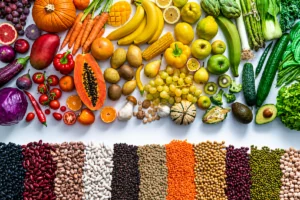
The central finding emerging from recent clinical studies is that microbial diversity is a hallmark of a healthy gut. A "diverse" gut contains a wide array of microbial species, which in turn provides the host with greater metabolic flexibility and resilience. Researchers have identified a strong correlation between the diversity of plants consumed by an individual and the diversity of their gut microbiota. By consuming a broad spectrum of fruits, vegetables, legumes, whole grains, nuts, and seeds, individuals provide their gut bacteria with a diverse "menu" of substrates—specifically different types of prebiotic fibers and phytonutrients—that allow a wider range of beneficial microbes to thrive.
Chronology: The Evolution of Nutritional Paradigms
The history of nutritional science has been marked by a series of distinct eras, each reflecting the technological and scientific limitations of its time.
The Era of Deficiency (Early 20th Century)
In the early 1900s, nutrition science was primarily concerned with the prevention of deficiency diseases. The focus was on identifying essential vitamins and minerals. The goal was simple: consume enough to avoid scurvy, rickets, or pellagra.
The Era of Macronutrients (Mid-20th Century to 1990s)
As food security improved, the focus shifted to the "Big Three" macronutrients. This era gave birth to the food pyramid and the obsessive tracking of fat, protein, and carbohydrate intake. Calorie counting became the gold standard for public health policy, particularly as obesity rates began to climb in Western nations.
The Genomic Revolution (2000s–2010s)
The completion of the Human Genome Project ushered in the age of "omics." Scientists began to realize that the human genome tells only half the story. The microbiome became the new frontier, leading to the NIH-funded Human Microbiome Project in 2007, which sought to map the microbial communities residing in and on the human body.
The Era of Dietary Diversity (2020–Present)
We have now entered an era where "food as information" is the dominant philosophy. Researchers are no longer asking simply "how much energy is in this food?" but rather "what signals is this food sending to my internal microbial population?" The focus has shifted from single-nutrient benchmarks to the assessment of dietary patterns characterized by high botanical variety.
Supporting Data: The Evidence Behind Plant-Based Variety
The evidence supporting the link between dietary diversity and health is increasingly robust. One of the most significant pieces of data comes from the American Gut Project, one of the largest crowd-sourced science projects in history.
The 30-Plant Threshold
Analyzing stool samples from over 11,000 participants, researchers at the American Gut Project discovered a striking trend: individuals who reported eating more than 30 different types of plants per week had gut microbiomes that were significantly more diverse than those who ate 10 or fewer.
The health implications of this difference are profound. Participants in the "30-plus" group showed:
- Reduced antibiotic resistance: Their gut bacteria were less likely to carry genes associated with antibiotic resistance.
- Increased Short-Chain Fatty Acid (SCFA) production: These beneficial compounds, such as butyrate, are produced when bacteria ferment fiber. They are essential for gut lining integrity and immune regulation.
- Improved inflammatory markers: Higher microbial diversity was inversely correlated with systemic inflammation markers like C-reactive protein (CRP).
Phytonutrient Synergy
The data also points to the concept of the "food matrix." When we isolate a single vitamin, such as Vitamin C, we rarely see the same health benefits as when we consume the whole fruit. This is because fruits and vegetables contain hundreds of secondary plant compounds—polyphenols, carotenoids, and flavonoids—that work in synergy. These compounds are largely indigestible by the human small intestine, meaning they travel to the colon where they act as "fuel" for the microbiome, promoting the growth of beneficial strains like Bifidobacterium and Lactobacillus.
Official Responses and Clinical Perspectives
Public health bodies and nutrition associations are beginning to incorporate these findings into their guidelines, though the transition is slow due to the complexity of the data.
The Position of the Academy of Nutrition and Dietetics
The Academy has increasingly emphasized "dietary patterns" rather than single-nutrient recommendations. In recent statements, leading nutritionists have highlighted that the "whole is greater than the sum of its parts." They caution, however, that diversity should not be interpreted as an excuse for dietary extremes, but rather as an invitation to expand the variety of staple foods in one’s diet.
Clinical Implementation
In clinical settings, "plant-forward" dietary prescriptions are replacing restrictive diets. Dietitians are now encouraging patients to use a "diversity checklist." Rather than counting calories, patients are encouraged to count the number of distinct plant species they consume in a week. This shift is being used to treat conditions ranging from irritable bowel syndrome (IBS) to metabolic syndrome, with early pilot programs showing high levels of patient compliance compared to traditional caloric-restriction models.
Implications for Public Health and Personal Wellness
The shift toward emphasizing dietary diversity has far-reaching implications for how we approach food policy, agriculture, and personal health.
Redefining Dietary Quality
For the average consumer, the shift toward diversity is liberating. It moves the focus away from the shame often associated with calorie counting and toward the curiosity of exploring new foods. The implication is clear: health is not about what you remove from your plate, but what you add to it. Adding a handful of seeds to a salad, choosing a mixed-grain bread instead of white, or incorporating legumes into a stew are small, incremental changes that have a cumulative effect on microbial health.
Agricultural and Economic Impacts
If dietary diversity becomes a public health priority, the agricultural sector may need to shift. Currently, the global food system relies heavily on a handful of crops—primarily corn, soy, and wheat. A transition toward higher plant diversity would necessitate a more varied agricultural output, potentially supporting local farming economies and increasing biodiversity in our food systems. This "farm-to-gut" connection suggests that the health of the soil and the health of the gut are intrinsically linked.
The Future of Personalized Nutrition
As we look to the future, the integration of microbiome testing and dietary diversity tracking will likely become a cornerstone of personalized medicine. We are approaching a time when an individual’s microbiome profile could inform specific dietary recommendations—identifying which types of fibers and plant compounds their unique ecosystem requires to thrive.
Conclusion
The evolution of nutrition science from the rigid, reductive counting of calories to the nuanced appreciation of dietary diversity represents one of the most important developments in modern health science. While macronutrients and energy balance remain fundamental to the laws of thermodynamics, they tell only a fraction of the story regarding human well-being.
By embracing a diet rich in botanical diversity, we are not just feeding our bodies; we are tending to the complex, microscopic communities that underpin our immune system, our mental health, and our long-term vitality. The modern kitchen should no longer be seen as a laboratory for caloric measurement, but as a garden of microbial potential. As research continues to unfold, the message to the public is becoming increasingly clear: for the sake of your gut, variety is not just the spice of life—it is the bedrock of health.