









By [Your Name/Journalistic Staff]
Living with chronic pain is often described by patients as a life defined by invisible parameters. There are physical limitations, emotional hurdles, and rigid routines designed solely to navigate the basic requirements of a 24-hour cycle. For Michele Rice, a long-time advocate within the chronic pain community, these boundaries had become a way of life—until a spontaneous decision to lead a daily support group shattered the very lines she believed were permanent.
The Anatomy of a Life With Pain
For millions of Americans, chronic pain is not merely a physical sensation; it is a structural architect of their daily existence. Medical experts note that chronic pain conditions—ranging from fibromyalgia and complex regional pain syndrome to autoimmune-related arthritis—often force patients into a state of hyper-vigilance.
For Rice, mornings were the primary "boundary." Like many living with systemic pain, her mornings were characterized by severe stiffness, cognitive fog, and the necessity of a slow-moving, protective ritual. "I’m not someone who jumps out of bed ready to start the day," Rice reflects. "My body is stiff, my pain is loud, and my brain feels slow to wake up. I also tend to resist change. I like knowing what to expect."
This preference for predictability is a common coping mechanism. Psychologists specializing in chronic illness often emphasize the role of "pacing"—the practice of carefully managing energy levels to prevent pain flares. However, this necessity for routine can inadvertently lead to social isolation, as the effort required to interact with the world often exceeds the patient’s available "energy budget."
A Catalyst for Change: The U.S. Pain Foundation Initiative
The turning point for Rice occurred when the U.S. Pain Foundation, a national non-profit dedicated to those living with chronic illness, announced a critical need for a new facilitator for their daily peer support group. These sessions serve as a digital lifeline for thousands of individuals, offering a space where the isolation of chronic illness is met with communal understanding.
When Rice learned that the daily group was at risk of losing its anchor, her response was visceral rather than analytical. "I didn’t stop to weigh the pros and cons," she recalls. "I didn’t think about how hard it might be. All I thought about was the people in that group. I didn’t want them to face each morning without the place they relied on for connection."
This decision marked a significant departure from her established routine. By committing to lead a morning session, she was effectively forcing herself to bypass her most difficult hours of physical recovery.
The Chronology of Adaptation
The transition from participant to facilitator was not seamless. The first weeks required a profound recalibration of her nervous system.
- Phase 1: The Resistance (Weeks 1-2): Rice faced the immediate physical reality of forcing her body into a state of alertness earlier than usual. This included the sensory overload of appearing on camera during high-pain intervals and the cognitive demand of guiding discussions while managing her own symptoms.
- Phase 2: The Discomfort (Weeks 3-5): The early phase was marked by fatigue. Rice notes that her natural instinct was to retreat and conserve energy, yet the responsibility to the group acted as a tether.
- Phase 3: The Synergy (Week 6 and beyond): An unexpected phenomenon occurred. The energy she expended to support others began to yield a return on investment. The act of communal healing, she discovered, had a paradoxical effect: the more she poured into the group, the more she felt empowered to handle her own physical state.
Supporting Data: The Efficacy of Peer-Led Support
The success of Rice’s initiative aligns with growing evidence in pain management literature regarding the efficacy of "Peer-Led Support Models."
According to data from the Journal of Pain Research, individuals who engage in structured, peer-led support groups report lower levels of perceived social isolation and a higher sense of self-efficacy—a psychological concept referring to an individual’s belief in their capacity to execute behaviors necessary to produce specific performance attainments.
Furthermore, a study published by the American Chronic Pain Association (ACPA) highlights that:
- 72% of participants in virtual peer-led support groups report a reduction in the psychological distress associated with chronic pain.
- 60% of participants report improved adherence to their medical treatment plans due to accountability provided by the group.
- 85% of members identify "validation of symptoms" as the primary benefit, which effectively lowers cortisol levels often spiked by the stress of feeling "unbelieved" by medical professionals or society.
Official Perspectives: The Role of Community in Pain Management
Health professionals have long championed the "Biopsychosocial Model" of pain, which posits that pain is not just a biological event but one inextricably linked to psychological and social factors.
"When we look at the trajectory of chronic pain, social connection is a primary variable in prognosis," says Dr. Elena Vance, a pain management specialist not affiliated with the study. "Programs like the one led by Michele Rice act as a form of ‘social scaffolding.’ They provide the structure necessary for patients to move beyond their isolation. By fostering community, these groups help rewrite the brain’s relationship with pain, shifting the focus from the internal sensation to the external connection."
The U.S. Pain Foundation’s endorsement of these groups highlights the critical shift in modern healthcare: acknowledging that clinical treatment must be supplemented by human-centric, empathetic peer support.
Implications: Redefining the "Limits" of Chronic Illness
The story of Michele Rice serves as a powerful case study for the broader chronic illness community. It challenges the conventional narrative that life with a chronic condition is a process of narrowing options.
Implications for Patients
For patients who feel that their lives have been "drawn into a small circle," Rice’s experience offers a paradigm shift: growth does not require the removal of the illness. Instead, growth occurs by expanding the container of one’s life despite the presence of pain. This involves taking "calculated risks" in social and professional engagement, even when the body screams for stillness.
Implications for Healthcare Policy
The success of this peer-led model underscores the need for greater integration of digital support networks into traditional care. If peer groups can significantly reduce the burden of isolation, they should be considered a standard component of a patient’s "care toolkit," perhaps even prescribed alongside physical therapy or medication.
Conclusion: Growth Beyond the Lines
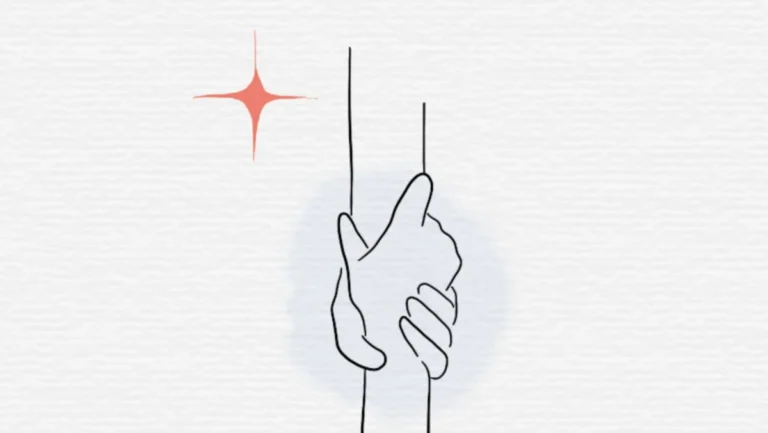
As Rice continues to lead the daily sessions, the nature of her personal boundaries has fundamentally changed. She has learned that the "lines" she once feared crossing were not walls, but rather habits that had hardened over time.
"Sometimes growth doesn’t look like climbing a mountain or running a marathon," Rice concludes. "Sometimes growth looks like logging on to a morning support group, turning on your camera, and saying, ‘Good morning, everyone.’"
Her journey serves as a poignant reminder that while chronic pain may change the shape of our lives, it does not erase our capacity for contribution. By logging on each morning, she isn’t just facilitating a meeting; she is actively pushing the boundaries of what is possible, proving that connection is the most potent medicine available to those navigating the silent, often invisible, world of chronic pain.