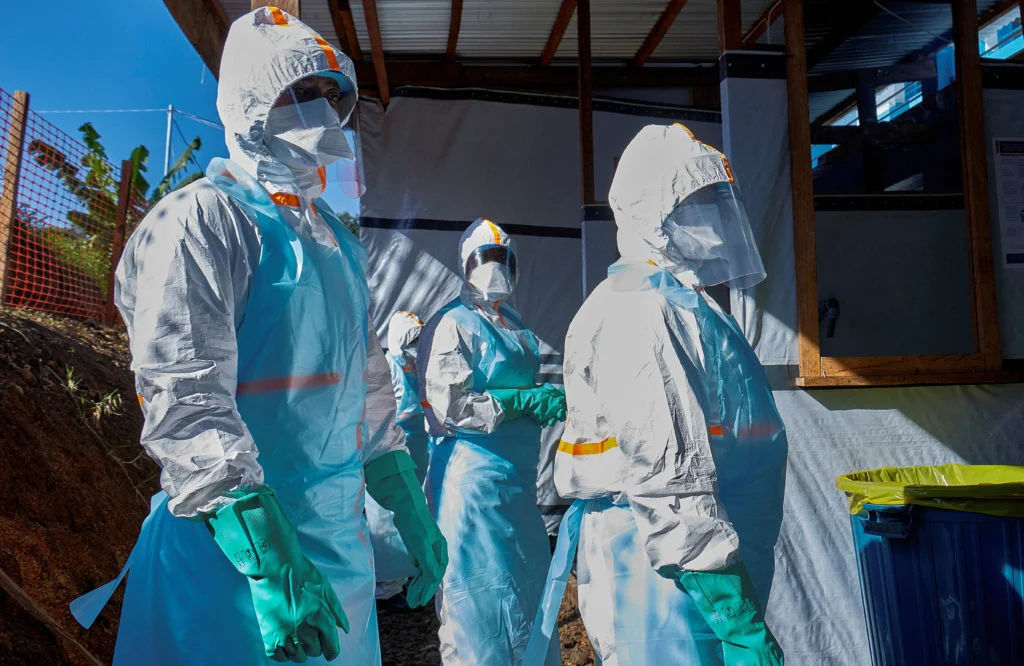
BUNIA, Democratic Republic of the Congo — At the epicenter of one of the most challenging health crises in recent memory, the landscape in the Ituri province is defined by a heavy, palpable tension. Inside the Evangelical Medical Center in Bunia, healthcare workers move with rhythmic precision, draped in layers of heavy personal protective equipment (PPE). They are locked in a daily, grueling battle against a silent, lethal adversary: the Bundibugyo strain of the Ebola virus.
As of early July, the narrative surrounding this outbreak has shifted from mere containment to a bold, scientific offensive. Researchers have officially launched a highly anticipated clinical trial to evaluate two experimental treatments, offering a glimmer of hope to a population weary from months of sickness, fear, and loss.
The Gravity of the Outbreak: Main Facts and Current Reality
The current outbreak, driven by the Bundibugyo virus, presents a unique challenge to the international medical community. Unlike more frequently studied strains, Bundibugyo lacks established, gold-standard vaccines or targeted therapeutic interventions. The human toll has been severe: World Health Organization (WHO) Director-General Tedros Adhanom Ghebreyesus confirmed that more than 1,400 individuals have been diagnosed, with 438 deaths recorded—a staggering mortality rate that underscores the urgency of the clinical intervention.
The trial, conducted under the auspices of the WHO, represents a collaborative masterwork of international cooperation. It brings together the Democratic Republic of the Congo’s (DRC) National Institute of Biomedical Research (INRB), the University of Oxford, the Institute of Tropical Medicine in Antwerp, and a coalition of global health organizations. The study’s primary objective is to evaluate the efficacy of the antiviral drug remdesivir and the experimental antibody treatment MBP134, both individually and in combination, to determine if they can significantly improve survival rates for those infected.
Chronology of the Response
The road to this trial has been marked by a series of desperate measures and incremental progress:
- Initial Outbreak Detection: Public health authorities identified a surge in unexplained hemorrhagic fever cases in eastern Congo, eventually confirming the presence of the rare Bundibugyo strain.
- The Struggle for Access: Over the subsequent months, the response was consistently hampered by regional insecurity, which frequently restricted the movement of aid workers and medical supplies.
- Expansion of Care: Despite the conflict, the INRB and its partners scaled up operations, establishing specialized treatment centers designed to isolate the virus while providing palliative care.
- July Launch: In early July, the first patient was officially enrolled in the clinical trial. This marked a pivotal shift from passive observation to active, experimental treatment protocols.
- The Monitoring Period: According to Dr. Vasee Moorthy, a WHO research adviser, the study will track the survival outcomes of participants for 28 days following the initiation of treatment, providing a standardized window for assessing the drugs’ effectiveness.
Supporting Data: The Scope of the Crisis
The data emanating from the DRC highlights a fractured healthcare landscape. While treatment centers are designed to be the primary point of intervention, a significant portion of the population remains beyond their reach. Pierre Akilimali, an incident manager at Congo’s National Institute of Public Health, revealed a chilling statistic: approximately 75% of all Ebola-related deaths in this current cycle have occurred outside of professional medical facilities.
This statistic reflects a broader systemic failure caused by a combination of factors: fear of the treatment centers, lack of transportation, and the physical danger of traveling through conflict-ridden territories. For the survivors, the recovery is often shadowed by the trauma of what they witnessed. Gladys Munguro, a survivor discharged just weeks ago, recalls the harrowing experience of watching fellow patients succumb to the virus while she fought for her own life. Her willingness to volunteer for future phases of the trial, targeting high-risk individuals, serves as a testament to the resilience of those directly affected.
Official Responses and Strategic Outlook
The response to the trial has been a mixture of professional optimism and pragmatic caution. Professor Placide Mbala, the coordinator of laboratory activities for the outbreak, estimates that the trial could span anywhere from three to six months, with the timeline remaining fluid based on the epidemiological trajectory of the virus.
The trial is structured in two distinct phases. The current phase, as outlined by Professor Yap Boum of the Africa Centres for Disease Control and Prevention (Africa CDC), focuses exclusively on patients already confirmed to have the virus and receiving care in specialized centers. The second phase, which is eagerly anticipated by community advocates, aims to widen the scope to include healthcare workers, individuals who have had close contact with infected persons, and other high-risk groups.
Despite the scientific focus, the humanitarian response remains hampered by the realities of life in the Ituri province. The violence against healthcare workers—who are often viewed with suspicion—has created a "no-go" environment for many aid groups. This creates a vicious cycle: the virus spreads because of community fear, and the fear persists because of the lack of consistent, trusted medical outreach.
Implications: The Challenge of Mistrust
While the medical community views these trials as a "light at the end of the tunnel," as described by local resident Audrey Tengetenge, there remains a persistent undercurrent of societal skepticism. The deep-seated mistrust of international entities and local authorities is not easily erased.
Nelson Dhebi, a local shopkeeper, voiced a sentiment common among the more skeptical segments of the population. He noted that while he recognizes the necessity of scientific progress, he remains wary of the potential risks associated with experimental drugs. His suggestion that leaders and elected officials should be the first to participate in such trials highlights a growing desire for transparency and equity in the way medical research is administered in developing nations.
This mistrust is compounded by the structural challenges of the region. The lack of infrastructure means that for many, a treatment center is a place of finality rather than a place of healing. Addressing this perception is just as vital as the medical research itself. Without community engagement and the active cooperation of the local population, even the most effective antiviral drugs will struggle to reach those who need them most.
Looking Toward the Future
The ongoing work in Bunia is a microcosm of the larger, global struggle against infectious diseases in volatile regions. The collaboration between international academic institutions and local Congolese researchers represents a new model of partnership—one that emphasizes capacity building and indigenous leadership in the face of crisis.
As the researchers continue to collect data, the international community remains attentive. The Gates Foundation, which provides financial support for the Associated Press’s global health coverage, has been a key advocate for sustained investment in such regions. However, the ultimate success of these efforts will be measured not just in laboratory findings, but in the restoration of public trust and the stabilization of the region.
For now, the medical teams in Bunia continue their work, shielded by plastic and intent on changing the trajectory of the outbreak. Every patient enrolled in the trial represents a data point, but for the people of Ituri, every patient represents a neighbor, a family member, or a friend. The outcome of these trials may well provide the roadmap for controlling future outbreaks of the Bundibugyo virus, but for those on the ground today, the urgency is far more personal: they are waiting for a miracle, and they are hoping that science finally has the answer.