








The Cancer Research Institute (CRI) has officially unveiled the recipients of its prestigious 2026 Scientific Achievement Awards, honoring two luminaries whose work has redefined the boundaries of tumor immunology. Dr. Eric Vivier and Dr. Joseph Sun have been named the 2026 laureates, recognized for their transformative contributions to our understanding of how the human immune system can be mobilized to eradicate cancer.
These accolades serve as the gold standard in the field, spotlighting the scientists whose foundational discoveries transition from the laboratory bench to the bedside, ultimately saving lives. The formal presentation of these honors will take place on Tuesday, October 20, 2026, during the CRI’s Annual Awards Gala, hosted at the iconic Guastavinos in New York City.
The 2026 Laureates: A Legacy of Excellence
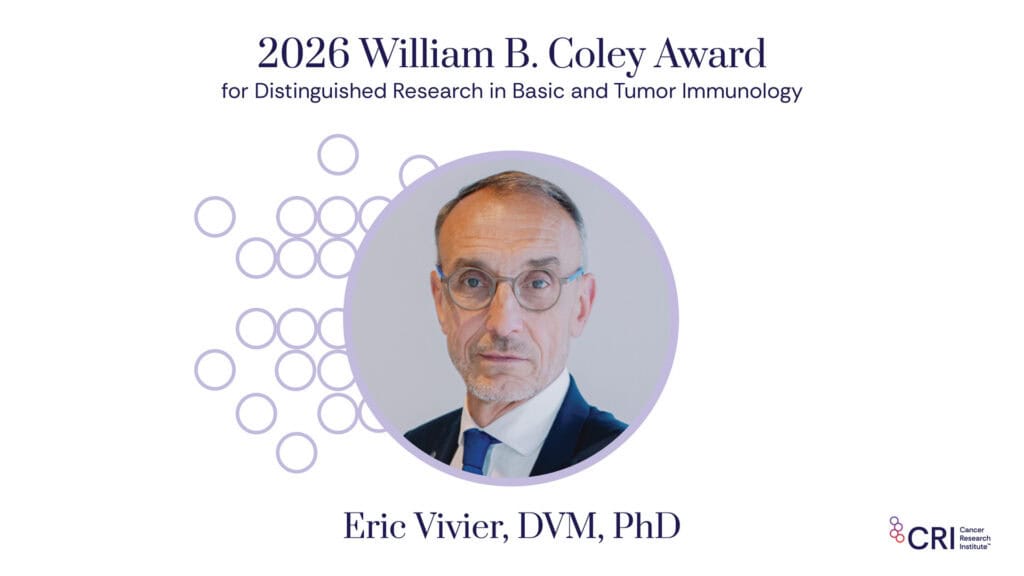
The CRI has bestowed the William B. Coley Award for Distinguished Research in Basic and Tumor Immunology upon Dr. Eric Vivier, DVM, PhD, a titan in the field of innate immunity. Simultaneously, the Frederick W. Alt Award for New Discoveries in Immunology has been awarded to Dr. Joseph Sun, PhD, a visionary whose work on immunological memory has challenged long-held scientific paradigms.
Dr. Eric Vivier: Decoding the Innate Immune Arsenal
Dr. Vivier’s recognition is the culmination of decades of pioneering research into natural killer (NK) cells. As a Professor of Immunology at Marseille Medical School and the visionary head of the Innate Lymphoid Cells laboratory at the Centre d’Immunologie de Marseille-Luminy, Dr. Vivier has fundamentally altered the scientific community’s perspective on innate immunity.
His research provided the roadmap for understanding how the immune system identifies and eliminates malignant cells. By characterizing the checkpoints and receptors that govern NK cell behavior, Dr. Vivier shifted the narrative of cancer immunotherapy from a T-cell-centric model to a more holistic approach that leverages the rapid, powerful response of innate lymphoid cells. His influence extends beyond academia; as a co-founder of Innate Pharma, Dr. Vivier has successfully translated his fundamental discoveries into clinical-stage biotechnology, bridging the gap between molecular biology and patient care.
Dr. Joseph Sun: Redefining Immunological Memory
Dr. Joseph Sun, a Member of the Immunology Program at Memorial Sloan Kettering Cancer Center and Professor and Director of the Immunology and Microbial Pathogenesis Program at Weill Cornell Medical College, is being honored for his transformative work on the "memory" of the immune system.
Dr. Sun’s career trajectory is a testament to the power of targeted research funding. As a CRI Irvington Postdoctoral Fellow from 2007 to 2009 under the mentorship of Dr. Lewis Lanier at UCSF, Dr. Sun challenged the classical dichotomy between innate and adaptive immunity. His groundbreaking research demonstrated that NK cells—historically considered part of the "innate" system—can indeed exhibit adaptive features, such as clonal expansion and the formation of long-lived memory after exposure to pathogens. This revelation has profound implications for cancer research, suggesting that the immune system’s "memory" can be trained and exploited to prevent tumor recurrence.
Chronology of Scientific Impact
The influence of these two scientists spans nearly two decades of intensive research. To understand the magnitude of their contributions, one must look at the progression of their work:
- 2007–2009: Dr. Joseph Sun begins his tenure as a CRI Irvington Postdoctoral Fellow. During this period, he conducts the critical experiments under Dr. Lewis Lanier that prove NK cells possess adaptive immune properties.
- 2015: Dr. Eric Vivier is recognized as a "Highly Cited Researcher," a title he has maintained consistently, reflecting the foundational nature of his work on NK cells and innate immunity.
- Ongoing (2015–2026): Dr. Vivier’s leadership at the Centre d’Immunologie de Marseille-Luminy continues to produce high-impact clinical data, while his contributions to Innate Pharma facilitate the development of novel monoclonal antibodies for cancer treatment.
- 2023–2026: Dr. Sun’s lab at Memorial Sloan Kettering and Weill Cornell further delineates the molecular pathways of T-cell and NK-cell exhaustion, providing new targets for next-generation immunotherapies.
- October 20, 2026: The formal award ceremony at Guastavinos in New York City.
- November 8, 2026: Dr. Eric Vivier is scheduled to deliver the prestigious Coley Lecture at the Society for Immunotherapy of Cancer (SITC) Annual Meeting in Phoenix, Arizona.
Supporting Data and Scientific Significance
The significance of these awards is underscored by the shift in the global cancer landscape. Modern immunotherapy has moved past the "one-size-fits-all" approach, and the work of Vivier and Sun provides the mechanistic depth required for precision medicine.
Dr. Vivier’s work has proven that innate immunity is a cornerstone of modern cancer immunotherapy. His research has led to the development of therapies that target specific receptors on NK cells, effectively "unleashing" them against tumors that might otherwise evade T-cell detection. With over 20 years of data supporting his models, the clinical outcomes linked to his research are robust, showing sustained remission rates in clinical trials.
Dr. Sun’s research has similarly provided the "molecular blueprint" for immune memory. By identifying the transcription factors and epigenetic markers that allow immune cells to "remember" viral and tumor antigens, he has paved the way for CAR-T and NK-cell therapies that are more durable and less prone to exhaustion. His work is increasingly cited in the development of combination therapies, where the goal is to trigger both an immediate and a long-term immune memory response.
Official Responses and Reflections
The professional community has lauded the choices, emphasizing the roles these researchers play as both innovators and mentors.
Dr. Lewis Lanier, a distinguished Member of the CRI’s Scientific Advisory Council and the mentor who guided Dr. Sun during his formative years, expressed deep satisfaction with the announcement. "Dr. Sun has been an absolute leader in his field," Dr. Lanier remarked. "I am so happy that we are going to acknowledge him as being one of the superstars that launched their careers with his CRI Irvington Fellowship. His evolution from a promising postdoctoral fellow to a transformative director of research is exactly what the Cancer Research Institute strives to cultivate."
The CRI itself, in its official statement, noted that both recipients embody the spirit of "investing in the best," asserting that the organization’s mission to fund high-risk, high-reward research is validated by the long-term success of individuals like Vivier and Sun.
The Broader Implications for Cancer Immunotherapy
The implications of the 2026 awards extend far beyond the gala dinner in New York. The synergy between Dr. Vivier’s focus on innate immune pathways and Dr. Sun’s focus on adaptive-like memory in innate cells is where the future of oncology lies.
1. Toward Universal Immunotherapy
By decoding how NK cells can be "taught" to remember, researchers are moving closer to universal, off-the-shelf immunotherapy products that do not require patient-specific engineering. This would drastically reduce costs and increase accessibility to life-saving cancer treatments.
2. Overcoming Tumor Resistance
Many cancers develop "blind spots" to avoid T-cell destruction. Dr. Vivier’s work on innate lymphoid cells provides a secondary, independent line of defense. By targeting the pathways he has uncovered, clinicians can attack tumors that have evolved to hide from the primary immune response.
3. A New Paradigm for Clinical Trials
The methodologies established by Dr. Sun regarding clonal expansion and long-lived memory are changing how clinical trial success is measured. Instead of focusing solely on tumor shrinkage, researchers are now looking for markers of "immunological memory" in the blood, predicting which patients are most likely to experience long-term, relapse-free survival.
Conclusion
As the Cancer Research Institute prepares to honor Dr. Eric Vivier and Dr. Joseph Sun, the scientific community is reminded of the slow, methodical, yet exhilarating process of medical discovery. These two men have not only pushed the boundaries of what we know about the immune system; they have provided the tools and the hope necessary to turn once-terminal diagnoses into manageable—or curable—conditions.
The 2026 Awards Gala will serve as a celebration of this progress. As the global oncology community turns its eyes toward New York in October, and later toward Phoenix for the Coley Lecture in November, the focus remains clear: the immune system is the most powerful weapon we possess against cancer. Thanks to the work of Dr. Vivier and Dr. Sun, that weapon is sharper, more precise, and more resilient than ever before.