









"I just bought a new BPA-free Tupperware set."
This seemingly innocuous statement from my friend, Anna, hit me with the force of a professional reality check. Anna is a high-powered legal professional—a woman who spends her days dissecting complex contracts, challenging witnesses, and cutting through the "BS" that plagues the corporate world. She is, by every definition, a critical thinker. Yet, here she was, falling into a psychological trap that had completely bypassed her inner hawk-like skeptic.
Anna has been trying to lose 15 pounds for months, but she feels perpetually stuck. When I asked her about her progress, she didn’t mention her gym attendance or her meal planning; she pointed to her kitchen cupboards. "I’ve been reading about how microplastics in food containers can disrupt hormones and lead to weight gain," she explained.
I paused. This conversation took place mere days after she confessed to me that she had been struggling to maintain consistency at the gym, was relying on takeout far too often, and had been sacrificing sleep for late-night, adrenaline-inducing "doom scrolling." When I gently suggested that she focus on consistent workouts or prepping homemade meals, her response was swift and dismissive: "I’ve tried that a thousand times. If it were that simple, it would have worked already."
The Anatomy of Procrastination: Why We Seek "Magic Bullets"
We have all been there. We ignore or delay the hard-but-worthwhile habit changes in favor of some ultra-specific, niche "magic bullet" that promises to change everything. We spend hours researching the most "optimal" workout program, comparing training splits or supplement brands, instead of devoting those hours to performing the basic, unsexy workout we already know how to do.
We wait for the perfect moment—a time when we are less busy, more inspired, or finally "motivated." But why do we do this? Psychologically, buying new gear or hunting for the latest supplement feels like making progress. Consuming YouTube tutorials or reading articles about health optimization feels like we are doing something productive. Waiting for the "right time" feels like a responsible, strategic decision.
Except, in reality, nothing changes until we take real, consistent action. Humans are remarkably clever at inventing sophisticated ways to avoid the basic, difficult, and unglamorous actions required to drive genuine change.
The Foundation: What We Know We Should Do
The health and fitness industry is filled with noise, but the signal remains largely the same. The foundational pillars of health are well-documented, yet consistently difficult to execute:
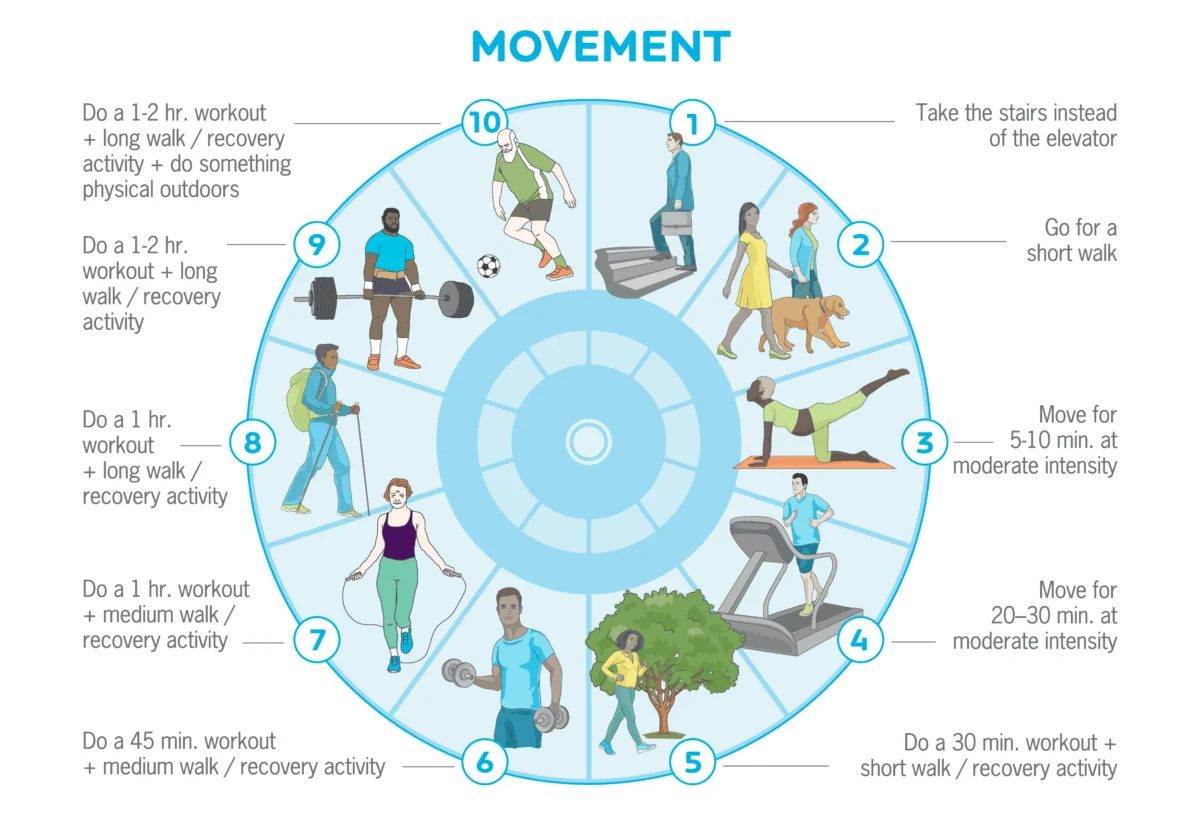
- Consistent Movement: Engaging in 30 minutes of moderate-to-vigorous activity daily, combining aerobic exercise with resistance training.
- Whole-Food Nutrition: Aiming for at least 80 percent of your diet to come from minimally processed, whole foods.
- Protein Sufficiency: Consuming enough protein to support muscle mass and satiety—generally 1.2 to 2.2 grams per kilogram of body weight.
- Sleep Hygiene: Prioritizing seven to eight hours of quality sleep by establishing a wind-down routine and consistent wake-up times.
- Substance Moderation: Reducing or eliminating the excessive consumption of alcohol, tobacco, and other processed chemicals.
These behaviors are not industry secrets; they are the bedrock of human physiology. Yet, the data is sobering. Research suggests that only six percent of the American population consistently performs these five basic behaviors. If you are doing the math, that means 94 percent of the population is missing the mark on at least one, if not all, of these foundational habits.
The Psychology of Resistance: Understanding Ambivalence
If these habits are so beneficial, why do we struggle so profoundly to maintain them? It begins with a psychological state known as ambivalence.
Ambivalence is that push-and-pull feeling you experience when contemplating change. It is the internal dialogue of "I want this, but I also want that." You want the benefits of a healthier body, but you also want the immediate comfort of your favorite treats without constraint. You want to stop using your phone as a mindless distraction, but you don’t want to face the anxiety that bubbles up when you are left alone with your own thoughts.
These contradictory emotions are often viewed as a sign of weakness, but they are actually a fundamental part of the human change process. The higher the stakes of the change, the more intense the resistance. In many cases, this resistance isn’t a red light; it’s a signal that the change matters to you.
Barrier #1: The Ambition Overload
One of the most common traps is "Ambition Overload." We decide that starting Monday, we will exercise for an hour every day, eat only "clean" meals, and sleep eight hours a night. We create a plan that requires us to change everything at once, despite currently having no exercise habit, a distaste for vegetables, and a habit of staying up past midnight.

We are prone to cognitive biases that cause us to overestimate our future motivation and energy levels. We assume our "future self" will be more disciplined and have more time than our "present self." When we fail to live up to these unrealistic, complex plans, we blame our willpower or our character, further cementing the belief that we are "bad at consistency."
Barrier #2: The Search for the "Hardcore" Secret
Many people fall into the trap of believing that if simple, moderate habits were effective, everyone would be healthy. Because "everyone knows" they should eat vegetables and sleep well, they assume the solution must be something more complex, "cutting-edge," or even "secret."
This is where the allure of the niche supplement or the "bio-hacker" protocol comes in. There is a psychological appeal to these tools—they offer the promise of a "new you" without the boredom of basic consistency. However, most of these hardcore strategies are unsustainable, inaccessible, or ineffective. They serve as a distraction, draining our time and money while we continue to ignore the foundational work that actually moves the needle.
Barrier #3: The Illusion of Perfection
The fitness industry often peddles the lie that "perfection" is required to see results. This leads many to believe they must eat only organic salads, run marathons, and meditate at dawn.
The truth is, perfection is not only unnecessary—it is an illusion. Even the healthiest people deal with illness, stress, life changes, and bad days. Accepting this reality is vital. To achieve your "best self," you must accommodate your "worst self"—the version of you that wants to watch television and eat junk food. Life is messy, and a plan that doesn’t account for that mess is a plan destined to fail.
Four Steps to Sustainable Change
To break free from these cycles, you must shift your approach toward actionable, realistic strategies.
1. Explore the "Why" Before the "How"
Before you dive into a new routine, conduct a "5 Whys" exercise. Ask yourself why you want to change, and keep digging until you find the core motivation. Understanding the consequences of inaction is just as important as visualizing the benefits of success.
2. Prioritize Effective Actions
You can do anything, but you cannot do everything at once. Focus on one domain—nutrition, movement, or sleep—and select one specific, small practice. Use a "Skills and Daily Actions" framework to move from a broad goal (e.g., "be healthier") to a specific, measurable action (e.g., "record hunger levels before meals").
3. Establish Your "Floor" and "Ceiling"
Stop viewing habits as an "on/off" switch. Instead, view them as a dial. Define your "floor"—the absolute minimum you can do on your worst day (e.g., five minutes of walking)—and your "ceiling"—the best-case scenario. When life gets chaotic, don’t turn your habits off; simply turn the dial down. Doing the bare minimum is not failing; it is succeeding within the context of a real, unpredictable life.
4. Build an Ecosystem for Success
Environment is the number one influencer of behavior. If you want to eat better, prep your kitchen so that healthy foods are the path of least resistance. If you want to exercise, build a life where movement is integrated into your routine. By shaping your immediate environment, you reduce the need for raw willpower.
The Verdict: Embrace the C+ Effort
If you are a perfectionist, the idea of aiming for "C+" effort might feel insulting. However, what all these barriers share is a denial of human imperfection.
Adopt an attitude of compassion. There will be seasons of your life where you hit "A" grades in fitness, and that is fantastic. But there will also be seasons where you need to scale back to a "C+." That is not a failure; it is a sign of a sustainable, long-term approach to a healthy, meaningful life. By letting go of the need for perfection and embracing the consistency of "good enough," you will find that you can achieve far more than you ever could through sporadic, intense, and unsustainable bursts of effort.