








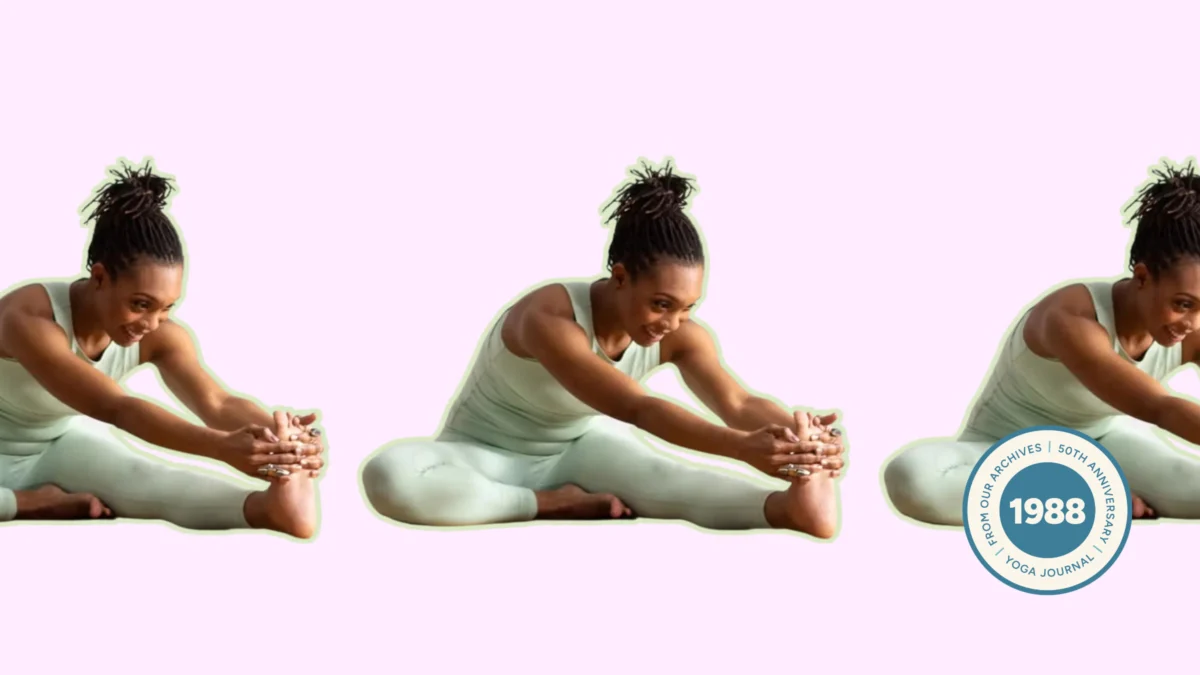
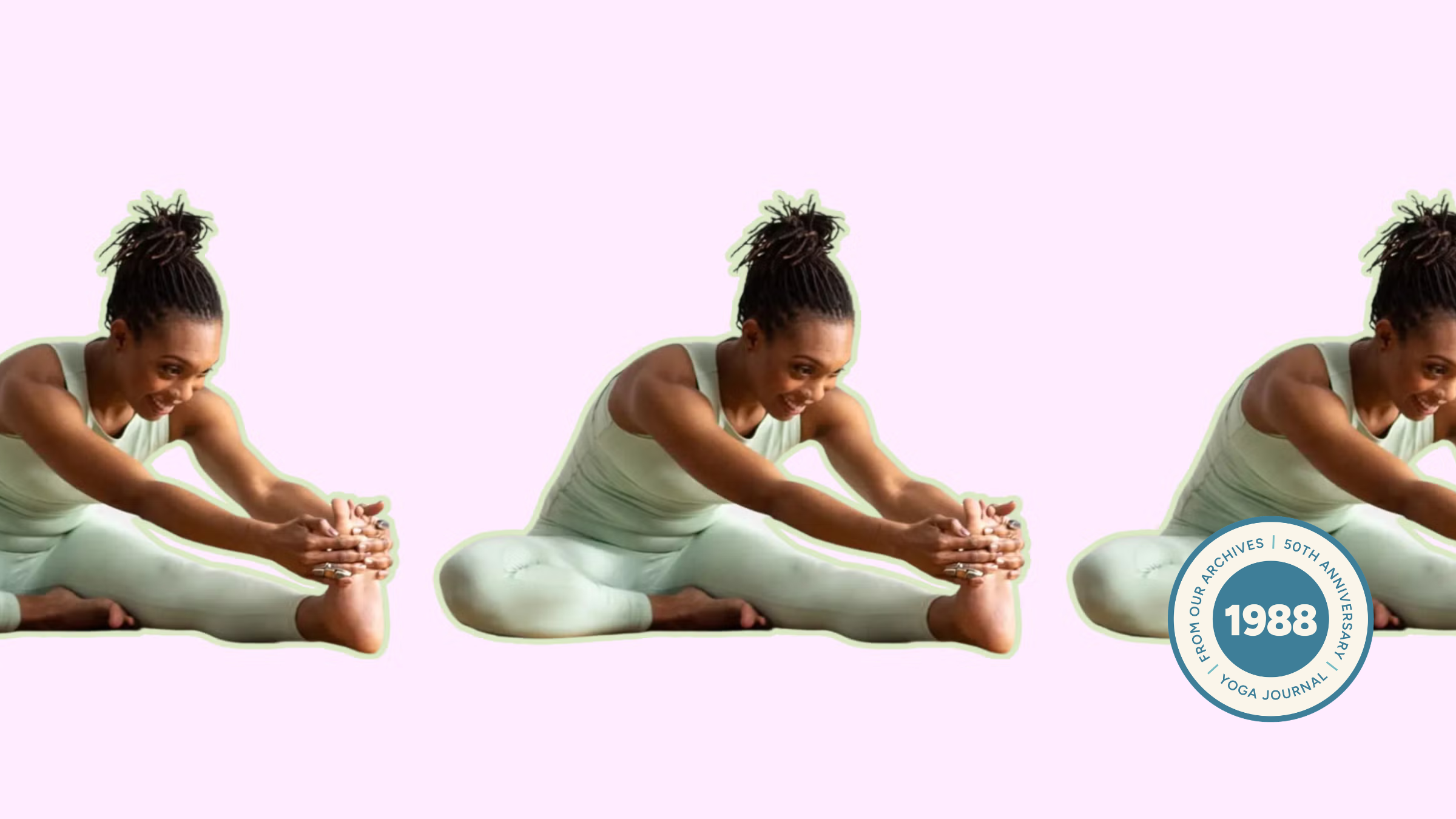
Originally published in the November-December 1988 issue of Yoga Journal, this archival deep dive explores the anatomical intricacies and philosophical depth of Head-to-Knee Forward Bend.
Executive Summary: The Paradox of the Forward Bend
Janu Sirsasana, or Head-to-Knee Pose, stands as a cornerstone of the Hatha yoga canon. While celebrated for its ability to induce a profound state of cooling and neurological quietude, the pose is frequently misunderstood. When performed with improper mechanics—specifically the rounding of the lumbar spine—it can transform from a therapeutic practice into a significant source of structural strain. This article examines the biomechanical vulnerabilities of the lower back, the impact of sedentary modern life on our postural habits, and the sophisticated methodology required to perform this asana safely and symbolically.
Chronology and Evolution of Practice
The history of Janu Sirsasana is as old as the tradition of seated asanas itself. However, the Western application of this pose has shifted dramatically since the 1970s. As yoga migrated from specialized studios into the mainstream, the emphasis often shifted from structural alignment to aesthetic "depth"—the pursuit of touching the head to the knee at any cost.
Historically, yogis viewed the pose as a "mandala of the body," a geometric expression of unity. In the late 1980s, prompted by increasing reports of lower back discomfort among practitioners, experts began to emphasize a shift in focus: away from the "head-to-knee" result and toward the "pelvis-over-hips" process. This re-education process remains the gold standard for contemporary instruction, prioritizing the integrity of the lumbo-sacral region over the superficial goal of folding deeper.
Anatomical Data: The Vulnerability of the Lumbar Spine
To understand why Janu Sirsasana requires precision, one must understand the structural design of the human spine.
The Structural Weakness
The lumbar spine is the body’s primary weight-bearing pillar, yet it is paradoxically the most vulnerable segment of the spinal column. While the thoracic and cervical regions benefit from complex ligamentous networks, the lumbar region lacks comparable reinforcement. Crucially, the ligaments that stabilize the upper and middle back do not extend fully to the sacrum.
This structural gap creates a "shearing force." When we stand or sit, the weight of the trunk and head places a forward-leaning pressure on the lumbar vertebrae. Because the lumbar curve is naturally concave (hollow on the posterior side), gravity constantly invites the vertebrae to slide forward. When a practitioner rounds the back during a forward bend, they exacerbate this shearing force, overstretching already vulnerable ligaments and potentially leading to chronic disc or soft-tissue distress.
The Impact of Modern Sedentary Habits
The biomechanical risks of Janu Sirsasana are compounded by the "functional trauma" of modern life. In previous generations, furniture design often encouraged a neutral spine. Today, the ubiquity of bucket seats in cars, airplanes, and office chairs forces the pelvis into a posterior tilt, causing the lower back to round perpetually.
After years of this conditioning, the body loses the muscular awareness required to initiate movement from the hip joints rather than the waist. Consequently, when a student attempts Janu Sirsasana, they are not starting from a neutral, healthy baseline; they are fighting against a lifetime of "slouching" conditioning.
The Methodology: Re-Educating the Pelvis
Correct practice requires a complete departure from the habit of folding from the lumbar spine. Instead, the movement must originate in the pelvis.
The Pelvic Rotation Experiment
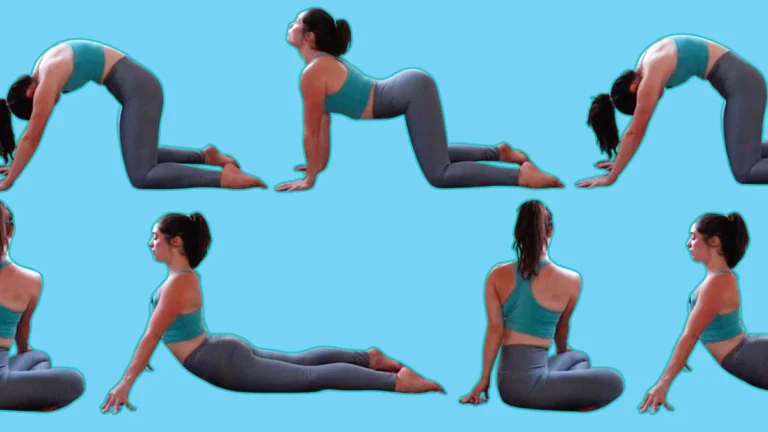
To facilitate the necessary mental and physical shift, practitioners should practice the "Cat-Cow" transition. By moving from a dropped abdomen (Cow) to a lifted abdomen (Cat) on hands and knees, the student can isolate the sensation of the tailbone’s movement.
- The Goal: To feel the pelvis rotate over the hip joints.
- The Application: In Janu Sirsasana, the same rotation must occur. The head does not lead the movement; the pelvis leads the descent. The "head-to-knee" naming convention is a misnomer; the actual goal is to move the pelvis forward until the spine is elongated and the torso can rest—not collapse—against the thigh.
Step-by-Step Execution
- Preparation: Sit on a folded blanket to elevate the hips. This reduces the tension on the hamstrings and allows the pelvis to tilt forward more easily.
- The Foundation: Extend one leg fully, keeping the back of the thigh grounded. Turn the straight leg slightly inward to optimize the femur’s position in the acetabulum (hip socket).
- The Initiation: Place hands on the anterior superior iliac crests (the prominent hip bones). As you begin to lean, ensure these bones are moving forward. If they stop moving, the movement has shifted to the spine—stop and reset.
- The Breath: Keep the diaphragm soft. If the breath is restricted, the body is likely under too much tension, which will negate the pose’s calming benefits.
- Refinement: For advanced students, the bent knee may move further back, but the demand for pelvic symmetry increases. The spine must continue to flow forward in an even, un-hunched arc.
Psychological Implications: The Mandala of the Self
Beyond the physical mechanics, Janu Sirsasana serves as a profound psychological tool. Drawing from the work of C.G. Jung and the symbolic traditions of Eastern mysticism, the pose is viewed as a "danced mandala."
Resolving Duality
The pose functions as a physical representation of the union between purusa (masculine/conscious principle) and prakriti (feminine/matter principle). By connecting the upper and lower body, the practitioner symbolically bridges the divide between the conscious mind and the physical vessel.
The act of folding inward effectively cuts off visual stimuli from the external world. This draws the mind toward the center of the "Self." In this state, the practitioner is invited to contemplate the "myth of the one that became two"—the idea that our sense of fragmentation is a veil, and that through the integration of the body, we can realize our inherent oneness with the Universal Soul.
Expert Analysis: A Time for Release, Not Penance
The consensus among seasoned yoga instructors is clear: Janu Sirsasana should never be treated as an exercise in "penance" or extreme stretching.
Avoiding Common Pitfalls
- The Hunch: Lifting the head to look forward often causes the shoulders to hunch and the neck to strain. Keep the neck relaxed and the spine neutral.
- The Force: Using the hands to pull the body down is counterproductive. The pose should be held with compassion, allowing the body to soften into the stretch rather than forcing it.
- The Sequencing: Always incorporate Janu Sirsasana after warming the body with standing poses or Downward-Facing Dog. Following the pose with gentle twists is highly recommended to neutralize any lingering tension in the lower back.
The Role of Hamstrings
While Janu Sirsasana provides a stretch, it should not be the primary tool for lengthening tight hamstrings. Beginners are advised to prioritize standing poses, such as those detailed in B.K.S. Iyengar’s Light on Yoga, to gain flexibility safely. Once the hamstrings have naturally loosened through standing work, Janu Sirsasana becomes an effective gauge of progress rather than a source of potential injury.
Conclusion
Janu Sirsasana is an invitation to inhabit the body with intentionality. By respecting the anatomical realities of the lumbar spine, breaking the habit of sedentary rounding, and approaching the pose as a meditative act of integration, the practitioner transforms a simple forward bend into a profound practice of structural and spiritual alignment. When practiced correctly, the pose offers a dual victory: the preservation of spinal health and the quiet realization of the unified Self.