









As the 2026 Olympia looms on the horizon, the landscape of the Men’s Classic Physique division is undergoing a seismic shift. Among the frontrunners, the Dutch sensation Wesley Vissers—affectionately known as "The Dutch Oak"—has emerged as a titan of tactical preparation. Fresh off a string of commanding performances at the Arnold Classic and the Detroit Pro, Vissers is not merely relying on his storied genetics; he is refining the mechanics of his hypertrophy training.
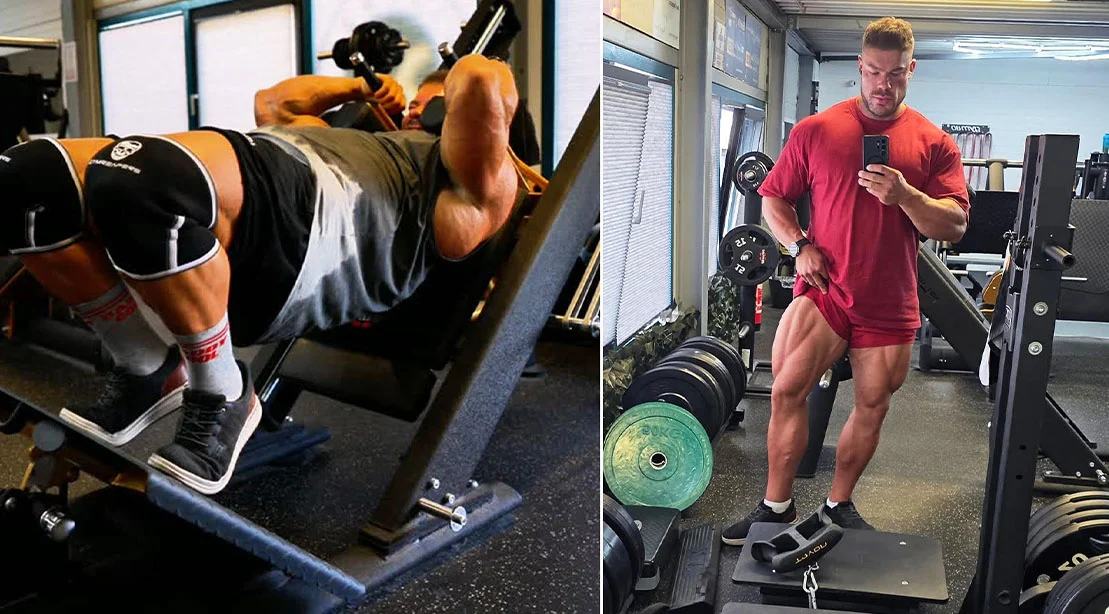
Central to his recent leg-building resurgence is an exercise often dismissed by modern gym-goers as a relic of the golden era: the sissy squat. By integrating this movement into a brutal superset protocol on the hack squat machine, Vissers has provided a blueprint for quad development that prioritizes deep tissue stretch and mechanical disadvantage, pushing his physique to new levels of refinement.
The Main Facts: Why the Sissy Squat?
The sissy squat is a compound movement that, despite its name, is arguably one of the most taxing exercises for the lower body. Unlike traditional back squats, which rely on spinal loading and hip hinge mechanics, the sissy squat shifts the load entirely to the knee joint and the quadriceps.
Vissers advocates for this movement because it addresses a fundamental principle of bodybuilding: the necessity of the "deep stretch." By allowing the lifter to lean back while moving onto the toes, the exercise forces the rectus femoris and vastus lateralis into a state of extreme elongation. According to Vissers, "Not only does it stretch the quads all the way to the top, it also stretches the hips and ankles at the same time." This multi-joint engagement ensures that the muscle is subjected to tension in its most vulnerable position, a key catalyst for sarcoplasmic hypertrophy.
Chronology of a Champion’s Evolution
The ascent of Wesley Vissers in the professional circuit has been marked by a transition from "mass-monster" aesthetics to a more balanced, refined, and anatomical masterpiece.
- Early 2025: Vissers identifies a need for greater quad sweeping to compete with the top-tier elite. He begins experimenting with high-frequency leg training, incorporating unconventional angles.
- Late 2025 (The Arnold Classic): After a period of intensive focus on leg volume, Vissers displays significantly improved lower-body separation. The industry takes note of his refined, sweeping quads.
- Spring 2026: Following his victory in Detroit, Vissers begins sharing his training methodology via social media. He emphasizes that the secret isn’t just heavy weight, but "smarter" weight.
- July 2026: Vissers publicly documents his "sissy-to-hack" superset, demonstrating why he believes this specific combination is the "best superset you can do" for quad development.
Supporting Data: The Mechanics of Hypertrophy
To understand why Vissers’ approach works, one must look at the biomechanical load placed on the quads during a sissy squat. In a traditional squat, the movement is limited by the mobility of the hips and the stability of the core. In a sissy squat, the hips are locked in a vertical line with the torso, shifting the center of gravity.
The Stretch-Mediated Hypertrophy Hypothesis
Modern exercise science suggests that muscle fibers grown under tension—specifically when the muscle is in a lengthened state—are more prone to satellite cell activation. When Vissers performs the sissy squat, he creates a lever arm that maximizes the torque on the knee extensors.
The Superset Synergy
The strategy of pairing the sissy squat with a standard hack squat is mathematically sound in terms of fatigue management.
- Phase One (The Sissy Squat): The lifter reaches muscular failure rapidly due to the isolation of the quads.
- Phase Two (The Hack Squat): Once the quads are "pre-exhausted," moving to the hack squat—which offers the stability of a machine—allows the athlete to push through the failure point, utilizing the glutes and hips to assist in finishing the set. This allows for a higher "time under tension" (TUT) than would be possible with a traditional, straight-set approach.
Official Perspectives: The Philosophy of the "Dutch Oak"
Vissers’ approach is rooted in the belief that bodybuilding is an art form as much as a sport. His commentary on social media reflects a shift away from the "ego lifting" that dominates many commercial gym cultures.
"Try these before any normal squat or leg press movements and you’ll be surprised," Vissers noted in a recent demonstration. His philosophy is clear: when the goal is muscle fiber recruitment rather than strength performance (in the powerlifting sense), the order of operations matters. By performing the most challenging, mobility-demanding movement first, he ensures that his quads are the limiting factor, rather than his lower back or cardiovascular system.
Implications for the 2026 Olympia
The implications for the upcoming Olympia are significant. Judges have increasingly favored the "Classic" look—small waists combined with aesthetic, sweeping quadriceps. By focusing on the sissy squat, Vissers is not just adding size; he is adding shape.
A New Standard for Leg Training
Vissers’ influence is already being felt across the community. Many amateur bodybuilders, inspired by his success, are abandoning heavy barbell back squats in favor of machine-assisted, high-tension movements. This shift signals a departure from the "power-bodybuilding" era of the 2010s, favoring a return to the isolation-heavy methods that defined the 1970s and 80s.
The "Safety" Factor
One of the most compelling aspects of Vissers’ advocacy is the emphasis on safety. By utilizing the hack squat machine to stabilize his body while performing sissy squats, he mitigates the risk of spinal shear forces often associated with heavy barbell squats. For the professional bodybuilder, longevity is the ultimate currency; by training smarter, Vissers is ensuring he can compete at the highest level for years to come.
How to Implement the Vissers Protocol
If you are looking to integrate the "Dutch Oak" method into your own training, it is essential to follow his specific guidelines.
- Preparation: Set up a hack squat machine or find a stable support structure for traditional bodyweight sissy squats.
- The Execution: Begin by performing sissy squats to absolute failure. Focus on the eccentric (lowering) phase, allowing your knees to travel far past your toes. Keep your torso upright.
- The Transition: Without resting, immediately load a standard, moderate weight onto the hack squat machine.
- The Finish: Perform hack squats until the quads reach a state of complete failure.
As Vissers himself says, "It’s a superset as we go to the regular hack squat… you can actually do a lot more reps with the regular hack squat, after your quads are already ‘toast’. Making this an incredible, safe, and effective superset."
Conclusion
Wesley Vissers has proven that the path to the Olympia stage is not paved with the heaviest weights, but with the most calculated techniques. By reviving the sissy squat and marrying it to the modern hack squat, he has demonstrated that there is always room for innovation in the iron game. Whether you are an aspiring pro or a weekend warrior, the "Dutch Oak’s" leg day protocols offer a path to growth that is as intellectually stimulating as it is physically grueling. As we look toward the 2026 Olympia, all eyes will be on Vissers’ legs—a testament to the power of the deep, painful, and highly effective stretch.
For those ready to challenge their limits, the message is simple: take the advice of the man who is currently redefining the standard, and don’t be afraid to put yourself to the test. After all, if you want the results of a champion, you must be willing to endure the training of one.