










Updated July 15, 2026
The yoga studio is often marketed as a sanctuary of self-discovery, yet for many practitioners, it can inadvertently become a site of performative pressure. The core of this issue lies in the traditional "correction culture," where instructors, driven by a well-meaning but potentially misguided desire to perfect a student’s alignment, frequently interrupt the individual’s internal experience.
The question facing the modern yoga community is profound: Is a teacher’s primary role to ensure a student’s body conforms to an aesthetic ideal, or is it to empower the student to trust their own physiological feedback?
The Anatomy of a Correction: A Practitioner’s Perspective
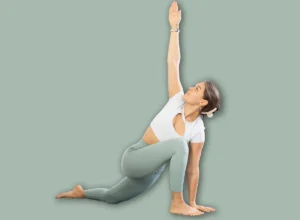
The conflict often begins with a simple, common instruction. Take, for example, the High Lunge. A student may instinctively bend their back knee to alleviate tension in their lower back—a modification that provides genuine relief. However, an instructor, conditioned to believe that a straight back leg is the "correct" expression of the pose, may repeatedly insist on a change.
This creates a power dynamic that can feel stifling. When a student who is also a teacher finds themselves "correcting" their own intuitive alignment simply to avoid being singled out, the practice loses its therapeutic value. The student is no longer practicing yoga; they are performing obedience. This tension highlights a growing divide between traditional postural dogmatism and the modern, accessibility-focused approach to mindful movement.
A Chronology of Evolving Instruction
Historically, yoga instruction in the West has relied heavily on the guru-disciple model, where physical alignment was passed down through a rigid lineage. For decades, students were taught that specific geometric shapes were synonymous with safety and efficacy.
- 1990s–2000s: The "alignment-first" era dominated. Teachers were trained to spot "deviations" from the standard pose and correct them immediately, often using hands-on adjustments.
- 2010s: A shift began as injury reports and anatomical research suggested that one-size-fits-all alignment could be detrimental. The concept of "functional anatomy" started to permeate teacher training programs.
- 2020s–Present: The conversation has moved toward radical accessibility. There is a growing recognition that an instructor’s "fix" might actually be an interference with a student’s bodily autonomy and their ability to self-regulate.
Supporting Data and Anatomical Reality
The assumption that there is a "right" way to perform a pose is increasingly being challenged by exercise physiologists and biomechanics experts. Many of the traditional cues, such as "straighten your back leg" or "square your hips," are rooted in aesthetic preferences rather than clinical necessity.
Yoga Medicine instructor Rachel Land notes that while there are legitimate anatomical reasons to activate specific muscle groups—like the quadriceps in a High Lunge—the method of activation matters. If a student achieves the desired stability through a modified position that protects their lower back, the "correction" to force a straight leg may actually introduce new risks.
Furthermore, the "Expert Bias"—the tendency for teachers to parrot cues they learned years ago without understanding the underlying mechanics—remains a systemic issue. As author and teacher Richard Rosen discovered, even seasoned instructors can find themselves repeating advice that lacks a factual basis. When pressed by students, many teachers are forced to confront their own lack of fundamental knowledge, leading to a more honest, experimental approach to the practice.
The Case for Mindful Intervention
The urge to "fix" is often an expression of care. Teachers want their students to get the most out of the practice, and many equate "the most" with "the deepest expression of the pose." However, this creates a misalignment of priorities.
1. Embracing the Possibility of "Good Enough"
When a teacher allows for the possibility that a student’s current variation is deliberate, the entire dynamic shifts. Instead of a critical gaze, the teacher adopts a curious one. Instructors are encouraged to move away from unsolicited corrections and toward a model of partnership. Simple phrases like "Are you good?" or "Let me know if you’d like to explore a variation" shift the agency back to the student.
2. The Power of Explanation over Instruction
The most effective cues are those that explain the why rather than dictating the what. If a teacher wants to encourage leg activation, they can frame it as an invitation: "If you are looking to engage your quadriceps more deeply, you might try straightening the back leg." This gives the student a choice based on their own internal sensation, rather than a command based on the teacher’s visual preference.
3. The Limits of Effectiveness
Teachers must acknowledge that their suggestions are not magic wands. A correction that works for one body may be useless or even harmful to another. The most professional approach involves a feedback loop: offer a suggestion, wait for the student to experience it, and then ask for their input. If the student reports no improvement, the instructor must be humble enough to let the suggestion go.
Official Responses and Industry Standards
Professional organizations in the yoga industry are beginning to revise their standards regarding physical adjustments and verbal cues. The consensus is moving toward "trauma-informed" and "student-centered" teaching.
Leading training programs are now emphasizing:
- Non-invasive cueing: Using verbal, descriptive language rather than physical touch or "fixing" postures.
- Contextualizing cues: Always explaining the purpose of a movement (e.g., "This helps stabilize the pelvis") so the student understands the intention.
- Respecting the "No": Understanding that if a student chooses not to follow a cue, it is a valid exercise of their autonomy, not a failure of the lesson.
Implications for the Future of Yoga
The shift toward a less corrective, more supportive teaching style has profound implications for the industry.
1. Increased Retention and Inclusion
When students feel they have the freedom to modify their practice without judgment, they are more likely to return. The "intimidation factor"—where students avoid classes because they fear they will be called out for their physical limitations—is a significant barrier to entry that the industry must address.
2. A Shift in Teacher Training
Teacher training programs must pivot from teaching "the perfect pose" to teaching "the physiology of movement." Educators need to be trained in communication skills, empathy, and the ability to say "I don’t know" when a student asks why a specific pose is performed a certain way.
3. Honoring the Student’s Intuition
Perhaps the most significant takeaway is that the student is the ultimate authority on their own body. An instructor’s role is that of a guide, not a surgeon. By providing a container for the student to explore their own sensations, the teacher facilitates a deeper, more sustainable, and more authentic practice.
Conclusion: The Space Between Cues
The goal of a yoga instructor should not be to sculpt every student into the same image. As demonstrated by the experience of students who feel "corrected" into discomfort, the urge to fix can often mask a lack of trust in the student’s own awareness.
True mastery in teaching is not found in how many adjustments one makes, but in the ability to hold space for the student to find their own path. Sometimes, the most professional thing a teacher can do is to say nothing at all, allowing the student to breathe, observe, and inhabit their own body on their own terms. In the quiet moments between cues, the most profound learning happens.