










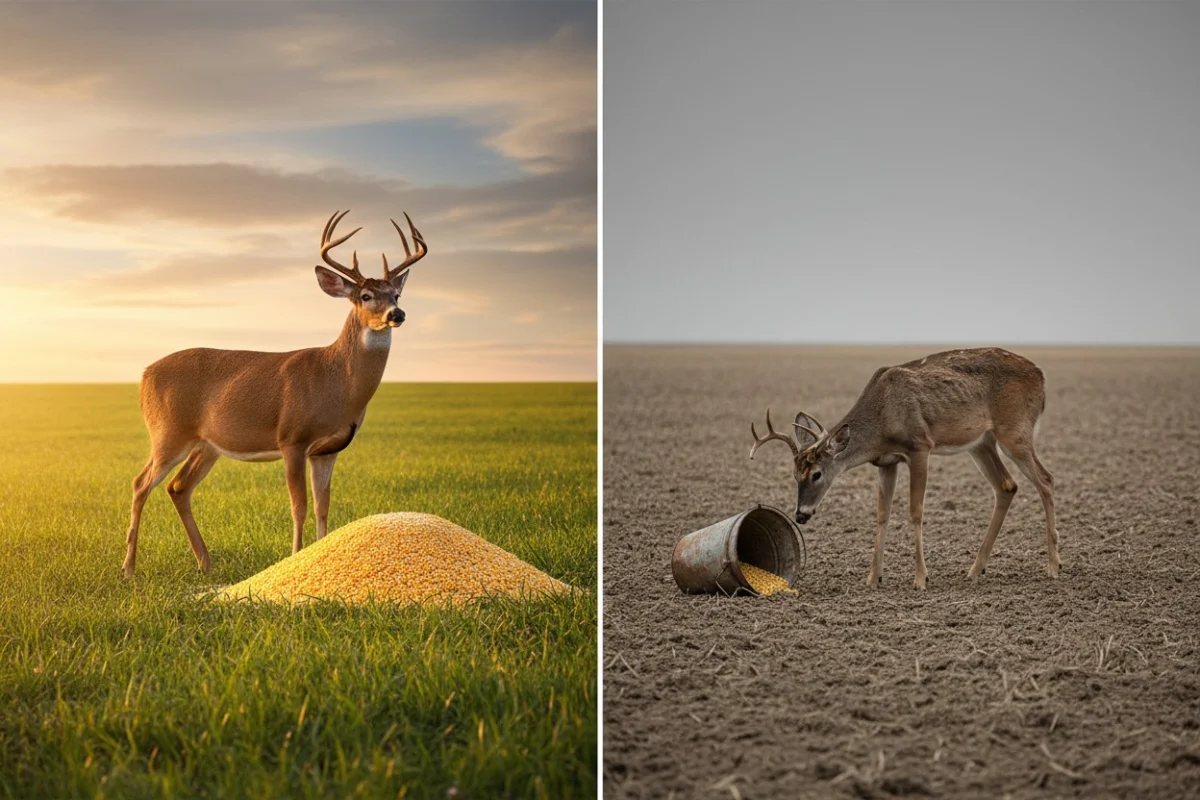
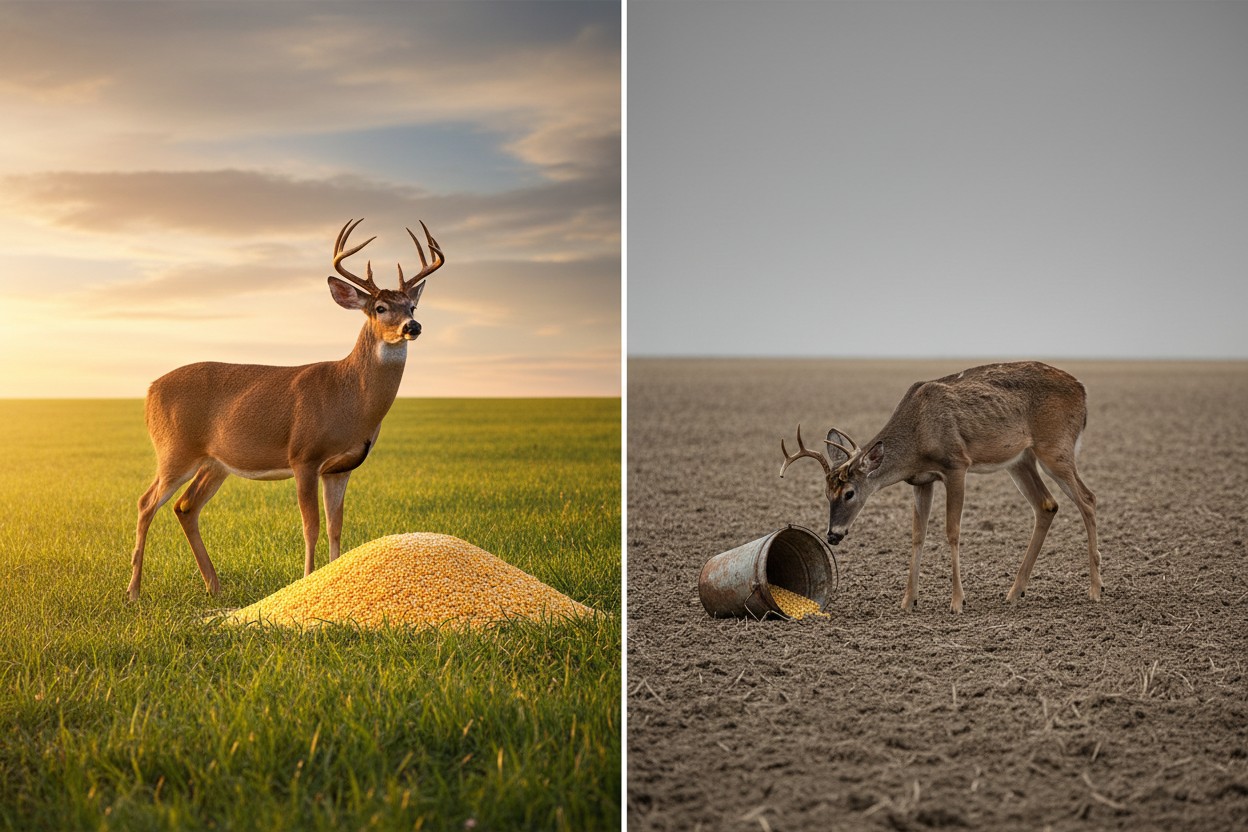
On a quiet ranch, the observation of local wildlife offers a lesson that modern civilization ignores at its own peril. When a landowner scatters corn for deer, the result is immediate: the herd swells, fawns survive in record numbers, and the population booms beyond the land’s natural capacity. But the moment the corn stops, the biological reality of the ecosystem asserts itself. The inflated herd, having lost its instinct for native forage, faces starvation, disease, and displacement.
This phenomenon, known to conservationists as "false carrying capacity," is not merely a quirk of animal husbandry. It is an immutable law of nature—and it is the trajectory upon which modern human civilization is currently sprinting.
Main Facts: The Illusion of Infinite Growth
The global population, currently hovering above 8 billion, is not supported by the earth’s natural productivity alone. Instead, it is sustained by an industrial "deer corn" strategy: the heavy, systematic application of fossil-fuel-derived fertilizers, globalized supply chains, and a financial architecture built on debt rather than tangible output.
For decades, the Haber-Bosch process—which synthesizes ammonia for fertilizer using natural gas—has acted as the engine of the global population explosion. This industrial marvel allowed for crop yields that would have been impossible in a pre-industrial era. However, this system created a dangerous dependency. We have effectively turned the entire human race into a herd that relies on the constant, daily delivery of "corn" from the global market. When that supply chain is severed, the demographic collapse is not a possibility; it is a mathematical certainty.
Chronology of the Impending Contraction
The transition from a state of industrial abundance to one of scarcity has been accelerating, driven by geopolitical instability and the fragility of modern infrastructure.
- 1960s–2000s: The Haber-Bosch Era: Global agriculture shifts entirely to synthetic nitrogen fertilizers. Population grows exponentially, enabled by cheap natural gas.
- 2020–2024: The Vulnerability Phase: Global supply chains, already strained by pandemic-era policies, face a new reality. Chokepoints in international trade, particularly the Strait of Hormuz, become the focal point of geopolitical tensions.
- 2025–2026: The Energy Choke: Conflict involving key regional powers, specifically the Iranian blockade of the Strait of Hormuz, triggers a massive disruption in the flow of natural gas feedstock.
- Present Day: The Correction Begins: Fertilizer production capacity drops by an estimated 25% globally. As the lag time in agricultural cycles expires, the reduced food output is manifesting in empty shelves, surging prices, and overburdened social safety nets.
Supporting Data: The Math of Scarcity
The ecological principles of carrying capacity suggest that when an artificial food source is removed, the population must contract to match the land’s actual "native" yield.
- The 25% Deficit: Industry analysts confirm that a 25% reduction in ammonia-based fertilizer availability equates to a proportional decline in crop yields for staple grains like wheat, corn, and rice.
- Infrastructure Fragility: The world’s food supply is not a local affair. It is a "just-in-time" delivery system. When fertilizer inputs are restricted, the ripple effect reaches the consumer within 12 to 18 months.
- Historical Precedents: The collapse of the Mississippian chiefdoms and the cyclical decline of the Maya civilization serve as grim reminders. In both instances, ecological exhaustion—driven by a failure to maintain the health of the soil or manage resource extraction—led to a rapid, painful downsizing of the population.
Official Responses and Systemic Denial
Despite clear indicators, official responses from governing bodies remain largely focused on maintaining the illusion of stability. Most governments are currently doubling down on subsidies and debt-financed social programs to mask the rising cost of food.
However, behind the scenes, agricultural experts and survival analysts point to a growing disconnect between official inflation metrics and the reality of caloric availability. While central banks claim to be managing the "cost of living," they are failing to address the fundamental "means of production." By prioritizing the maintenance of financial liquidity over the security of physical energy and fertilizer inputs, policymakers are effectively ensuring that when the "corn" stops, the system will not have the resilience to adapt, leading to a much sharper, more chaotic collapse.
Implications: The Hard Shift to Self-Reliance
The implication of this "Great Correction" is a shift from global interdependence to radical localism. The demographic contraction—estimated by some analysts to involve 2 to 4 billion people losing consistent access to nutrition—will not be a gentle decline. It will be characterized by extreme volatility.
The Forager’s Survival Strategy
Those who survive the coming contraction will be the "foragers" of the 21st century: individuals and communities that have opted out of the dependency cycle before the system forced them out.
- Land and Water: The most secure assets in a post-industrial world are not stocks or digital currencies, but land with independent water sources and the capacity for regenerative food production.
- Skill Acquisition: The era of the "specialized consumer" is ending. The future belongs to those who understand the mechanics of food production, water purification, and small-scale livestock management.
- The Rejection of Dependency: Relying on the supermarket or the state for daily sustenance is the primary risk factor. Moving toward heirloom seed preservation and permaculture is the only way to insulate a family from the impending supply chain failure.
Conclusion: Preparing for the New Reality
We are currently witnessing the end of an era of unprecedented, artificial abundance. The deer corn that has fueled the human population surge is being withdrawn, and the biological laws that govern all living systems are reclaiming their dominance.
This is not a message of inevitable doom, but a call to conscious action. The choice is binary: remain part of the dependent herd, waiting for the "corn" that will no longer be provided, or begin the difficult, vital work of building a self-sustaining life. The survival of the individual—and perhaps the future of the human species—depends on the ability to transition from a consumer of industrial output to a steward of the land.
The corn is running out. It is time to learn how to forage.
References and Further Reading
(Note: As specified, these refer to the broader body of research on ecological carrying capacity and agricultural history.)
- Salatin, J. Studies on Agricultural Dependency and Pest Concentration.
- Ecological Impact Studies. The Effect of Artificial Supplemental Feeding on Migratory Waterfowl.
- Energy Security Reports. The Strait of Hormuz and its Role in Global Ammonia Synthesis.
- Agricultural Economics Data. Correlation between Fertilizer Availability and Caloric Output (2024-2026).
- Social Service Analysis. Trends in Food Bank Demand and Government Commodity Reliance.
- Archaeological Research. Resource Depletion and the Collapse of Mississippian Chiefdoms.
- Historical Anthropology. The Maya Cycle: Environmental Stewardship and Civilization Sustainability.
- Carson, R. The Legacy of Ecological Interventions and Systemic Failure.
- Survivalist Methodology. The Necessity of Self-Reliance in Volatile Economic Climates.
- Land Investment Research. Strategic Asset Allocation: Water, Soil, and Privacy.
- Regenerative Agriculture Journal. Building Soil Health as a Hedge against Industrial Collapse.