






For generations, the kitchen has been a laboratory of culinary tradition. For many, the childhood memory of butter—smeared thick across warm toast, folded into fluffy potatoes, or creamed into dense, aromatic coffee cakes—is the bedrock of comfort food. Yet, the choice between butter and margarine has long been a source of domestic debate and nutritional confusion.
As a food scientist, I have spent my career examining how the subtle chemical architecture of these two kitchen staples dictates not only their nutritional profiles but their performance under the heat of an oven. While they may look similar on a dinner plate, butter and margarine are distinct entities, governed by different rules of chemistry, biology, and industrial manufacturing.
Main Facts: The Structural Foundation of Fats
At their most fundamental level, both butter and margarine are emulsions—complex, stable mixtures of tiny water droplets suspended within a continuous fat matrix. This matrix is composed primarily of triglycerides, the dominant form of dietary fat.
A triglyceride molecule is defined by a three-carbon glycerol backbone, to which three fatty acid chains are attached. While the backbone remains constant, the fatty acid chains can vary significantly in length and structure. This variation is where the primary divergence between butter and margarine begins.
The Saturation Divide
Butter, a product of animal origin, is composed largely of saturated fatty acids. Because these molecules possess no double bonds between carbon atoms, they are chemically "straight." This allows them to stack neatly and compactly, creating the firm, crystalline structure that makes butter solid at room temperature and firm when chilled.
In contrast, margarine is derived from plant-based oils. These fats are primarily unsaturated, meaning they contain double bonds between carbon atoms. These bonds introduce "kinks" into the molecular chain, preventing the molecules from stacking tightly. This irregular geometry is the reason margarine—unless specifically engineered—tends to be softer and more pliable than traditional butter.
A Chronology of Culinary Chemistry
The journey from the churn to the laboratory reflects the evolution of food science. For centuries, butter was the undisputed sovereign of the kitchen, produced through the mechanical agitation of cream.
The Birth of Butter
When cream is churned, the protective membranes of fat globules rupture. As these fats are released, they coalesce into semi-solid grains, eventually separating from the watery, low-fat byproduct known as buttermilk. Through kneading and pressing, this mass becomes the butter we recognize. In some traditions, "cultured" butter is created by introducing lactic acid bacteria, which ferment the lactose in milk into flavor compounds, resulting in a signature tangy, complex profile.
The Rise of Margarine
The late 19th and 20th centuries saw the rise of margarine as a cost-effective and, later, a health-conscious alternative. Initially produced to combat shortages, the process has become highly sophisticated. To turn liquid vegetable oils into a solid, spreadable product, manufacturers utilize a process called interesterification.
Unlike the older method of hydrogenation—which was often criticized for creating harmful trans fats—interesterification involves chemically rearranging the fatty acids on the glycerol backbone. This provides the product with a uniform, stable structure without the need for trans fats, which have been widely banned due to their strong links to cardiovascular disease and elevated cholesterol.
Supporting Data: Composition and Standards
To understand why these products perform differently in the oven, one must look at their specific composition. Both butter and margarine are required by various regulatory frameworks to be at least 80% fat, though high-quality butter often reaches 85%. The remaining 15–20% consists of water, vitamins, minerals, and—in the case of butter—small amounts of protein and lactose.
Standard of Identity
Butter is protected by some of the oldest food standards in the United States. These "standards of identity" mandate that for a product to be labeled as "butter," it must meet stringent criteria regarding its fat content and its origin from cream. Margarine, while also regulated, lacks the same historical protection, leading to a wider variety of formulations, including "spreads" that may contain significantly higher water content and lower fat percentages.
The Color Palette
Nature provides butter with its iconic golden hue through beta-carotene, a pigment derived from the grass the cows consume. Because cattle do not metabolize this pigment entirely, it remains in the milk fat. Margarine, being naturally colorless, undergoes a visual transformation in the factory. Producers add synthetic beta-carotene, along with diacetyl (a chemical compound that mimics the scent of butter) and various preservatives, to replicate the sensory experience of the real thing.
Official Responses and Nutritional Implications
The scientific community’s view on these fats has shifted significantly over the last few decades. In the mid-20th century, margarine was often touted as the "heart-healthy" alternative to butter due to its lower saturated fat content. However, the discovery of the dangers associated with trans fats created a temporary setback for the industry.
Today, food scientists categorize most margarine as an "ultraprocessed" food. While interesterification has successfully eliminated trans fats, the intensive industrial processing required to create these fats contrasts sharply with the "whole food" nature of churned cream.
Navigating the Health Debate
The choice between the two is rarely black and white. Butter provides a natural, minimally processed fat source, but it is high in saturated fats. Margarine offers lower saturated fat levels and can be fortified with plant sterols, but it requires additives to maintain its stability and texture. For the consumer, the takeaway is balance: understanding that the "best" choice often depends on the specific dietary needs of the individual and the intended application.
Practical Implications: Baking Performance
When it comes to the science of baking, the chemical differences between butter and margarine are not merely theoretical—they are functional.
The Maillard Reaction
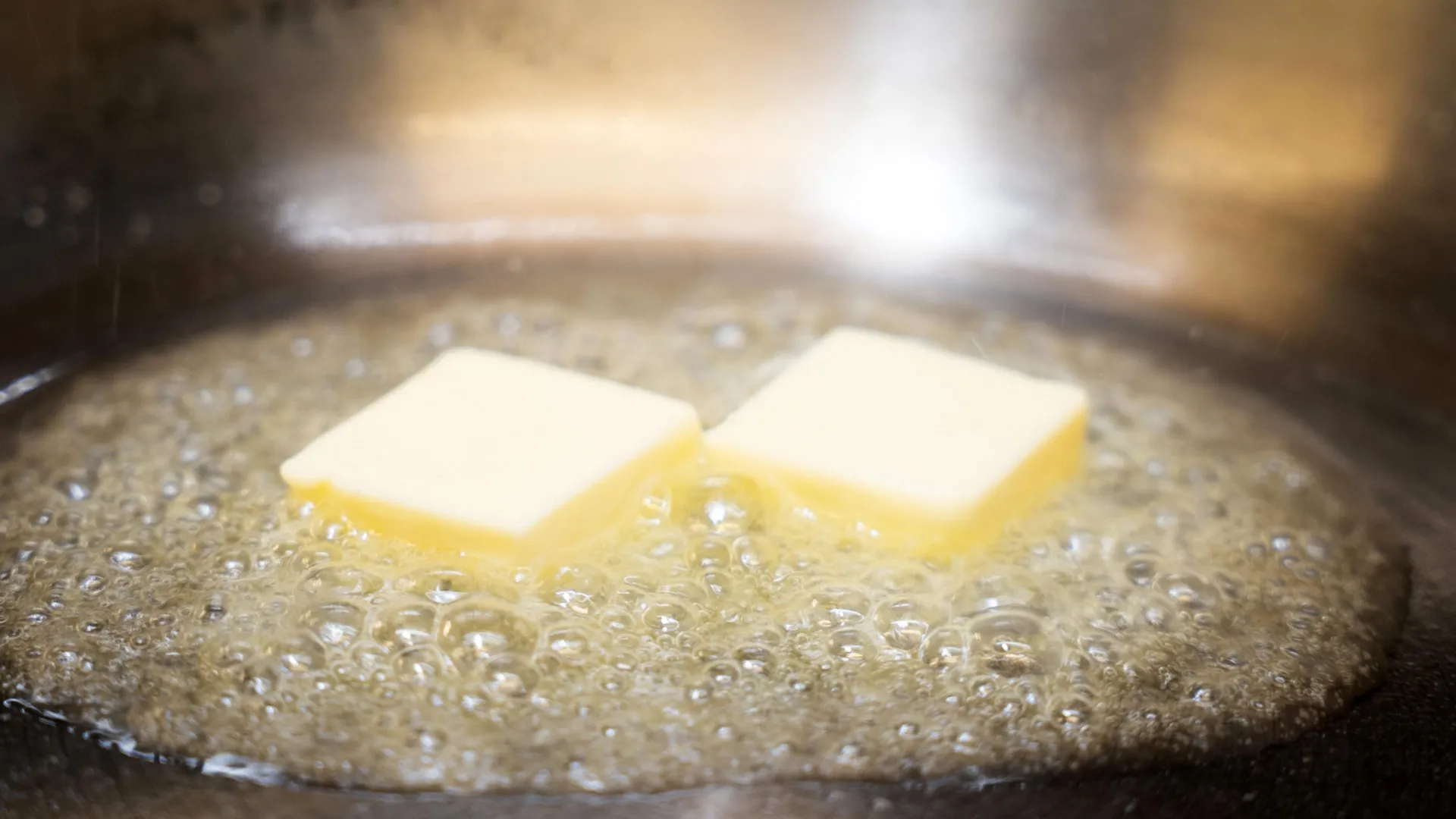
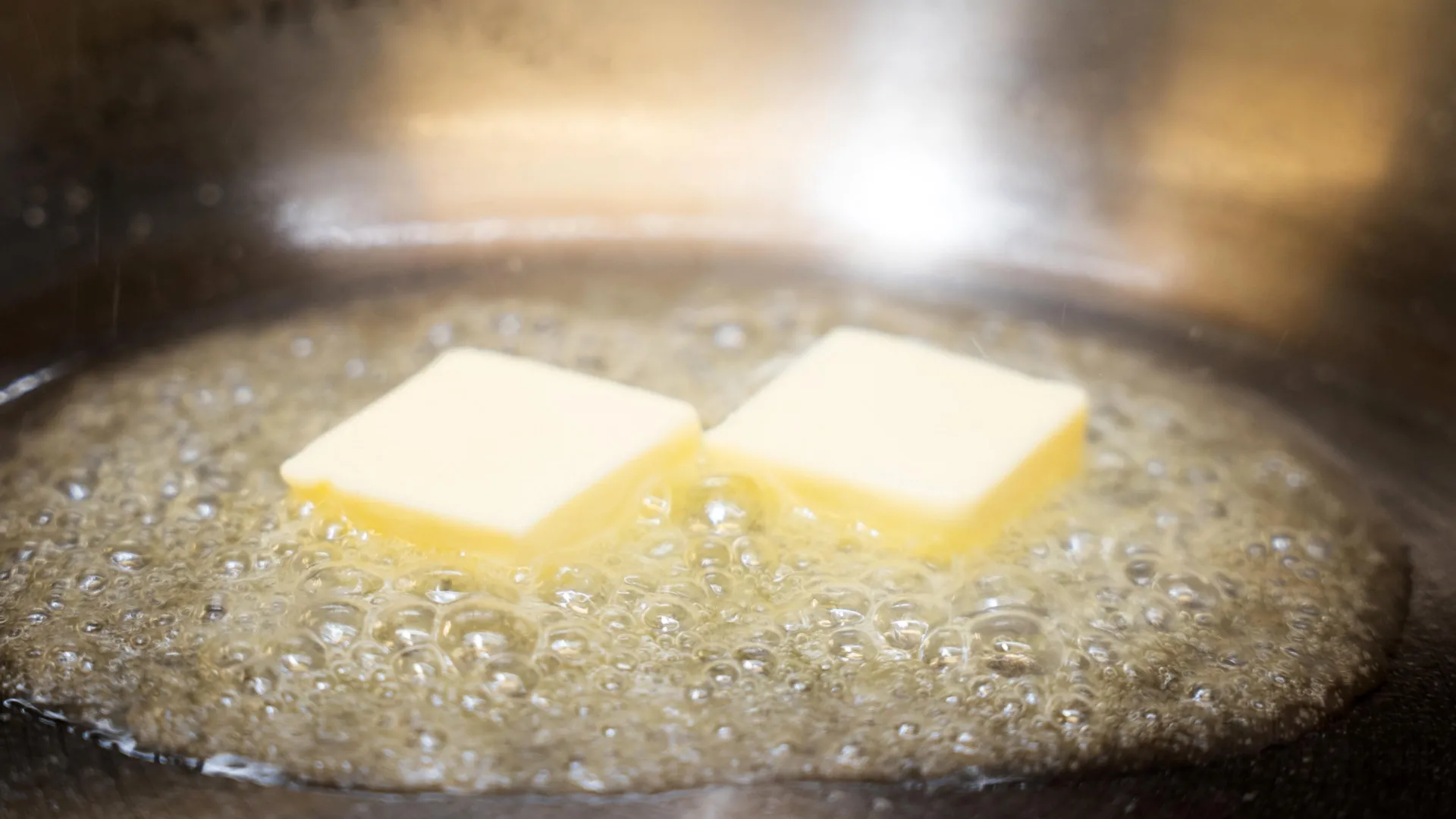
Butter contains milk solids—specifically protein and lactose. When heated, these solids undergo the Maillard reaction, a chemical process that browns the food and produces a deep, nutty, caramelized aroma. Margarine, which lacks these milk solids, does not brown in the same way, resulting in a flavor profile that is often described as "flatter."
Texture and Steam
Baking is an exercise in structural engineering. The high water content in butter is vital for pastry production; as the butter melts in a hot oven, that water turns to steam, creating the delicate, flaky layers in croissants and pie crusts. Because the water content in margarine can vary wildly—especially in lower-fat "spreads"—it often fails to provide the same lift or flaky texture.
The Verdict on Substitution
Can you use them interchangeably? Yes, but with caveats. If you are baking a recipe where the flavor and texture of butter are the highlights—such as shortbread or puff pastry—butter is irreplaceable. If you are seeking a longer shelf life, a more consistent, controlled melt, or a lower-fat option for casual cooking, margarine serves as a reliable, functional tool.
Conclusion
As our understanding of food science deepens, we move away from the binary idea that one product is inherently "evil" and the other "pure." Instead, we see butter and margarine as two different chemical solutions to the same culinary challenge. By understanding the triglycerides, the emulsification process, and the role of milk solids, the home cook can move from simply following a recipe to mastering the chemistry of their own kitchen. Whether you prefer the golden, aromatic complexity of butter or the engineered, consistent performance of margarine, the secret is knowing exactly what is happening inside the pan.