










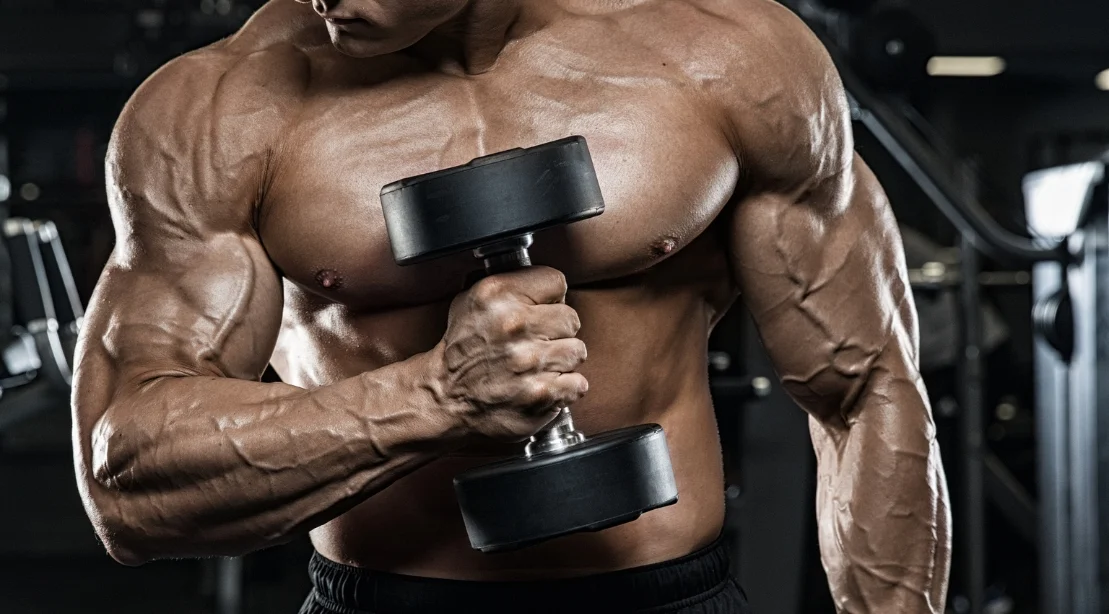
In every gym across the globe, from high-end metropolitan fitness clubs to rustic, iron-clad garage setups, there remains a singular, persistent obsession: the biceps. A full, peaked pair of arms has served as the quintessential icon of physical strength since the dawn of the golden age of bodybuilding. Yet, there is a recurring irony in the iron game. While the triceps actually account for roughly two-thirds of the upper arm’s total mass, the social and aesthetic currency of the biceps remains unmatched. Nobody stops a stranger to ask them to flex their triceps; the bicep peak remains the ultimate symbol of a physique transformed.
However, the path to building impressive arms is a landscape littered with misconceptions. While the goal is straightforward, the process is far from easy. Like every other muscle group, the biceps do not respond to wishful thinking or marathon sessions; they respond to a singular, non-negotiable stimulus: a compelling biological reason to grow.
The Growth Equation: Understanding Biological Adaptation
At the heart of any effective training regimen lies what can be termed "The Growth Equation." Many beginners operate under the assumption that muscle growth is a direct linear function of time spent in the gym. They equate a higher volume of exercises and longer, more grueling workouts with superior results. In reality, this approach is often counterproductive.
The biceps are a relatively small muscle group. They do not require a dozen different curl variations or hours of repetitive motion. Instead, they require focused, high-intensity mechanical tension. Your primary objective in the gym is to provide enough controlled stress—within a specific time frame and at a sufficient intensity—to convince your body that its current muscular capacity is inadequate for the challenges it faces.
Once this threshold of "adaptive signal" is reached, the stimulus is complete. The actual process of hypertrophy (muscle growth) does not occur while you are lifting the iron; it occurs during the recovery phase, while you are sleeping, eating, and allowing your body to repair the micro-tears created during training. By continuing to "over-train" beyond the point of stimulus, you are not adding to your growth—you are actively hindering your recovery.
Anatomy 101: The Secret Role of the Brachialis
To truly optimize arm development, one must look beyond the surface-level anatomy of the biceps brachii. The front of your upper arm is a dual-component system: the biceps brachii and the brachialis. While the biceps are the "show" muscle that pop when you flex, the brachialis sits deep underneath, quietly acting as the foundation.
For the aspiring bodybuilder, the brachialis is perhaps the most undervalued asset in the upper arm. Because it lies beneath the biceps, as the brachialis grows, it physically pushes the biceps upward. This creates a more pronounced, "higher" peak and adds a dimension of fullness that traditional curls alone cannot achieve.
Many lifters spend years performing only standard supinated (palms up) curls, neglecting the brachialis entirely. To build a truly complete arm, one must manipulate grip mechanics.
- Supinated Grip (Palms Up): This position places the primary mechanical load directly on the biceps brachii.
- Neutral Grip (Hammer Curl): By turning your palms to face each other, you shift the biomechanical emphasis toward the brachialis while still maintaining significant recruitment of the biceps.
Integrating both grip variations into a single session is not just a suggestion; it is a necessity for those seeking structural symmetry and maximum arm girth.
The Chronology of Training: Managing Peripheral Fatigue
A critical error often made by novices is the failure to account for systemic fatigue. The biceps are not isolated units; they are involved in almost every pulling movement in a standard training split. Heavy barbell rows, pull-ups, chin-ups, and pulldowns all recruit the biceps as a secondary muscle group.
If you engage in a rigorous back day on Monday, your biceps are already partially fatigued by the time you arrive at your scheduled "Arm Day." This is why "more is better" is a fallacy. If you are generating the required intensity, eight high-quality sets for the biceps—combined with a few targeted sets for the brachialis—are generally sufficient to trigger an adaptive response. Adding extra sets beyond this point often leads to diminishing returns and potential overtraining.
Supporting Data: Tension vs. Exercise Selection
In the modern fitness era, social media often promotes the idea of "secret" exercises or complicated angles that will unlock hidden growth. This is a myth. Whether you choose barbell curls, dumbbell curls, preacher curls, or cable variations, the physiological outcome remains the same provided the execution is sound.
The weight itself is indifferent to the tool you use; the muscles do not distinguish between a straight bar, an EZ-curl bar, or a cable handle. They recognize only one language: tension.
The best exercise is, by definition, the one that allows you to:
- Isolate the target muscle without excessive momentum or "cheating."
- Maintain strict, controlled form through the full range of motion.
- Generate maximum intensity by reaching near-failure safely.
When you focus on the movement of the weight from Point A to Point B, you are training for performance. When you focus on the tension exerted on the muscle fibers throughout the entire arc of the movement, you are training for hypertrophy.
Expert Perspective: Why Quality Beats Quantity
Professional trainers and kinesiologists consistently emphasize that the "mind-muscle connection" is not just a psychological construct—it is a physiological requirement. By slowing down the eccentric (lowering) portion of a curl, you increase the time under tension, which is a primary driver of protein synthesis.
Studies in muscle hypertrophy suggest that "junk volume"—sets performed with poor form or insufficient intensity—does nothing but fatigue the central nervous system. Conversely, "high-quality volume" performed with perfect form and a conscious effort to squeeze the muscle at the peak of the contraction maximizes the recruitment of motor units.
Implications: The Road Ahead
As you prepare to build a routine that yields results, keep these implications in mind:
- Consistency over Intensity Spikes: Do not attempt to destroy your arms in one session. Aim for consistent, progressive overload over weeks and months.
- Prioritize Recovery: Since the biceps are small muscles, they recover relatively quickly, but they still require 48 hours of rest between intense sessions to facilitate growth.
- The "Finisher" Philosophy: For those who have mastered the basics, old-school techniques like "21s" (seven reps in the bottom half, seven in the top half, and seven full-range reps) serve as a brutal but effective way to force blood into the muscle and push past a plateau. However, these are tools to be used at the end of a session, not as a replacement for foundational heavy lifting.
In the upcoming installment of this series, we will transition from theory to practice. We will outline a comprehensive, evidence-based arm routine designed to optimize the biceps and force the brachialis to grow. We will also explore the anatomy of the "21s" and why, despite their discomfort, they remain a staple in the arsenals of the world’s most aesthetic athletes.
Remember: the goal is not to lift the heaviest weight in the gym. The goal is to make the weight you are lifting feel as heavy as possible through precise, deliberate, and relentless tension. Your biceps are waiting for a reason to grow. Give them one.