









In a significant leap forward for oncology, researchers at the University of Illinois Chicago (UIC) have unveiled an innovative experimental cancer treatment derived from the very bacteria that inhabit the tumor microenvironment. By isolating a specific protein fragment—termed "aurB"—scientists have developed a novel method to systematically dismantle the energy production of cancer cells, effectively starving them of the fuel required for rapid, aggressive proliferation.
Published in the journal Signal Transduction and Targeted Therapy, the study presents a compelling alternative to traditional therapies that rely on the p53 gene, a common but often mutated tumor-suppressor gene that frequently renders conventional treatments ineffective. By bypassing the p53 pathway entirely and focusing on mitochondrial destruction, this new therapy offers a potential lifeline for patients with treatment-resistant cancers.
The Main Facts: Depriving Tumors of Their Power Source
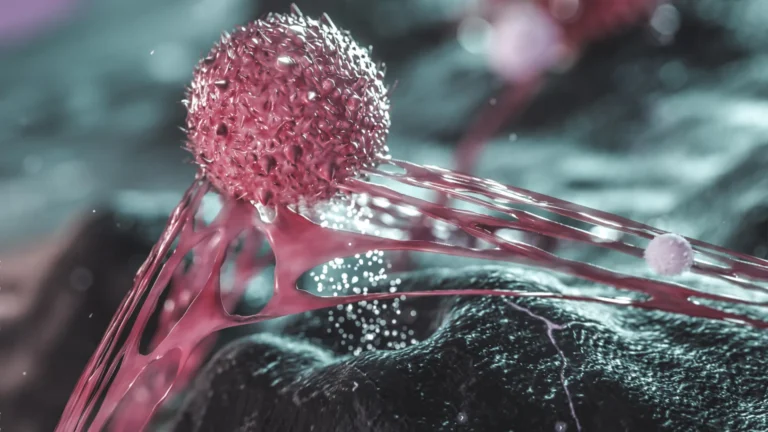
At the heart of the research is the realization that cancer cells are "energy-hungry." To maintain their rapid growth, these cells rely heavily on mitochondria—the cellular "power plants" that generate adenosine triphosphate (ATP).
The UIC team identified that the protein fragment aurB, derived from the bacterial protein auracyanin, has a unique affinity for these mitochondria. Once it enters the cancer cell, aurB binds directly to ATP synthase, the molecular machine responsible for energy production. By disrupting this process, the therapy effectively cuts off the tumor’s power supply, causing it to wither and die.
In preclinical trials, particularly those focusing on hormone therapy-resistant prostate cancer, the results were striking. When paired with standard radiation therapy, the aurB peptide did not merely slow tumor growth; it significantly inhibited it, suggesting that the protein may act as a potent "sensitizer," making cancer cells significantly more vulnerable to conventional radiation.
Chronology: From Bacterial Discovery to Targeted Therapy
The development of aurB was not an overnight success but the result of years of methodical investigation into the tumor microenvironment.
The Cupredoxin Foundation
The research journey began with the discovery that tumors are not sterile environments; they host diverse communities of bacteria. UIC researchers previously identified a class of proteins known as cupredoxins—copper-containing proteins that facilitate electron transfer—which demonstrated an ability to suppress tumor growth.
The Limitation of p53
Initial iterations of cupredoxin-based drugs showed promise in early clinical trials for adult cancers and pediatric brain tumors. However, researchers hit a recurring roadblock: these therapies were dependent on the functionality of the p53 gene. In many cancer patients, the p53 gene is mutated or inactive. Because these mutations are highly individualized, the effectiveness of earlier cupredoxin treatments varied wildly from patient to patient. This realization shifted the laboratory’s focus toward finding a "p53-independent" pathway.
The Identification of Auracyanin
In their most recent study, the team conducted a deep-dive analysis of breast cancer tumor samples using advanced DNA sequencing. By cataloging the bacteria residing within these samples, they isolated a specific species that produced a unique cupredoxin: auracyanin. Recognizing its potential, the team synthesized a peptide based on this protein, naming it aurB, and began testing its efficacy in cell lines specifically chosen for their lack of active p53.
Supporting Data: Efficacy in Resistance Models
The laboratory data provided by the UIC team offers a rigorous validation of the aurB mechanism. In experiments using hormone-resistant prostate cancer models—a notoriously difficult form of cancer to treat—aurB exhibited high efficacy.
Synergy with Radiation
Perhaps the most encouraging data point involves the synergistic effect between aurB and radiation. Standard radiation therapy often struggles against aggressive, treatment-resistant tumors. However, when aurB was introduced into the treatment regimen, the researchers observed a marked reduction in tumor volume.
"The combination significantly enhanced the activity of the peptide and the tumor became much smaller," noted Tohru Yamada, the senior author of the study.
Toxicity and Safety Profiles
A critical hurdle for any new cancer drug is the "therapeutic index"—the balance between killing the cancer and harming the host. In the preclinical models, aurB showed minimal signs of systemic toxicity. By targeting the mitochondria specifically within the tumor microenvironment, the treatment appears to spare healthy cells, which typically have different metabolic requirements and mitochondrial profiles than the highly specialized, high-energy-consuming cancer cells.
Official Responses and Expert Perspective
The research team, led by Tohru Yamada—an associate professor in the departments of surgery and biomedical engineering at UIC and a member of the University of Illinois Cancer Center—emphasizes that this is a fundamental shift in how we view the role of bacteria in oncology.
"The mitochondria are very important for a cell to survive; they are the energy factories," Yamada explained. "Many cancer cells exhibit altered mitochondrial number and activity, because a cancer cell has to grow aggressively and rapidly. Therefore, the mitochondria would be an ideal target for cancer therapy."
Yamada also acknowledged the collaborative nature of the project, crediting his colleagues within the College of Medicine and the Department of Surgery. Contributors including Drs. Martin Borhani, Aslam Ejaz, Ajay Rana, Enrico Benedetti, and Tapas K. Das Gupta were essential in refining the experimental parameters and ensuring the project’s success. Other key contributors from the College of Medicine and the College of Engineering, such as Samer A. Naffouje and Weiguo Li, provided the technical expertise necessary to map the bacterial DNA and analyze the resulting peptides.
Implications: A New Frontier in Oncology
The potential implications of the aurB study extend far beyond prostate cancer. If the mechanism of mitochondrial disruption via bacterial proteins proves successful in human clinical trials, it could revolutionize the treatment landscape for a wide variety of solid tumors.
Beyond p53
The primary implication is the removal of the "p53 barrier." By moving away from gene-dependent therapies, doctors may one day be able to treat patients regardless of their specific genetic mutation profile, potentially simplifying the "personalized medicine" approach by offering a universal "energy-deprivation" strategy.
The Microbiome as a Drug Source
Perhaps most intriguingly, the study suggests that the bacteria living inside tumors—once thought to be mere bystanders—are actually a goldmine for therapeutic discovery.
"There are many other bacterial proteins that could be a source of cancer drugs," Yamada noted. "We simply haven’t tried them yet."
This perspective shifts the paradigm: instead of looking for chemical compounds in synthetic libraries, researchers may find the next generation of cancer-fighting agents by simply looking closer at the bacterial communities that evolve alongside tumors.
Next Steps for Clinical Application
The university has already taken the proactive step of patenting aurB through its Office of Technology Management, signaling an intent to move the research toward clinical trials. While the transition from mouse models to human patients is a rigorous and lengthy process, the existing foundation—based on years of previous cupredoxin research—provides a robust roadmap for future development.
As the scientific community continues to explore the intersections of microbiology and oncology, the work of the UIC team stands as a testament to the power of lateral thinking. By reframing the tumor not just as a cluster of rogue cells, but as an ecosystem that can be starved of its fuel, researchers are opening doors to a new era of cancer care—one where the very bacteria that tumors rely on may ultimately become their undoing.