Since its inception in 1965, the “Olympia” name has transcended the realm of mere athletic competition to become the global gold standard of physique excellence. It is the stage where legends are forged, where the boundaries of human anatomy are tested, and where the echoes of Arnold Schwarzenegger’s seven-title reign continue to inspire new generations of lifters.
As the industry pivots toward the highly anticipated 2026 final in Las Vegas, it is time to look back at the history that shaped the sport. From the inaugural crown bestowed upon Larry Scott to the record-shattering earnings of modern champions, Muscle & Fitness breaks down the essential facts, figures, and historical narratives that define bodybuilding’s most prestigious stage.
The Genesis: Who Was the First Mr. Olympia?
To understand the weight of the Olympia title, one must return to the Brooklyn Academy of Music in 1965. Joe Weider, the visionary behind the IFBB, sought to create a platform that would allow the greatest bodybuilders in the world to compete for a title that signified absolute supremacy—a stage where, unlike the Mr. Universe, the winner could continue to defend his title year after year.
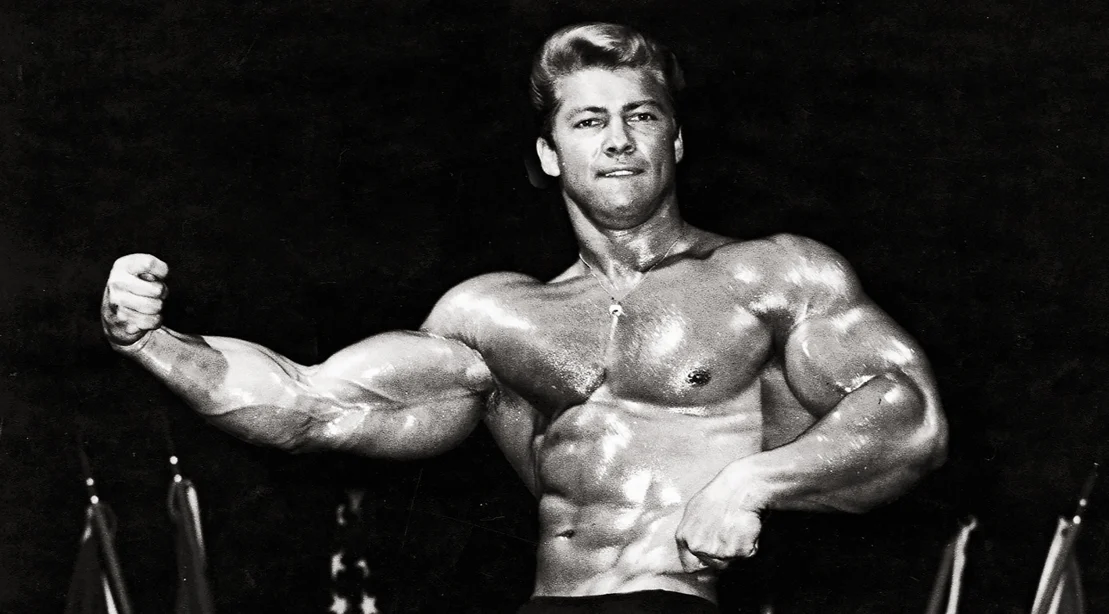
The man who claimed that first historic victory was Larry “The Golden Boy” Scott. Hailing from Idaho, Scott brought a combination of massive, sweeping arms and aesthetic symmetry that set the tone for the division. Interestingly, the pageantry of the inaugural event lacked the polish we see today. Instead of the now-iconic Sandow Trophy, Scott was presented with a literal crown and a $1,000 prize.
Scott successfully defended his title in 1966, earning another $1,000 and a commemorative silver plate. His brief but legendary run established the "Olympia" as the ultimate destination for any serious bodybuilder, a legacy that would soon be expanded by the likes of Sergio Oliva and, eventually, the man who brought the sport to the mainstream: Arnold Schwarzenegger.
The Legacy of the Sandow: Origins and Evolution
The Sandow Trophy is more than a prize; it is a symbol of immortality in the iron game. It is named in honor of Eugen Sandow, the Prussian strongman widely recognized as "The Father of Modern Bodybuilding." Sandow, who organized the world’s first major bodybuilding competition at London’s Royal Albert Hall in 1901, was a pioneer in physical culture.
The physical design of the trophy itself—a muscular figure in a classic pose—was based on a sculpture by Frederick W. Pomeroy. In 1901, these figures were cast in gold, silver, and bronze for the top three finishers. However, it took several decades for this imagery to become synonymous with the Olympia.
While the trophy appeared sporadically in various high-level shows throughout the mid-20th century, it was not until 1977 that it became the permanent fixture of the Olympia. Frank Zane, the 1977 champion, was among the first to hold the modern version aloft, cementing a tradition that remains the pinnacle of the sport today.
"We award the iconic Sandow Trophy to the #1 bodybuilder in the world," says Olympia President Dan Solomon. "The winner of this trophy is known for the rest of his life as Mr. Olympia. It is the ultimate testament to years of sacrifice, discipline, and aesthetic perfection."
Chronology of Champions: The Men Who Defined Eras
The history of the Olympia is marked by dynasties. Throughout the decades, the sport has seen periods of dominance where a single athlete seemed to hold the "O" under a spell, keeping the Sandow out of reach for all competitors.
The Era of Consistency
Lee Haney, the pride of Spartanburg, South Carolina, remains a titan in the history books. After a stellar amateur career that began with the Teen Mr. America in 1979, Haney stepped onto the Olympia stage in 1984. He would not taste defeat for eight consecutive years, dominating the sport until his retirement in 1991. His mass, coupled with a V-taper that seemed to defy geometry, forced the industry to evolve.
The Reign of "The King"
If Haney was the king of the 80s, Ronnie Coleman was the undisputed sovereign of the late 90s and early 2000s. A former police officer, Coleman brought a level of extreme mass and conditioning that pushed the sport into a new dimension. His eight-consecutive-title run (1998–2005) is often cited as the most impressive feat in bodybuilding history. When he finally lost the title to Jay Cutler in 2006, it marked the end of an era that saw the human physique pushed to its absolute limits.
Beyond the Open: Breaking Records in Participation and Performance
While the Open division garners the most headlines, the Olympia is a massive ecosystem featuring multiple divisions, each with its own legends.
Iris Kyle: The Undisputed GOAT
When discussing the greatest of all time, the conversation must include Iris Kyle. With an astonishing 10 Olympia titles to her name across the Heavyweight and Open divisions between 2001 and 2014, Kyle stands alone at the top of the sport. Her tenure was characterized by a relentless drive and an ability to present a package that remained at the top of the sport for over a decade.
"What I was able to accomplish on that Olympia stage came from within, with humility, respect, and unshakable belief," Kyle noted in a reflective social media post. Her record serves as a benchmark for excellence that remains unmatched by any male or female competitor in the history of the event.
The Longevity of "The Blade"
Dexter Jackson, known as "The Blade," holds a record that may never be broken: 21 Olympia finals appearances between 1999 and 2020. Jackson’s career is a masterclass in longevity. Despite the immense physical toll of professional bodybuilding, Jackson remained a top-tier threat well into his 40s. He secured the 2008 Mr. Olympia title after years of near-misses, proving that patience and consistency are as vital as raw genetics.
Financial Implications: The Business of Bodybuilding
Bodybuilding has undergone a massive commercial transformation since the days of $1,000 purses. Today, the Olympia is a multi-million-dollar industry.
Derek Lunsford, the 2025 Mr. Olympia, captured the largest single-event payday in the history of the competition, reflecting the growing investment and professionalization of the sport. However, when looking at cumulative earnings, Phil Heath, known as "The Gift," remains at the top of the hierarchy. Winning seven titles between 2011 and 2017, Heath’s era coincided with significant prize pool increases. With an estimated career earning total exceeding $2 million from the stage alone, Heath’s success highlights how the professionalization of the Olympia has turned elite bodybuilders into global icons with significant financial security.
Looking Ahead: The 2026 Olympia Final
As we approach the 2026 final in Las Vegas, scheduled for September 24–27, the stakes have never been higher. The landscape of the sport is more competitive than ever, with new divisions and international talent raising the bar for conditioning and symmetry.
The Olympia is more than just a contest; it is a celebration of human potential. Whether it is the newcomer chasing their first qualification or a veteran looking to add another Sandow to their collection, the spirit of the event remains rooted in the principles Larry Scott established in 1965.
For fans, athletes, and industry professionals, the 2026 event promises to be a watershed moment. As we prepare to crown the next Mr. Olympia, we continue to honor the ghosts of the past—the Scotts, the Haneys, the Colemans, and the Kyles—who built the stage upon which the future will be decided.
For more information on the upcoming Olympia weekend, including ticket details, athlete profiles, and broadcast schedules, visit mrolympia.com.