









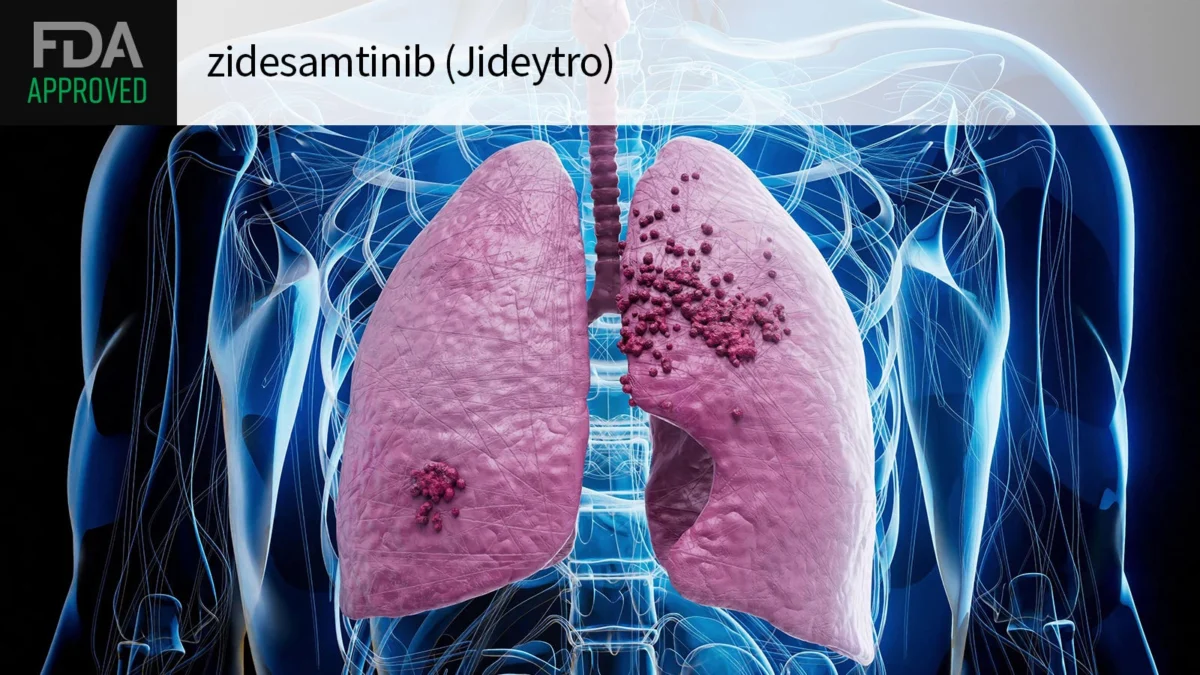
July 22, 2026 — In a significant development for oncology, the U.S. Food and Drug Administration (FDA) has officially granted approval for zidesamtinib (brand name: Jideytro) for the treatment of adults with locally advanced or metastatic ROS1-positive non-small cell lung cancer (NSCLC). This approval, announced by GSK on Wednesday, targets a specific subset of patients who have already navigated the challenges of previous ROS1-targeted therapies, offering a new lifeline for those whose cancer has evolved to resist standard care.
The Clinical Landscape: Addressing Resistance in ROS1-Positive NSCLC
ROS1-positive NSCLC accounts for approximately 1% to 2% of all non-small cell lung cancer cases. While the advent of first- and second-generation ROS1 inhibitors revolutionized the treatment landscape, clinicians have long faced the formidable hurdle of acquired resistance. Over time, tumors often develop mutations or find "bypass tracks" that render initial therapies ineffective, frequently leading to progression—most notably within the central nervous system (CNS).
Zidesamtinib enters the market as a next-generation, brain-penetrant ROS1-selective inhibitor. Its molecular design is specifically engineered to bypass the resistance mechanisms that stymie earlier inhibitors. By effectively crossing the blood-brain barrier and maintaining potency against a broad spectrum of ROS1 resistance mutations, zidesamtinib seeks to address the "revolving door" of therapy that many NSCLC patients face.
Chronology: From Trial to Therapeutic Standard
The path to approval for zidesamtinib was paved by the robust data generated during the phase I/II ARROS-1 clinical trial (NCT05118789). The journey of this drug highlights the modern accelerated timeline for precision oncology, moving from early-stage investigation to regulatory validation based on compelling surrogate endpoints.
- Early Phase Development: Initially designed to overcome the limitations of early ROS1 inhibitors, the molecule underwent rigorous testing in the ARROS-1 trial, which specifically recruited patients who had already exhausted standard-of-care options.
- The ARROS-1 Milestone: The study population comprised 117 patients, all of whom had previously received at least one ROS1 kinase inhibitor. The primary focus was on objective response rate (ORR), a critical metric for evaluating the efficacy of drugs in heavily pretreated cancer populations.
- July 2026 Approval: Following the submission of data showing durable responses across various subgroups, the FDA granted approval, cementing zidesamtinib’s role as a subsequent-line treatment for patients with limited options.
Supporting Data: Efficacy and Patient Outcomes
The clinical data from the ARROS-1 trial paints a promising picture for the therapeutic potential of zidesamtinib. The drug demonstrated efficacy not only in the general study population but also in subgroups that are historically difficult to treat.
Efficacy by Treatment History
The trial data underscored the potency of zidesamtinib across different levels of prior treatment exposure:
- Overall Population: Among the 117 patients, the ORR was 44%. Perhaps more significantly, the responses were durable; the duration of response (DOR) rates at 6 and 12 months were 82% and 69%, respectively, suggesting that the clinical benefit is not merely transient.
- Prior Exposure Stratification: Patients who had received one prior ROS1 inhibitor showed an ORR of 49%. In the more heavily pretreated group—those who had received two or more prior ROS1 inhibitors—the ORR was 38%. This indicates that while efficacy may taper with increased resistance, zidesamtinib remains a viable option even for patients who have exhausted multiple lines of therapy.
Addressing CNS and Resistance Mutations
One of the most critical aspects of the ARROS-1 findings relates to the drug’s performance in the brain and against specific genetic obstacles:
- CNS Metastases: For patients with measurable CNS metastases at baseline who had not undergone radiation within the previous two months, the ORR was an impressive 48%. This highlights the drug’s ability to achieve adequate therapeutic concentrations in the brain.
- Resistance Mutations: In patients harboring documented ROS1 resistance mutations, the ORR was 50%, validating the engineering behind the drug’s design as a next-generation inhibitor.
Official Perspectives: The Clinical Impact
The approval of zidesamtinib was met with cautious optimism by the oncology community. Alexander Drilon, MD, a lead investigator at Memorial Sloan Kettering Cancer Center, emphasized the multifaceted nature of the challenge faced by patients with this diagnosis.
"Despite advances in treatment, resistance mutations, disease progression in the brain, and treatment-related adverse events continue to create challenges for patients," Drilon stated in the GSK press release. He noted that the responses observed in the ARROS-1 trial, particularly in patients who had already undergone multiple cycles of systemic therapy, represent a "meaningful progress for people living with this disease."
For physicians, the addition of zidesamtinib to the arsenal provides a much-needed "third or fourth act" in the clinical management of ROS1-positive disease, allowing for a more nuanced, sequence-based approach to treatment.
Safety and Risk Management
No therapeutic agent is without risk, and the safety profile of zidesamtinib, based on a pooled population of 446 patients, requires careful clinical oversight.
Common Adverse Reactions
The most frequently reported adverse reactions included:
- Edema (swelling)
- Peripheral neuropathy
- Constipation
- Fatigue
- Dyspnea (shortness of breath)
Laboratory Abnormalities
Clinicians are advised to monitor patients for specific hematologic and metabolic changes. The most common grade 3 or 4 laboratory abnormalities identified during clinical trials included:
- Increases in creatine phosphokinase
- Increases in triglycerides
- Decreases in lymphocytes
- Decreases in hemoglobin
Warnings and Precautions
The FDA-mandated prescribing information for zidesamtinib contains several critical warnings that necessitate proactive patient monitoring. These include:
- CNS Adverse Reactions: Given the drug’s brain-penetrant nature, monitoring for neurological changes is essential.
- Cardiac Risks: The potential for QTc interval prolongation requires periodic ECG monitoring.
- Pulmonary Toxicity: Interstitial lung disease and pneumonitis have been noted, requiring immediate evaluation of new or worsening respiratory symptoms.
- Systemic Concerns: Precautions are also listed for skeletal fractures, myalgia (related to creatine phosphokinase elevation), pancreatic toxicity, and the risk of embryo-fetal toxicity.
Implications: The Future of Precision Oncology
The FDA approval of zidesamtinib marks a shift in how we approach targeted therapy in lung cancer. By specifically addressing the resistance mutations that develop after initial therapy, GSK and the medical community are moving toward a paradigm of "maintenance and adaptation."
A Shift in Sequencing
The availability of zidesamtinib will likely change clinical guidelines for how ROS1-positive patients are sequenced. Previously, once a patient progressed through second-generation inhibitors, clinical trial enrollment was often the only viable path. Now, with an FDA-approved standard, the treatment algorithm is more robust.
The Role of Biomarker Testing
This approval further reinforces the critical importance of comprehensive molecular profiling. To utilize zidesamtinib effectively, clinicians must understand the specific resistance landscape of the patient’s tumor. The efficacy seen in patients with specific ROS1 resistance mutations highlights that the future of cancer care is inextricably linked to the ability to identify these mutations in real-time.
Looking Ahead
While zidesamtinib offers a significant breakthrough, the oncology community remains focused on the next iteration of challenges. As patients live longer with metastatic disease, the focus will continue to shift toward managing chronic toxicity and preventing the development of even more complex resistance patterns.
For the patient population living with ROS1-positive NSCLC, July 22, 2026, represents a day of progress. By transforming a previously intractable resistance problem into a manageable clinical scenario, zidesamtinib exemplifies the ongoing evolution of precision medicine—a field that continues to turn the tide against advanced malignancies, one mutation at a time.