










In a potential paradigm shift for oncology, researchers from Weill Cornell Medicine and the Cornell Duffield College of Engineering have unveiled a groundbreaking dual-action therapy that leverages the unique properties of silica nanoparticles to combat aggressive prostate cancer. By combining direct tumor destruction with a sophisticated "reawakening" of the body’s dormant immune system, this novel approach has achieved complete tumor remissions in preclinical mouse models. The findings, published in the June 15 issue of Cancer Research, suggest that these tiny engineered structures—already proven safe in early-stage imaging trials—may soon pave the way for human clinical applications.
The Genesis of "C’ Dots": From Imaging to Therapeutics
The story of this breakthrough begins not with a weapon, but with a map. The particles in question, formally known as ultrasmall fluorescent core-shell silica nanoparticles or "Cornell Prime dots" (C’ dots), were originally developed to enhance the precision of medical imaging. Composed of amorphous silica—a naturally occurring form of silicon dioxide found in various foods and microscopic organisms—these particles were designed to navigate the human body safely to highlight tumor boundaries during surgery.
However, as researchers began to explore the potential of these particles, they observed a phenomenon that defied initial expectations. The particles did not merely linger in the background as inert imaging agents; they appeared to interact with the biological environment in ways that actively inhibited tumor growth. This serendipitous discovery prompted a multi-year, interdisciplinary collaboration between the laboratory of Dr. Michelle Bradbury, an expert in radiology and molecular imaging, and the laboratory of Dr. Ulrich Wiesner, a pioneer in materials science and engineering.
Chronology of the Research Effort
The development of the C’ dot therapy represents a rigorous, multi-year trajectory of scientific refinement:
- Phase I: Imaging Foundation: Initially, the research focused on establishing the safety and targeting capabilities of C’ dots for image-guided surgery. Because they are smaller than the threshold for renal clearance, they can be safely excreted by the body, a key requirement for any systemic nanoparticle therapy.
- Phase II: Discovery of Therapeutic Potential: While observing the particles in laboratory settings, the team noted that they selectively accumulated in tumor tissues. Subsequent investigations revealed that these particles, when modified, could exert a direct toxic effect on cancer cells.
- Phase III: Mechanistic Elucidation: The team identified that the particles trigger "ferroptosis"—a specialized, iron-dependent form of cell death. This discovery provided a mechanistic basis for why the nanoparticles were killing cancer cells without the systemic toxicity associated with traditional chemotherapy.
- Phase IV: Immunological Integration: The most recent stage of the research involved evaluating the "cold-to-hot" tumor transition. By turning an immune-suppressed (cold) tumor environment into an immune-active (hot) one, the researchers discovered that the nanoparticles act as a sensitizer, allowing standard immunotherapy drugs to work where they previously failed.
- Phase V: Preclinical Validation: The latest study utilized mice with aggressive prostate cancer, testing the nanoparticles alone and in combination with existing checkpoint inhibitors and macrophage-targeting therapies.
Supporting Data: The Mechanics of Destruction
The efficacy of the C’ dots relies on a sophisticated "one-two punch" strategy that addresses both the physical integrity of the tumor cell and the biological environment surrounding it.
The Ferroptosis Pathway
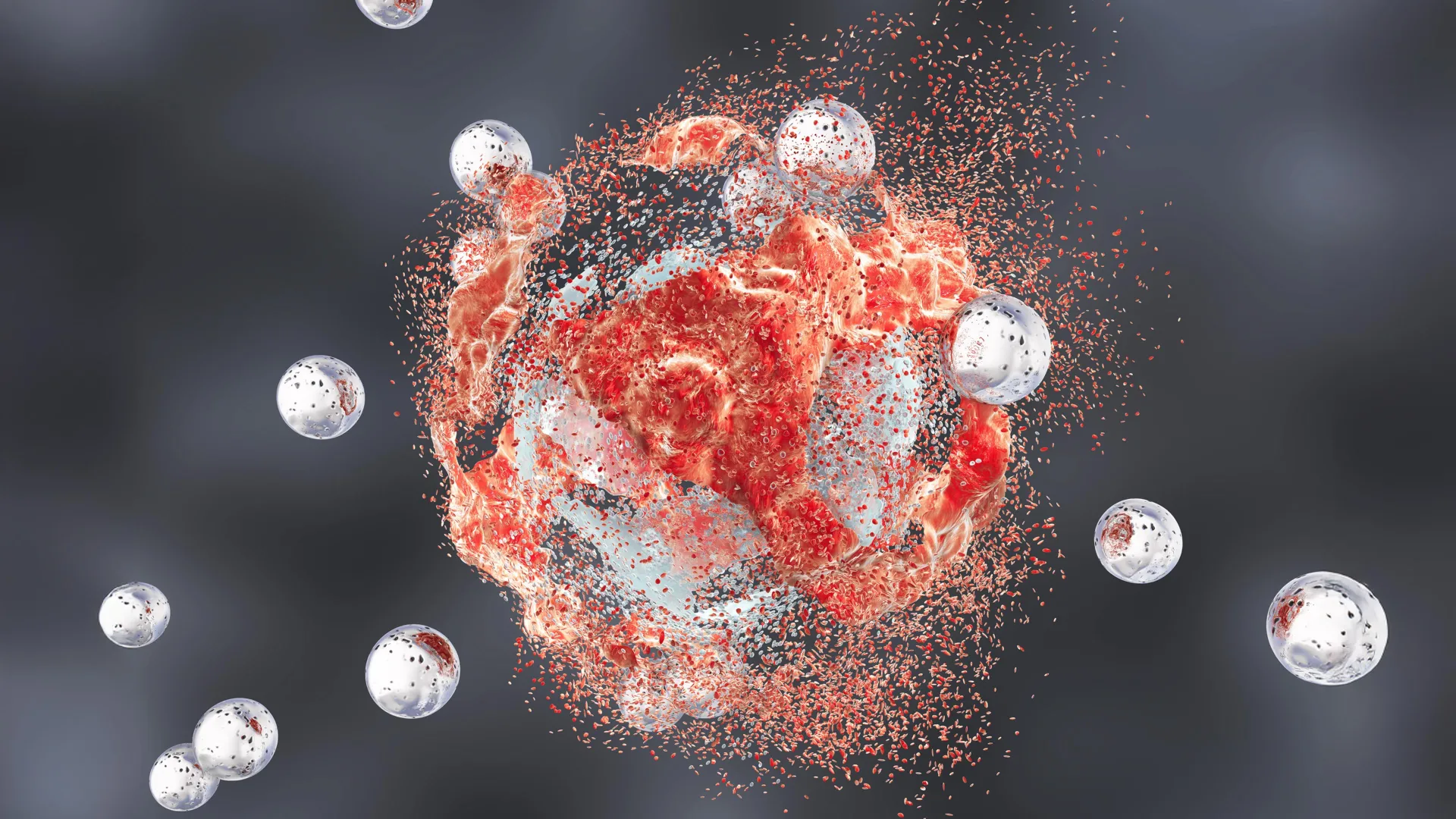
The most startling finding in the study involves the process of ferroptosis. Under normal conditions, cells manage oxidation carefully. However, the C’ dots—likely by collecting and transporting positively charged iron ions from the bloodstream directly into the tumor cells—overwhelm the cell’s internal defenses. This leads to a cascade of oxidation that destroys the fatty molecules within cell membranes, causing the tumor cells to collapse and die from the inside out.
Remodeling the Immune Microenvironment
Prostate tumors are notoriously "cold," meaning they often evade the immune system by creating a microenvironment that suppresses T-cell and macrophage activity. The C’ dots effectively "reboot" this environment. The researchers observed that in the presence of these nanoparticles, inactive or suppressed immune cells shifted into an active, cancer-fighting state. This shift is critical because it creates a vulnerability that allows existing immunotherapies to infiltrate and destroy the tumor, a feat that has historically been difficult to achieve in prostate cancer.
Synergistic Survival Statistics
The data from the survival studies were particularly compelling. While C’ dots alone or immunotherapy alone offered only modest survival benefits, the combination was transformative.
- Combination A (C’ dots + Checkpoint Blockade): Resulted in complete or near-complete remissions and indefinite survival in 40% of the test subjects.
- Combination B (C’ dots + Checkpoint Blockade + CSF-1R Blockade): By adding a treatment that specifically targets tumor-associated macrophages, the success rate for complete remission increased to 50%.
Official Responses: A New Clinical Paradigm
The research team believes these results represent a fundamental shift in how we approach cancer therapy.
"We’re very encouraged by these results; a treatment that directly induces tumor-cell death while transforming the immune microenvironment, as this does, would represent a new clinical paradigm," said Dr. Michelle Bradbury. Her sentiment is shared by the study’s co-corresponding author, Dr. Ulrich Wiesner, who expressed wonder at the versatility of the silica particles. "It seems unreal—how is it possible that rather than a single pathway, we see all these effects happening simultaneously and only in tumors and not in healthy tissues?"
Dr. Wiesner speculates that because silica is so ubiquitous in the natural environment—found in everything from leafy greens to cereal grains—the human body may possess a latent, inherent compatibility with the material that researchers are only now beginning to exploit.
Dr. Jedd Wolchok, a co-author on the study and a leading oncologist, emphasized the clinical urgency of these findings. "One of the most intriguing aspects of this work is the convergence of direct tumor cell killing with broad immune remodeling," Wolchok stated. "By creating conditions that support a more effective antitumor immune response, these particles may help unlock the full potential of immunotherapy in prostate cancer."
Implications for Future Oncology
The potential for C’ dots to move into human clinical trials holds significant promise for patients with aggressive, treatment-resistant prostate cancer. Because the nanoparticles are targeted using a molecule that recognizes PSMA—a protein highly expressed on the surface of prostate tumor cells—the therapy achieves high concentrations at the site of the disease while sparing healthy tissue.
The lack of toxicity observed in organs like the spleen and liver—even when the particles were administered systemically—is a significant milestone. In the world of drug development, the "therapeutic window" is often narrow; the ability to achieve such high efficacy with minimal off-target effects is the hallmark of a potential game-changer.
Looking Ahead
The research team, which includes a dedicated group of postdoctoral fellows and graduate students who performed the painstaking work of synthesizing and characterizing these particles, is now setting its sights on the next hurdle: human clinical trials. The goal is to determine whether the safety profile and the remarkable synergy with immunotherapy observed in mice will translate to human patients.
If successful, this technology could provide a blueprint for a new class of "smart" therapies that do not rely on a single biological pathway, but rather manipulate multiple pathways—metabolic, inflammatory, and immunological—simultaneously. As the scientific community looks toward the next phase of development, the C’ dot stands as a testament to the power of interdisciplinary research, bridging the gap between materials science and clinical medicine to tackle one of the most stubborn challenges in oncology.
This research was supported by the Department of Defense (PC220534); the National Cancer Institute; and Cycle for Survival/Parker Institute funding. Drs. Bradbury and Wiesner are inventors on patents related to the technology described.