





In an era defined by fluctuating global economies and a tightening philanthropic landscape, scientific progress often finds itself at a crossroads. For many research institutions, the past year has been characterized by defensive maneuvers and budgetary consolidation. However, for the Cancer Research Institute (CRI), the fiscal year 2025–26 represented a deliberate pivot toward aggression in the pursuit of discovery. By committing a historic $34.4 million in new funding, the organization has signaled that in the face of uncertainty, the only viable path forward is an unwavering commitment to the next generation of scientific pioneers.
The Pillars of Progress: A Record-Breaking Year in Review
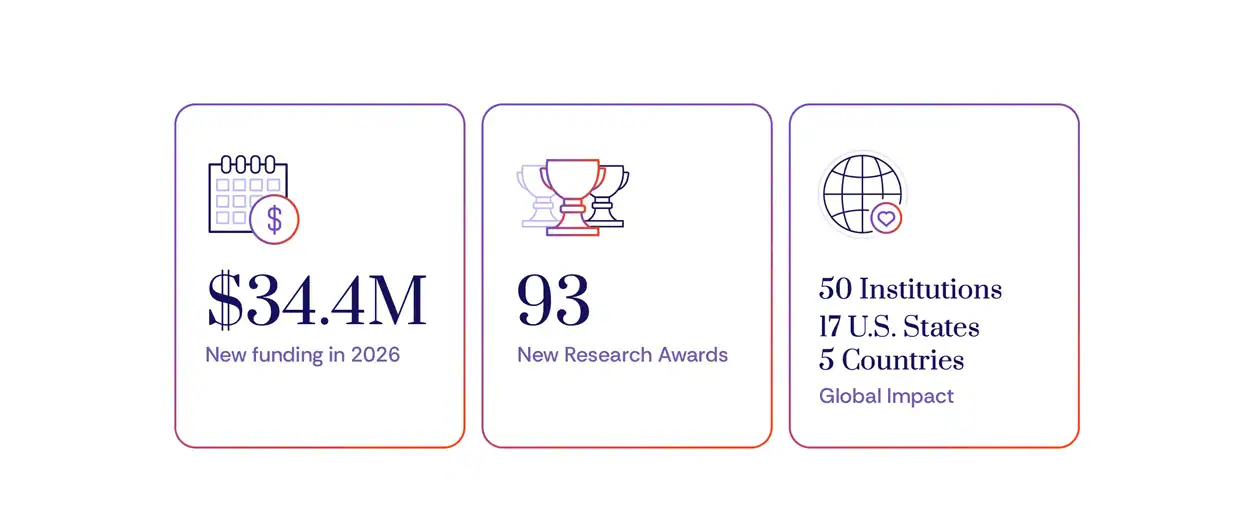
The statistics from the 2025–26 fiscal year serve as more than mere metrics; they represent a lifeline to the global scientific community. With $34.4 million distributed across 93 awards, the CRI has achieved its most prolific grantmaking year since its inception seven decades ago. These investments are not geographically isolated; they have been deployed across 50 elite research institutions spanning five countries and 17 states.
This infusion of capital is designed to act as a buffer against the “funding gap” that frequently stifles promising research. By providing this stability, the CRI ensures that the high-risk, high-reward nature of cancer immunotherapy remains a priority, even when broader economic indicators suggest a move toward caution.
Chronology of Commitment: 70 Years of Scientific Stewardship
The CRI’s recent funding surge is the culmination of a seven-decade legacy of strategic patience. Since its founding, the Institute has operated on a foundational philosophy: identify brilliance early and provide the resources necessary for that brilliance to manifest in the clinic.
- The Early Years (1950s–1980s): Establishing the credibility of immunotherapy, a field that was once considered fringe, by funding foundational studies into the body’s innate ability to combat malignancy.
- The Expansion Era (1990s–2010s): Scaling operations to include clinical trials and the development of translational data programs, bridging the gap between bench science and bedside application.
- The Contemporary Milestone (2025–2026): Implementing the IGNITE Award program, a strategic response to the “Valley of Death”—the precarious phase where early-career researchers struggle to transition from fellowship to independent lab leadership.
The IGNITE Award: Bridging the Career Chasm
Perhaps the most significant development in the CRI’s portfolio this year is the launch of the IGNITE Award (Inspiring Growth and Nurturing Independence Through Excellence).
The transition from a postdoctoral researcher to an independent principal investigator is arguably the most volatile period in a scientist’s life. During this phase, researchers must simultaneously navigate the administrative hurdles of establishing a laboratory, define a niche for original research, and secure enough preliminary data to compete for federal or long-term private funding. Historically, many brilliant researchers have exited the field during this transition, not due to a lack of talent, but due to a lack of bridge funding.
IGNITE is specifically engineered to eliminate this barrier. By providing flexible, targeted support, the award allows early-career scientists to focus on bold, high-stakes inquiries that might otherwise be deemed "too risky" by more traditional, conservative funding bodies.
Case Study: Dr. Simone Park and the Future of Memory T Cells
The efficacy of the IGNITE program is best illustrated through the journey of Dr. Simone Park at the University of Pennsylvania. Dr. Park’s career trajectory is a perfect case study of how sustained investment fosters long-term scientific leadership.
Initially supported by the CRI as a postdoctoral fellow, Dr. Park is now one of the inaugural recipients of the IGNITE Award. Her work focuses on tissue-resident memory T cells. These specialized immune cells do not merely circulate in the blood; they reside within tissues, acting as a permanent "security force" that remains on high alert for cancer recurrence.
Dr. Park’s research is investigating the biological mechanisms that allow these cells to persist and maintain their anti-tumor efficacy over years. By decoding the biology of their durability, Dr. Park is working toward the development of therapies that could provide patients with a lifetime of immunological protection. Her progress is not just a personal victory; it is a proof-of-concept for the CRI’s "continuum of support" model—nurturing a scientist from their formative training years through to the establishment of a transformative, independent research program.
Supporting Data: A Multi-Layered Ecosystem
The CRI’s impact is not limited to grants. To truly move the needle in cancer research, the Institute has cultivated a holistic ecosystem:
- Clinical Integration: Beyond basic research, the CRI actively advances clinical studies, ensuring that biological discoveries are tested in the real-world setting of patient care.
- Computational Empowerment: Recognizing that modern oncology is a data-driven field, the CRI invests in programs that provide scientists with advanced computational skills, allowing them to parse the complex genomic and proteomic data sets inherent in immunotherapy.
- Patient Advocacy: The Institute maintains a robust infrastructure for patient and caregiver education, ensuring that those affected by cancer can navigate the often-confusing landscape of emerging immunotherapies with accurate, actionable information.
Implications: The Macro View of Scientific Innovation
The implications of the CRI’s recent strategy are profound. By choosing to increase funding in a period of uncertainty, the CRI is challenging the industry standard of reactive grantmaking.
The Cost of Caution
The scientific community often warns of "the cost of inaction"—the lost breakthroughs that never occur because the funding environment was too hostile to support early-stage exploration. By prioritizing stability for early-career investigators, the CRI is actively mitigating this loss. The long-term impact will likely be seen in a more diverse, resilient pipeline of immunotherapy leaders who are capable of tackling the next generation of challenges, from refractory cancers to the complexities of the tumor microenvironment.
A Promise to the Future
The 2026 Annual Impact Report is not just a document of fiscal responsibility; it is a manifesto of institutional intent. It serves as a reminder to the broader biomedical research community that the "landscape of uncertainty" is a constant variable, not a reason for paralysis.
For the researchers currently at their benches, for the patients waiting for the next breakthrough, and for the donors who sustain this mission, the CRI’s record-setting year provides a clear message: progress requires more than just money—it requires the courage to bet on people when the world is betting on caution.

Conclusion: The Work Ahead
As the CRI looks toward the future, it is clear that the organization is not satisfied with the status quo. While $34.4 million is a record, it is viewed internally as a foundation rather than a ceiling. There remains an urgent need to translate the increasingly complex biology of the immune system into therapies that are accessible, effective, and durable.
The success of the IGNITE program and the growth of the Lloyd J. Old STAR Awards—which support established investigators in high-risk research—demonstrates that the CRI has successfully built a ladder of support that spans an entire career. From the first postdoctoral experiment to the pioneering work of a tenured laboratory head, the CRI remains the constant in a field defined by rapid, often overwhelming, change.
As the organization notes, "We’re just getting started." In a field where every day represents a critical juncture for patients, that sense of urgency is not just appropriate—it is essential. The landscape of science will always be subject to the winds of uncertainty, but with sustained support, bold ideas, and a commitment to nurturing human potential, the Cancer Research Institute has proven that progress is not just possible; it is inevitable.