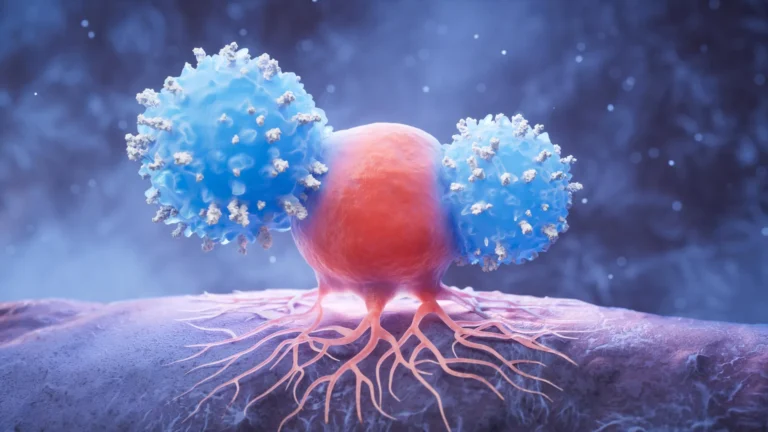











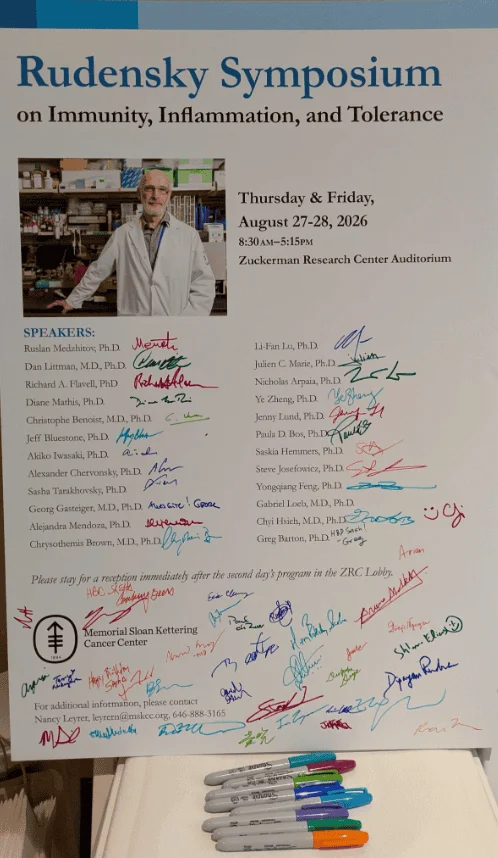
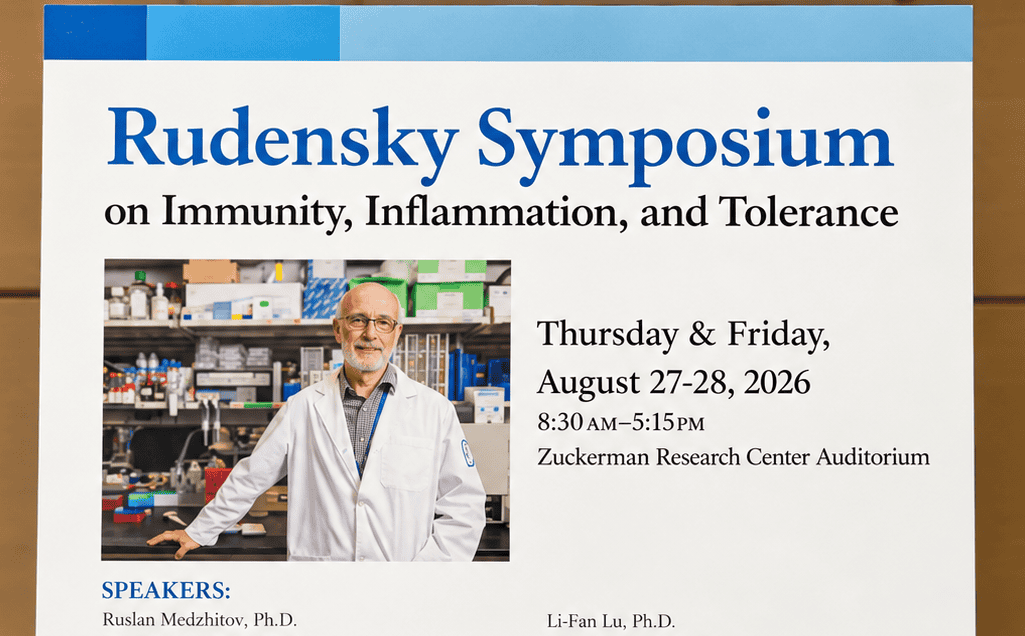
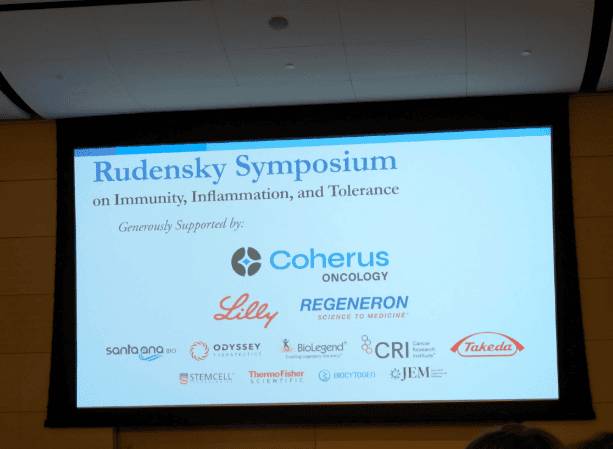
On August 27–28, 2026, the scientific community gathered for a milestone event that transcended the typical academic conference. The "Rudensky Symposium on Immunity, Inflammation, and Tolerance" was convened not merely to review data, but to honor the 70th birthday of Dr. Alexander “Sasha” Rudensky, a titan in the field of immunology and a pillar of the Memorial Sloan Kettering Cancer Center (MSKCC).
The symposium served as a living map of Dr. Rudensky’s influence, bringing together generations of former trainees, collaborators, and esteemed peers. Over two days, the event wove together high-level scientific discourse with personal reflections on the mentorship and collaborative spirit that have defined Dr. Rudensky’s career. For the Cancer Research Institute (CRI), which has supported Dr. Rudensky’s work for over two decades, the gathering was a testament to the power of long-term investment in basic science.
The Foundation of a Scientific Legacy
The history of Dr. Rudensky’s work is inextricably linked to the evolution of modern immunology. In 2015, the CRI recognized his foundational contributions to the field by awarding him the prestigious CRI William B. Coley Award. His research into regulatory T cells (Tregs)—the "peacekeepers" of the immune system that prevent autoimmunity and maintain tissue integrity—has revolutionized our understanding of immune tolerance.
CRI’s commitment to Dr. Rudensky extends beyond individual awards; it encompasses a broader philosophy that to cure cancer, one must first master the fundamental mechanics of the immune system. With over a dozen CRI-funded fellows having passed through his laboratory, the "Rudensky School" of thought has become a major engine for innovation in cancer immunotherapy.
Chronology of the Symposium: A Dialogue Across Generations
The symposium was structured to mirror the trajectory of immunological discovery: moving from the basic maintenance of healthy tissues to the complex, hostile environment of the tumor microenvironment.
Day One: Homeostasis and the Mechanics of Repair
The opening sessions focused on the "baseline" of the immune system. Dr. Ruslan Medzhitov, a 2003 CRI Coley Awardee, set the tone by reframing the immune system as a domestic maintenance crew. He presented data on how stressed cells recruit macrophages to clear "molecular garbage," suggesting that the immune system’s role in tissue repair is just as critical as its role in defense against infection.
This theme of maintenance was expanded by Dr. Diane Mathis and Dr. Christophe Benoist, both 2024 CRI Coley Awardees. Their presentations highlighted that Tregs are not just passive suppressors of inflammation; they are active architects of tissue repair. Dr. Mathis detailed how specific Treg populations manage inflammation in injured muscle to guide effective healing, while Dr. Benoist provided a molecular breakdown of how the target recognized by a Treg dictates its identity and functional outcome.
Day Two: The Pre-Cancerous Frontier and Ecosystems
The second day shifted toward the "tipping point"—the moment when healthy tissue homeostasis breaks down into malignancy. Dr. Richard A. Flavell, a 2012 CRI Coley Awardee, presented compelling preclinical work regarding cancer immunosurveillance. By tracking mutant intestinal stem cells in mouse models, Dr. Flavell showed that the immune system actively engages in a "tug-of-war" with early-stage cancer cells long before a tumor is clinically visible.
Dr. Julien C. Marie contributed a vital perspective on the plasticity of inflammatory states. By studying the TGF-β signaling pathway, his research revealed that harmful inflammatory programs in Th17 cells—often precursors to oncogenesis—are not necessarily permanent. This finding offers a glimmer of hope for future therapies that might "reprogram" inflammatory cells rather than simply eliminating them.
Supporting Data: The Architecture of Tumor Resistance
The symposium highlighted a paradigm shift in how researchers view tumors: no longer as isolated masses, but as complex ecosystems that manipulate their surroundings.
- The Microbiome Connection: Dr. Dan Littman, a 2016 CRI Coley Awardee, presented findings on the gut microbiome’s systemic impact. His research demonstrated how gut bacteria train T cells to influence systemic responses to checkpoint immunotherapy, proving that the battlefield for cancer treatment often begins in the digestive tract.
- Collagen and Metastasis: Dr. Paula D. Bos explored the physical structure of tumors. Her research showed that Tregs manipulate macrophages to remodel collagen fibers into "highways" for tumor cell migration. By temporarily inhibiting these specific Treg populations, her team successfully reduced metastatic spread in mouse models.
- Engineered Environments: Dr. Nicholas Arpaia, collaborating with CRI Lloyd J. Old STAR awardee Dr. Tal Danino, showcased the use of engineered bacteria as "Trojan horses." These bacteria are designed to deliver immune-modulating therapies directly into the immunosuppressive neighborhoods of lung tumors, minimizing systemic side effects.
Official Perspectives: The Value of Sustained Support
The Cancer Research Institute’s sponsorship of the event reflects a strategic mandate to prioritize fundamental immunology.
“The Rudensky Symposium is more than a celebration of a career; it is a celebration of a methodology,” said a spokesperson for the CRI. “By funding the basic, curiosity-driven science that Dr. Rudensky champions, we aren’t just looking for the next drug; we are training the next generation of scientists who will ask the questions we haven’t even thought of yet.”
The "scientific family" of Dr. Rudensky, represented by the scores of trainees who signed a commemorative poster board at the event, echoed this sentiment. Many attendees noted that the freedom to pursue unconventional biological questions—even when the clinical utility was not immediately apparent—was the hallmark of Dr. Rudensky’s lab.
Implications: The Future of Cancer Prevention
The most profound implication of the symposium is the move toward "pre-emptive" immunology. The research presented by Drs. Flavell, Marie, and others suggests that the window for intervention in cancer is far wider than currently realized. If we can identify the immune signals that allow mutant cells to outcompete their neighbors, we may one day be able to "nudge" the immune system to eliminate nascent cancer cells before they become life-threatening tumors.
Furthermore, the focus on "precision restraint" is a critical evolution in the field. The symposium made it clear that the goal is not to "boost" the immune system indefinitely—which risks dangerous autoimmunity—but to modulate it with the surgical precision of the Tregs themselves.
Conclusion: A Ripple Effect of Mentorship
As the symposium concluded, the "ripple effect" of Dr. Rudensky’s mentorship was palpable. The event proved that scientific breakthroughs are rarely the result of a single "eureka" moment, but rather the cumulative result of decades of rigorous, collaborative inquiry.
By investing in the foundational understanding of how tissues stay in balance, the scientific community is building a toolkit that will define the next fifty years of oncology. As these trainees move into their own laboratories, they carry with them the lessons of the Rudensky Symposium: that progress is a human endeavor, that biology is inherently connected, and that the answers to our most daunting diseases are often hidden within the subtle, everyday workings of our own immune cells.
The legacy of Sasha Rudensky, therefore, is not merely the papers published or the awards collected; it is the vibrant, interconnected network of scientists now working in concert to translate the mysteries of immunity into the reality of patient cures.