











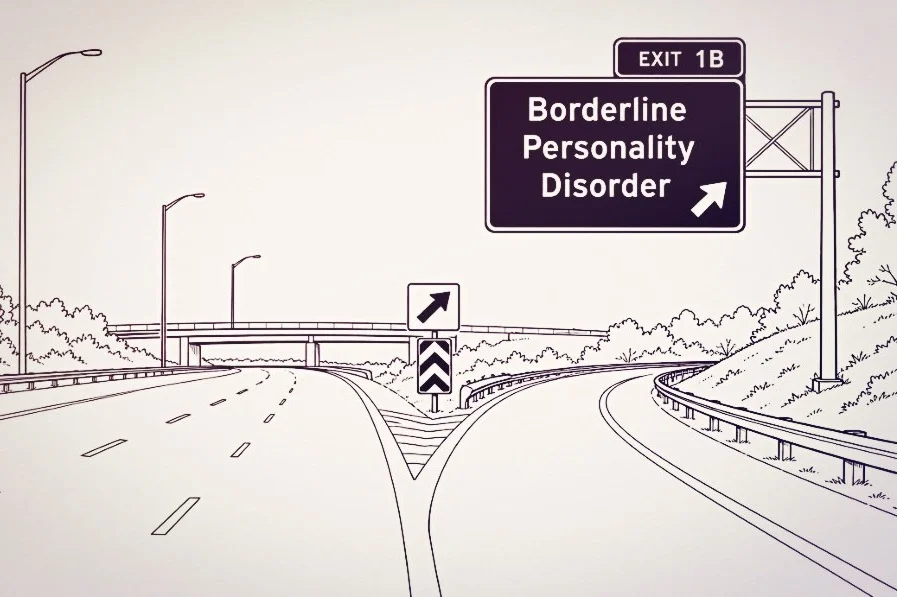
In the contemporary landscape of psychiatric care, a diagnosis is intended to be a compass—a tool to guide clinicians toward effective treatment and provide patients with a framework for understanding their suffering. However, for a growing number of patients, the diagnostic process has morphed into a "carousel," where labels are applied, discarded, and weaponized, often at the expense of the patient’s stability.
A recent account from a survivor of the mental health system highlights a disturbing trend: the use of diagnostic shifting to manage "difficult" cases and the abrupt termination of life-saving trauma therapy in favor of more convenient, less resource-intensive labels. This case study serves as a window into a systemic crisis where bureaucratic efficiency frequently takes precedence over clinical efficacy.
Main Facts: The Intersection of Trauma and Misdiagnosis
The core of this systemic failure lies in the profound overlap between Complex Post-Traumatic Stress Disorder (CPTSD), Attention Deficit Hyperactivity Disorder (ADHD), Autism Spectrum Disorder (ASD), and Emotionally Unstable Personality Disorder (EUPD)—more commonly known in the United States as Borderline Personality Disorder (BPD).
The patient in question, a survivor of assault, was initially diagnosed with CPTSD. While showing significant progress through specialized trauma therapy, their treatment was derailed by a series of contradictory diagnoses. This "diagnostic migration" began with a pivot to ADHD, followed by a suggestion of Autism, and culminated in a diagnosis of EUPD/BPD.
Critically, the EUPD diagnosis was delivered without a formal assessment and was used as a justification to deny further trauma-informed care. This pattern illustrates three major systemic issues:
- Diagnostic Overshadowing: Where one condition is ignored in favor of a newer, often more stigmatized label.
- Clinical Abandonment: The termination of successful therapy without a transition plan or "step-down" care.
- The Weaponization of Stigma: Using the BPD label to categorize patients as "treatment-resistant," thereby absolving the system of its failure to provide adequate care.
Chronology: A Descent into Clinical Gaslighting
The patient’s journey through the mental health system provides a timeline of how bureaucratic logic can dismantle personal recovery.
Phase I: The Promise of Trauma-Informed Care
Following a severe assault, the patient entered the system and received a diagnosis of CPTSD. Unlike standard PTSD, which often centers on a single event, CPTSD involves prolonged or repeated trauma, leading to "disturbances in self-organization" (DSO). For the first time, the patient reported "real progress," learning to map triggers and regulate physiological responses to trauma.
Phase II: The ADHD Pivot and the "Magic Pill"
Halfway through successful therapy, the treating psychologist shifted focus. Based on symptoms of executive dysfunction—which are common in both ADHD and CPTSD—the psychologist diagnosed the patient with ADHD. Crucially, rather than treating the conditions as comorbid, the psychologist terminated trauma therapy entirely. The patient was told to wait for ADHD medication, described as a "magic pill" that would resolve all underlying issues.
Phase III: The Year of Abandonment
The patient spent over a year on a waiting list for a psychiatric consultation to access medication. During this period, the lack of support caused a severe regression. Without the "off-ramp" of trauma therapy, flashbacks returned with increased intensity, and hypervigilance became a permanent state. When the consultation finally occurred, the psychiatrist dismissed the ADHD diagnosis, suggesting instead that the patient might be autistic.
Phase IV: The EUPD Label and Final Discharge
Desperate to return to the trauma therapy that had previously worked, the patient requested reinstatement. The request was denied based on a bureaucratic rule: a one-year limit on trauma intervention. When the patient challenged this decision, the lead psychiatrist—without conducting a formal assessment—labeled the patient with EUPD. This diagnosis was used to effectively close the case, framing the patient’s distress as a permanent personality flaw rather than a reaction to unmanaged trauma.
Supporting Data: The Science of Overlapping Symptoms
The patient’s experience is backed by a burgeoning body of clinical research that warns against "rushed" diagnoses in complex cases.
The Problem of Symptom Mimicry
A 2024 study by Sarr et al. highlights that CPTSD, Autism, and EUPD share nearly identical profiles regarding emotional dysregulation and social difficulties. Without a "longitudinal assessment"—observing the patient over a long period—clinicians often reach for the most "convenient" label.
In the ICD-11, the hallmark of CPTSD is identified as disturbances in self-organization, which includes:
- Affective Dysregulation: Difficulty calming down or feeling emotionally numb.
- Negative Self-Concept: Feelings of worthlessness or shame.
- Interpersonal Disturbances: Difficulty maintaining relationships.
These symptoms mirror the executive dysfunction of ADHD and the sensory hyper-reactivity often seen in Autism. When a clinician is under pressure to close cases, the nuances between these conditions are often ignored.
The "BPD Stigma" in Clinical Settings
The label of EUPD/BPD carries a unique and damaging weight. Research by Lam et al. (2015) found that clinicians rate a patient’s prognosis more negatively the moment a BPD label is applied, even if the symptoms are identical to those of a patient without the label.
Further studies by Baker & Beazley (2022) and Black et al. (2011) confirm that healthcare providers often hold subconscious biases against BPD patients, viewing them as "difficult," "manipulative," or "attention-seeking." In the patient’s case, this diagnosis functioned as a "wastebasket" category—a way to categorize a patient who was not recovering on the system’s rigid schedule.
Official Responses and Systemic Constraints
While individual clinicians make these diagnoses, they do so within a framework of systemic scarcity. Official responses from mental health trusts often cite "resource allocation" as the primary driver for therapy limits.
The "One-Year" Rule
Many public health systems, particularly those under-funded, implement "time-limited interventions." From an administrative standpoint, this ensures a "flow" of patients through the system. However, for CPTSD—a condition defined by long-term damage—a one-year cutoff is often arbitrary and counter-productive. When a patient exceeds this limit, the system is incentivized to reclassify them into a category that does not require the same level of intensive, ongoing psychological support.
The Private Sector Pipeline
In many regions, an Autism or ADHD label allows public health providers to claim they lack "specialized adult neurodevelopmental resources." This effectively pushes the patient toward the private sector, "cleaning the books" for the public provider. By reclassifying a trauma patient as neurodivergent or "personality disordered," the state can often bypass its obligation to provide long-term psychotherapeutic funding.
The Power Dynamic
The patient’s attempt to seek a second opinion was met with a flat refusal from the head of the clinic. In many psychiatric settings, the power imbalance is absolute. There is rarely a clear pathway for a patient to challenge a "clinical diagnosis," even when that diagnosis is made without the standardized testing protocols required by the DSM-5 or ICD-11.
Implications: The Human Cost of Epistemic Injustice
The implications of this "diagnostic weaponization" extend far beyond a single patient’s chart. It touches on the concept of epistemic injustice—where a person’s ability to communicate their own experience is dismissed because of a prejudicial label.
1. The Erosion of Trust
When a patient "drops their guard" in therapy, only to have their vulnerability used as evidence of a personality disorder, the therapeutic alliance is shattered. For a trauma survivor, this mimics the original trauma: a betrayal of trust by a figure in a position of power.
2. The Stigma in Employment and Society
A BPD label is not just a medical note; it is a social mark. If disclosed to employers or used in legal proceedings (such as family court), it can be used to undermine an individual’s credibility and stability. By applying this label without due diligence, clinicians are placing a permanent "black mark" on a patient’s social and professional life.
3. The Need for Accountability
The current system lacks a robust mechanism for holding clinicians accountable for "diagnostic malpractice." When a diagnosis is used as a tool for discharge rather than a tool for healing, it ceases to be medicine and becomes a form of bureaucratic management.
4. Moving Toward Compassion
The patient’s plea is simple: a return to compassion. "If someone really has BPD," they argue, "this label shouldn’t be used to discriminate against them or discharge them without a transition plan." The goal of psychiatry should be the alleviation of suffering, not the categorization of "difficult" patients into silos of neglect.
Conclusion
The descent of this patient into the "cracks of the system" was not an accident; it was the result of a system operating exactly as it was designed—to prioritize throughput over outcomes. As long as mental health services continue to use diagnoses as weapons of exclusion, the most vulnerable patients will continue to be the ones most likely to be left behind. True reform requires a move away from "convenient labels" and a return to the long, difficult, but necessary work of trauma-informed care.