










The American healthcare system is frequently described as "broken"—a vast, labyrinthine machine powered by antiquated fax machines, opaque billing practices, and a web of perverse financial incentives that often prioritize volume over patient outcomes. But beneath the technical jargon and policy debates lies a more uncomfortable question: Who is actually responsible for the deterioration of the patient experience?
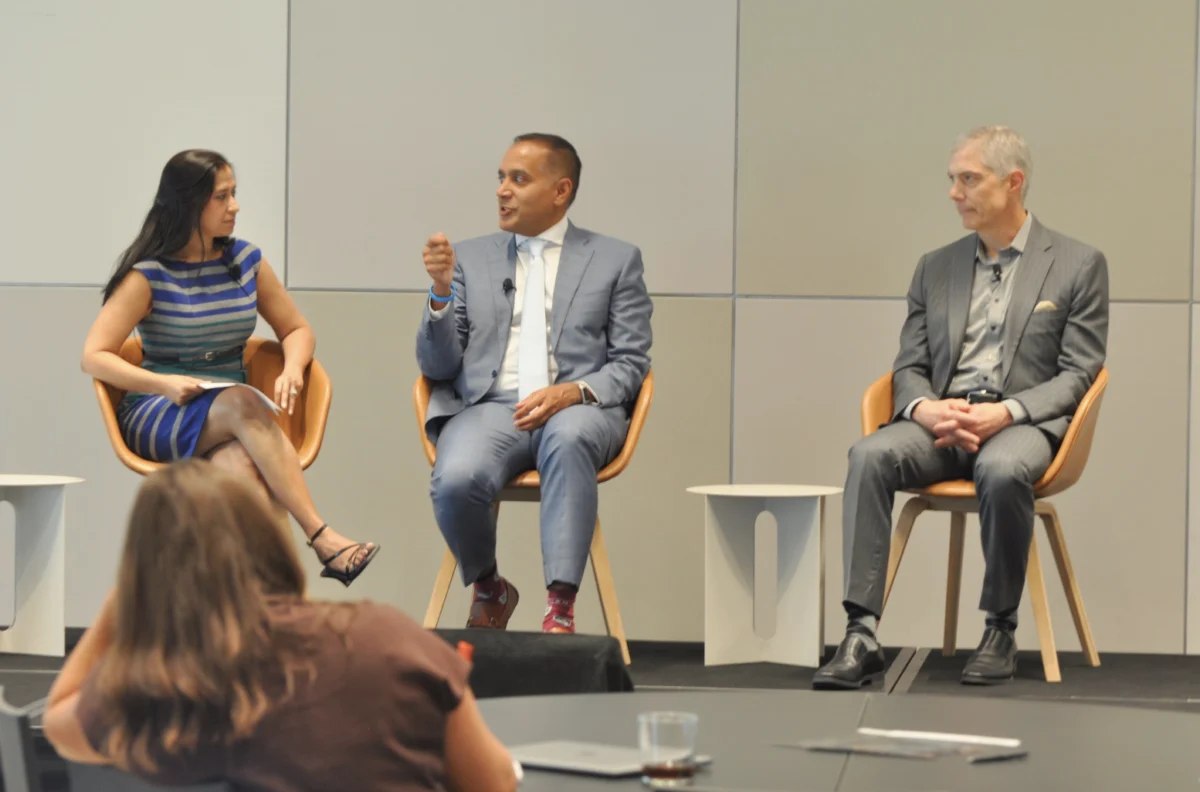
At MedCity News’ recent "Bullseye" event in Chicago, Editor-in-Chief Arundhati Parmar posed that exact question to two prominent health insurance CEOs. Their response was not a deflection toward government regulation or rising inflation, but a startling admission of culpability. "We did," replied Sachin Jain, CEO of SCAN Health Plan.
This candid admission from the executive suite signals a potential turning point in the industry, suggesting that the path to reform begins not with new legislation, but with a fundamental shift in the moral philosophy of healthcare leadership.
The Normalization of the Abnormal: A Culture of Convenience
The core of the issue, according to Jain, is that healthcare stakeholders have "normalized the abnormal." Professionals within the system have become desensitized to the friction and failure points that everyday patients endure, largely because those with industry influence have access to a "back door."
"I think we’ve come to accept things that we would not want for our loved ones," Jain told the audience. "When they apply to other people, we’re kind of okay with it because all of us have access to a back door. When any one of us has a challenge or a problem with the healthcare system, we pick up the phone, we call the person that we know might be able to make it work, and then we’re like, ‘Okay, thank God I know the CEO of this or the president of that.’"
This bifurcated reality—where executives enjoy concierge-level access while members navigate a fragmented, bureaucratic maze—is the engine of the current systemic failure. Jain argued that as long as leadership remains insulated from the consequences of the systems they design, the impetus for radical improvement will remain muted.
The Role of Health Plans: Architects of the System
Paul Markovich, CEO of Ascendiun—the nonprofit parent company of Blue Shield of California, Blue Shield Promise Health Plan, Altais, and Stellarus—agreed with the sentiment of collective guilt. For Markovich, the power dynamic in healthcare is inextricably linked to the administrative rules set by insurance providers.
"It’s our own damn fault collectively," Markovich noted. "We tend to control the rules of how people get paid. What are the administrative burdens? Are we using a fax machine, or are we figuring out another way to connect digitally? We have the biggest influence in trying to shift the system to getting much better results than what we’re seeing now."
Markovich posits that health plans are uniquely positioned to act as agents of change. By abandoning archaic communication methods and streamlining payment models, insurers could theoretically force the rest of the healthcare ecosystem to modernize. However, the path to such change is complicated by the industry’s massive scale and the conflicting motivations between nonprofit and for-profit entities.
For-Profit vs. Nonprofit: The Moral Dilemma
A central tension in the debate is whether the for-profit model is inherently incompatible with high-quality, patient-centric care. Parmar questioned whether insurance companies should exist as for-profit entities at all, given their fiduciary duty to shareholders, which often clashes with their duty to patients.
Markovich expressed being "torn" on the issue. While he believes the system might benefit from a higher density of nonprofit insurers, he acknowledged that some for-profit organizations, such as Devoted Health, operate with a strong mission-driven ethos. Conversely, he warned against the assumption that the nonprofit status is a panacea, pointing to the Department of Justice’s recent $556 million settlement with Kaiser Permanente affiliates regarding allegations of risk adjustment fraud.
Leadership Over Structure
Jain pushed the conversation further, arguing that the problem is not necessarily the for-profit structure itself, but a loss of moral agency. He pointed to the 2014 decision by CVS Health to remove tobacco products from its shelves—a move that likely sacrificed short-term revenue for a long-term public health benefit.
"We used to talk about corporations as potentially moral entities," Jain said. "We’ve become slaves to the idea that corporations have to just be slaves to their incentives or quarterly earnings. Corporations can be good or bad; they don’t just have to serve shareholders. The conversation we need to be having is: how do we ensure that an industry that treats human life every single day operates in a moral way?"
Challenging the Status Quo: Pharmacy Reimagined
Despite the dominance of industry giants like UnitedHealthcare—which lack the same incentives for radical disruption—smaller, mission-driven organizations can still exert significant influence through pilot programs and model shifts.
A prime example cited by Markovich is the "Pharmacy Reimagined" initiative led by Blue Shield of California. By breaking away from the traditional Pharmacy Benefit Manager (PBM) model and splitting responsibilities among several specialized partners, the organization challenged the opaque pricing structures that have long plagued drug costs.
"We went out with a model—the first major health plan to say this doesn’t make sense," Markovich explained. "We’re not going to do a traditional model. It got a lot of attention, and others started to follow. It also got traction in the public and with Congress. There are things that we can do to lead that can help change, but at the end of the day, we also need help."
The Path Forward: A Call for Radical Transparency
The consensus among these leaders is that meaningful reform requires a psychological shift within the C-suite. As long as executives view themselves as masters of a broken system rather than contributors to its decay, progress will remain incremental.
Jain’s call for executives to admit they are "hypocrites" is a radical, almost confessional approach to corporate leadership. By acknowledging that they work for organizations that often promise "patient-first" care while delivering the opposite, they hope to create a standard of accountability that forces change.
"Every one of us in this industry works for what I would describe as a fundamentally hypocritical organization," Jain declared. "You say one thing and you do another, and I think it’s not going to get better until we actually say that out loud. We are hypocrites. I am a hypocrite. I don’t want to be a hypocrite anymore. That’s the journey that we have to take the industry on."
Implications for the Future of Healthcare
The conversation at the Bullseye event highlights three critical implications for the future of the U.S. healthcare system:
- Administrative Reform as a Moral Imperative: If insurers stop mandating outdated technologies like fax machines and simplify the reimbursement process, they can significantly reduce physician burnout and administrative overhead.
- The Rise of Value-Based Accountability: The industry is moving toward a stage where public scrutiny and regulatory pressure may force even the largest for-profit entities to reconcile their quarterly earnings with their clinical outcomes.
- The Power of Precedent: As seen with the PBM disruption, individual health plans can act as "proof of concept" for broader market change. If smaller, mission-driven plans can prove that a better system is financially viable, they create a roadmap for larger players to follow—or risk losing market share to those who do.
Ultimately, the transformation of the healthcare system will not be achieved through a single piece of legislation. It will require a sustained, industry-wide acknowledgment that the current "back door" culture is untenable. As Jain and Markovich suggest, the first step to fixing the machine is admitting that those in charge are the ones who allowed it to break in the first place. Whether this admission leads to systemic change remains to be seen, but for the first time in a long time, the industry’s leaders are finally looking in the mirror.