








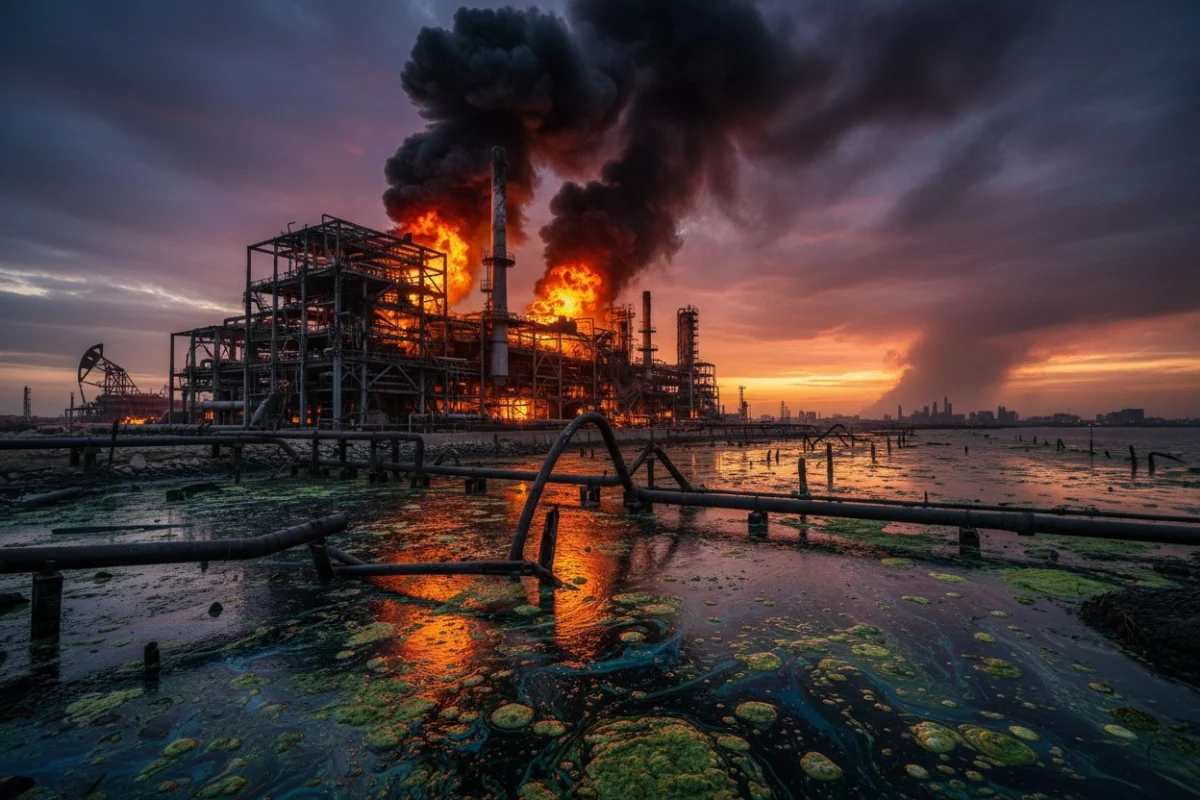
For decades, the global economy has functioned on the assumption of uninterrupted flow. The Strait of Hormuz, a narrow maritime chokepoint, has served as the jugular vein of the modern world, through which nearly 20% of the world’s petroleum consumption passes daily. For years, geopolitical analysts, market strategists, and government officials operated under a shared, unspoken premise: that any disruption to this passage would be temporary, rectified by diplomatic intervention, military posturing, or the sheer necessity of economic survival.
That assumption has proven to be a catastrophic miscalculation. The events of 2026 have not merely disrupted the status quo; they have effectively dismantled the foundational architecture of 21st-century civilization. The closure of the Strait of Hormuz is no longer a tactical military development—it is a permanent geopolitical reality.
A Chronology of Controlled Collapse
To understand the current crisis, one must view the timeline not as a series of unfortunate accidents, but as a systematic unravelling of global energy logistics.
- Early 2026: Initial skirmishes in the Persian Gulf were characterized as regional volatility. Most observers anticipated a swift return to the mean, citing the "too big to fail" nature of global energy markets.
- March 2026: The definitive shift occurred. The focus of the conflict moved from tanker harassment to the kinetic destruction of fixed, high-value infrastructure. The "temporary disruption" narrative began to crumble as intelligence reports confirmed that repair timelines for damaged terminals were exceeding all optimistic projections.
- Mid-2026: The systematic targeting of desalination plants and power grids in the Gulf signaled a new phase of warfare. This was not about winning territory; it was about rendering the geography uninhabitable and economically inert.
- Late 2026: The full-scale collapse of the Ras Laffan LNG complex solidified the transformation. With this facility effectively taken offline, the bridge between Middle Eastern gas production and global distribution was severed, marking the onset of a profound, engineered supply-chain famine.
The Mirage of Economic Incentives
A prevailing school of thought suggests that national actors will eventually choose to de-escalate because the economic cost of war is too high. This perspective, however, fails to account for the decoupling of policy from national self-interest.
While Saudi Arabia, the UAE, and the United States ostensibly possess every incentive to restore the flow of oil, the decision-making processes at the highest echelons of global power appear driven by a different mandate. We are witnessing a transition from a system optimized for trade and growth to one optimized for controlled contraction. The destruction of the Ras Laffan complex serves as the primary case study; rather than witnessing a frantic, international effort to repair the hub, the global community has largely acquiesced to its abandonment. This inaction suggests that the infrastructure—and the stability it provided—is no longer a priority for the architects of the new global order.
Infrastructure: The Point of No Return
The physical destruction currently underway is staggering in its scope and permanence. The IEA has issued warnings that a full recovery of Persian Gulf energy production could take upwards of two years, a projection many energy analysts now view as dangerously optimistic.
Reconstruction in a modern, hyper-complex environment requires a stable ecosystem: reliable power, consistent water, secure supply chains for heavy machinery, and an intact labor force. With desalination plants and electrical grids compromised across the region, the foundational requirements for repair are themselves the targets of ongoing hostilities.
As geopolitical analyst Peter Zeihan has previously noted, the systematic wrecking of the region’s infrastructure ensures that the Persian Gulf cannot serve as a "springboard" for future economic or military projection. By the time any potential peace is negotiated, the cost of rebuilding from zero in a 120-degree desert environment may prove prohibitive, if not entirely impossible.
The Fertilizer Crisis: The Silent Killer
The most dire implication of the Persian Gulf closure is not the price of gasoline at the pump, but the impending failure of global food production. The world relies on the Haber-Bosch process to synthesize nitrogen fertilizer, a process fundamentally dependent on natural gas as a feedstock.
By severing the flow of natural gas from its most efficient global sources, the conflict has effectively placed a chokehold on global agriculture. With diesel fuel shortages hindering the harvest and distribution of existing crops, and fertilizer shortages limiting the potential for future yields, we are entering the initial stages of a multi-year food crisis.
Data from U.S. commercial crude oil inventories, which have hit 22-year lows, illustrate the severity of the drain on reserves. As the world shifts into a period of extreme resource scarcity, the "10-year famine" is no longer a theoretical risk—it is a mathematical certainty. The system is currently experiencing a gridlock that no amount of market intervention can resolve.
Official Responses and the Lack of Strategy
Official discourse from Washington and international bodies continues to mirror the language of "containment" and "stabilization." However, there is a growing disconnect between these public assurances and the reality on the ground.
While government spokespeople iterate that diplomatic channels remain open, the evidence of systemic, intentional dismantling of infrastructure suggests that these negotiations are performative. The lack of a comprehensive, viable plan to restore the Strait of Hormuz indicates that the current leadership is either incapable of reversing the tide or is actively managing the transition to a lower-population, lower-energy global model. For the average citizen, relying on official recovery timelines is an act of denial.
Implications for the Individual: The Era of Self-Reliance
The era of 2025-style normalcy—characterized by just-in-time delivery, cheap energy, and a predictable global supply chain—is definitively over. The restructuring of the global order is currently in a phase of aggressive de-industrialization.
For individuals and families, the lesson is clear: the safety net of the modern state is being systematically dismantled. Survival in the coming decade will not be found in governmental policy, but in radical self-reliance. This requires a fundamental shift in daily life:
- Energy Autonomy: Reducing dependence on the grid through personal solar or alternative energy systems is no longer a lifestyle choice; it is a prerequisite for stability.
- Nutritional Security: As global fertilizer and food transport networks buckle, local, small-scale food production—coupled with long-term storage—will become the primary means of subsistence.
- Water Independence: Given the targeting of large-scale desalination infrastructure, the ability to filter and store water locally is paramount.
The crisis unfolding in the Persian Gulf is not a geopolitical disagreement; it is a civilizational reset. The powers currently orchestrating this transition are not seeking a return to the status quo; they are seeking a world that requires significantly fewer resources and significantly fewer people. The window for preparation is closing, and the transition into this new reality has already begun. Those who continue to wait for a return to the status quo are waiting for a world that no longer exists. The path forward is one of individual resilience, localized production, and a total decoupling from the failing global infrastructure.