









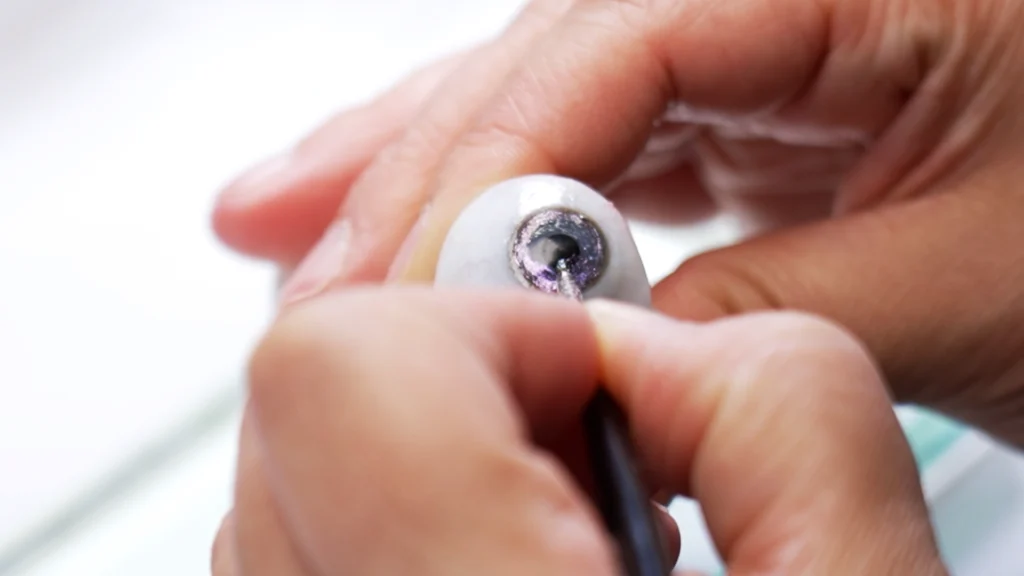
For centuries, the primary objective of an ocular prosthesis was the pursuit of invisibility. Whether crafted from glass by Venetian artisans in the 18th century or molded from acrylic by modern specialists, the goal for those who had lost an eye was simple: to mimic reality so perfectly that the prosthetic would go unnoticed. However, a burgeoning movement within the ocularist community is challenging this mandate of camouflage. Today, for a growing number of wearers, the artificial eye is being reimagined not as a mask, but as a canvas—a vibrant, personal tool for self-expression that turns a medical necessity into a bold statement of identity.
The Paradigm Shift: From Camouflage to Creativity
The traditional prosthetic eye is a marvel of both medical science and artistry. Composed of a custom-fitted acrylic shell that sits over a surgically implanted sphere, the device is designed to restore volume to the socket and mirror the appearance of the natural eye. For many, this restoration is a vital step in healing after trauma or illness.
Yet, as senior arts correspondent Jeffrey Brown explores in this installment of the CANVAS series, the desire for "normalcy" is being superseded by a desire for authenticity. In Portland, Oregon, board-certified ocularist Christina Leitzel has become a central figure in this movement. Known for creating what she calls "fun eyes," Leitzel crafts custom prosthetics that intentionally stand out. From glitter-infused irises and glow-in-the-dark patterns to intricate portraits and representations of beloved pets, her work is redefining the relationship between patient and prosthesis.
"I think there’s something in me that I have always wanted to help people," says Leitzel, who was inspired to enter the field after studying the work of prosthetic artists like Sophie de Oliveira Barata. "It is a beautiful art form to blend both art and science, and then give someone back something that they lost—or in this case, give them something new that reflects who they are."
A Chronology of the Artificial Eye
The history of the ocular prosthesis is a testament to human resilience and technological stagnation. As noted by Dan Roche, a professor at Le Moyne College and author of Eyes by Hand: Prosthetics of Art and Healing, the evolution of the field has been remarkably slow.
- Ancient Origins: The earliest recorded instances of prosthetic eyes date back to ancient Egypt, where inlaid eyes were placed in mummified bodies to provide the deceased with sight in the afterlife.
- 16th Century: Early surgeons began developing rudimentary coverings to protect the eye socket, though these were often more protective than aesthetic.
- 18th Century: The Venetian glass-blowing tradition introduced a level of artistry that allowed for more realistic iris colors and vascular detailing.
- The 20th Century: The rise of OSHA regulations and improved workplace safety measures in the United States led to a decline in traumatic eye injuries, shifting the demand for prosthetics from industrial accident victims to those suffering from congenital conditions, retinoblastoma, and ocular melanoma.
- 2021–Present: A cultural pivot occurs as wearers like Rachel Yee begin publicly embracing "fun eyes," moving the practice from the medical shadows into the realm of fashion and personal art.
Supporting Data: The Scope of the Ocularist Industry
Despite the vital role ocularists play in the lives of their patients, the industry remains highly specialized and relatively small.
- Practitioner Demographics: Currently, there are fewer than 200 board-certified ocularists operating across the United States and Canada.
- Patient Population: Approximately 20,000 individuals in North America lose an eye each year, whether due to illness, cancer, or trauma.
- Financial Barriers: A traditional, custom-made prosthetic eye costs between $2,000 and $10,000. While standard prosthetics are often covered by medical insurance, "fun eyes"—which are classified as cosmetic enhancements—are almost universally excluded from coverage.
- The Fun Eye Fund: Recognizing the financial hurdle this creates for patients, grassroots organizations like "The Fun Eye Fund" have emerged. Founded after a successful social media fundraising campaign for 12-year-old Gracie Corrigan, the nonprofit now helps families offset the costs of these customized artistic pieces, ensuring that creative expression is not limited by economic status.
The Psychological Intersection: Art as Therapy
The relationship between an ocularist and a patient is uniquely intimate. It requires a high degree of vulnerability, as the patient must share not only their physical measurements but also the emotional weight of their loss.
For patients like Bree, who lost an eye to ocular melanoma at 27, the initial transition was harrowing. "I went under with 20/20 vision and woke up with one eye and no depth perception," she recalls. "It broke me." While her first prosthetic was a perfect match to her remaining eye, she found the experience "uncanny," noting that it felt like a stranger was staring back at her from the mirror. By opting for a "fun eye"—a replica of her one-eyed cat—she transformed a symbol of trauma into a source of personal empowerment.
Dan Roche emphasizes that this dialogue is, in itself, a form of therapy. "Being able to talk through it with somebody who has seen this over and over is healing," Roche explains. By choosing to wear an eye that represents a personal narrative, patients are reclaiming agency over a body part that was previously defined by loss.
Official Perspectives and Implications
The medical community is gradually acknowledging that the psychological benefits of "fun eyes" are significant. While insurance providers remain cautious about covering what they view as elective aesthetic upgrades, patient advocates argue that the mental health improvements and the restoration of confidence are medical outcomes in their own right.
The implications of this movement are far-reaching:
- Redefining Disability: The shift away from "passing" as non-disabled towards "accessorizing" one’s disability is a powerful narrative change. It rejects the notion that those with physical differences must hide them to make others "comfortable."
- Expansion of Ocularistry: As the demand for artistic prosthetics grows, the field of ocularistry may evolve to include more interdisciplinary training, combining traditional medical fabrication with digital design, 3D printing, and fine art techniques.
- Community Support: The emergence of nonprofits like The Fun Eye Fund demonstrates a shift toward community-led care, where the burden of cost is shared by a supportive network of peers rather than solely relying on archaic insurance structures.
Conclusion: A New Way to See
The intersection of health and art is perhaps most visible in the office of an ocularist, where a drawer of glass and acrylic eyes can look like a collection of museum pieces. For patients like Rachel Yee and Gracie Corrigan, these eyes are not merely substitutes for what was lost; they are extensions of their personalities.
As Jeffrey Brown noted in his report, the transition from looking for a match to looking for a masterpiece is a profound journey. Whether it is a sparkling night sky or a tribute to a departed pet, these prosthetics offer a new way to interact with the world. By choosing to stand out, these individuals are not just changing how they are seen—they are changing the very way they see themselves. In doing so, they prove that while a prosthetic may be a medical device, it is, at its heart, an instrument of the human spirit.