







For thousands of years, the Indian subcontinent has nurtured a profound understanding of human physiology and the subtle energetics of the body. Central to this knowledge is Ayurveda, an ancient system of healing that views the body, mind, and spirit as an interconnected whole. Among its most celebrated therapeutic modalities is Ayurvedic massage—a sophisticated practice that transcends simple relaxation to serve as a cornerstone of both preventative health and clinical intervention.
By utilizing intentional touch, rhythmic application of herbalized oils, and a deep understanding of the individual’s unique constitution, Ayurvedic massage seeks to restore equilibrium to the body’s fundamental energies. As modern science begins to take a renewed interest in holistic wellness, the time-tested methodologies of the brhat trayi—the "Great Three" foundational texts of Ayurveda—offer a compelling blueprint for health in the 21st century.
The Foundations of Ayurvedic Healing
Ayurveda operates on the understanding that all matter, including the human body, is composed of the five great elements: space, air, fire, water, and earth. When these elements manifest within our biology, they coalesce into three primary energetic forces known as doshas:
- Vata: A combination of space and air, governing movement and communication.
- Pitta: A combination of fire and water, governing metabolism and transformation.
- Kapha: A combination of water and earth, governing structure and lubrication.
Health, in the Ayurvedic paradigm, is the state of balance between these three forces. When the doshas become "vitiated" or imbalanced, illness ensues. Ayurvedic massage serves as a corrective measure, employing the principle of "like-increases-like" and the application of opposite qualities to restore harmony. For instance, the cold, dry, and erratic nature of an imbalanced Vata is countered by the warm, grounding, and unctuous nature of oil-based massage.
Chronology and Historical Context: A Legacy of Touch
The roots of Ayurvedic massage are etched into the history of Vedic civilization. References to these practices are found in the Caraka Samhita, the Sushruta Samhita, and the Vagbhata—the brhat trayi that form the bedrock of Ayurvedic clinical practice. Later texts, such as the Bhavaprakasha and Yogaratnakara, expanded upon these methodologies.
In ancient times, massage was far more than a luxury; it was a versatile tool of state and society. Practitioners employed specific techniques to fortify warriors before battle, enhance physical vitality (virilization), manage the delicate recovery period of postpartum care, and serve as a pillar of preventative hygiene. This history demonstrates that Ayurvedic massage was always intended to be a flexible, adaptive science, tailored to the specific life stage and health requirements of the individual.
Individualized Care: The Precision of the Practitioner
Unlike standardized modern spa treatments, an Ayurvedic massage is a highly individualized intervention. A practitioner does not simply follow a set routine; they perform a comprehensive assessment of the client’s Prakruti (inherent constitution) and Vikruti (current state of imbalance).
Crucial to this assessment is the evaluation of Agni (digestive fire) and the presence of Ama (metabolic toxins). Ama is viewed as a sticky, heavy substance that accumulates in the body due to poor digestion or environmental factors. If a practitioner identifies high levels of Ama, they will often avoid traditional oil-based massage, as the heavy, unctuous nature of the oil could exacerbate the condition. In such cases, the practitioner may opt for Udvartana—a vigorous dry massage using specialized herbal powders that scrape away the stagnation.
The Role of Oil and Herbs
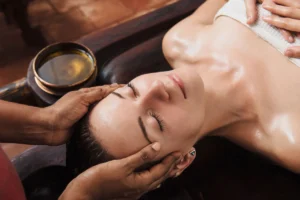
In the Ayurvedic tradition, oil is a physical manifestation of love. The Sanskrit word Snehan means both "oil" and "love," reflecting the belief that the application of oil harmonizes the cells with a vibration of care and radiance. The choice of oil is a strategic decision:
- Vata: Benefits from heavy, warming oils like sesame.
- Pitta: Benefits from cooling oils like coconut or sunflower.
- Kapha: Benefits from lighter, heating oils like mustard.
These oils are frequently infused with specific herbs to create medicinal formulations, such as Mahanarayan tailam for deep muscular pain or Dhanvantaram tailam for pacifying Vata-related neurological imbalances.
The Mechanics of Therapy: Categories and Techniques
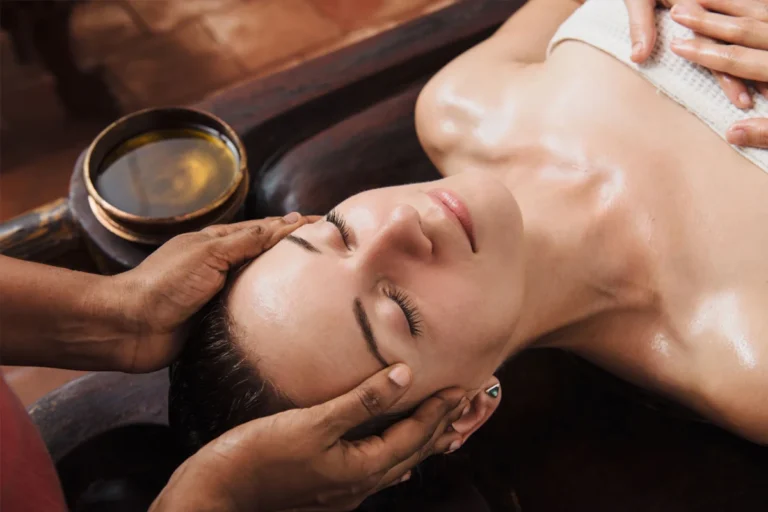
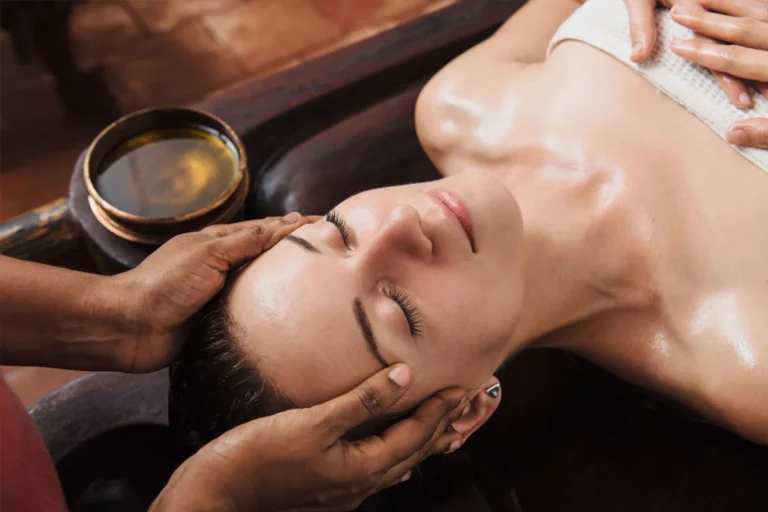
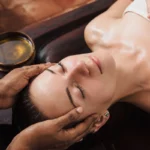
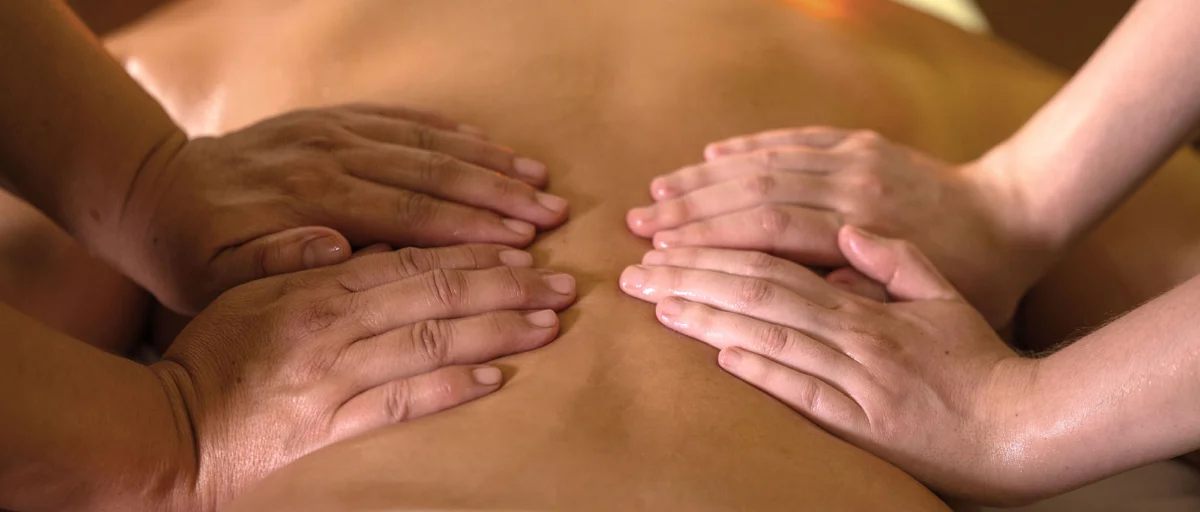
Ayurvedic massage is categorized by its intent and the medium used. The most prominent practice is Abhyanga, the full-body oil massage. Whether performed as self-care or administered by one or more practitioners (as in the four-handed massage), Abhyanga serves to lubricate tissues, nourish the skin, and release stored toxins into the circulatory system for eventual elimination.
Beyond oils, the use of powders and pastes provides additional therapeutic avenues:
- Udvartana: Dry, warm herbal powders used to break up adipose tissue and stimulate lymphatic drainage.
- Udsadana: A beauty-focused application of herbs.
- Udgarshana: The use of herbal pastes to treat specific dermatological imbalances.
The strokes themselves are a language of healing. Practitioners utilize Anuloma (away from the heart) and Pratiloma (towards the heart) to achieve different physiological outcomes. Pratiloma is often used to stimulate circulation and lymph flow, while Anuloma is employed to ground the nervous system and calm the mind. Specific techniques include Peedana (kneading), Udvesthana (wringing), and Sandhi Calana (joint mobilization), each designed to penetrate tissues ranging from the skin to the deep muscles and organs.
Marma Therapy: The Energetic Gateway
Perhaps the most distinctive element of the Ayurvedic massage repertoire is Marma therapy. Marmani are specific energy points on the body where physical matter meets the subtle consciousness. Often compared to acupuncture points, Marma points are typically larger and involve the stimulation of specific junctures where veins, arteries, tendons, bones, and muscles converge.
By stimulating these points, a practitioner can unblock the flow of prana (life force energy), providing a powerful intervention for mental, emotional, and physical distress. This makes Marma therapy an essential bridge between the physical body and the subtle mind.
Implications for Modern Wellness
The implications of integrating Ayurvedic massage into modern healthcare are significant. In an era where mental health concerns and chronic stress are at an all-time high, the focus on the air element and the nervous system provides a potent, non-pharmacological solution. Because the skin is considered the body’s largest organ—governed by bhrajaka pitta—the regular application of herbalized oils does more than improve complexion. It nourishes the Agni of the skin, allowing medicinal properties to penetrate into the muscles, nerves, and deeper connective tissues.
As we look toward the future of holistic health, the wisdom of the brhat trayi serves as a reminder that the most effective healing often comes from working with the body’s innate rhythms rather than against them. Whether through the soothing stroke of an oil-based Abhyanga or the precise stimulation of a Marma point, Ayurvedic massage remains a vital, evolving science that continues to offer a sanctuary for the body and a quietude for the mind.
About the Author:
Beatrice Voss, CAP, is an Ayurvedic Practitioner who received her training under the esteemed Vasant Lad at The Ayurvedic Institute. Her practice is deeply rooted in the lineage of the Institute, focusing on heart-centered care and the subtle, transformative therapies of Marma, pranayama, and meditation. Beatrice is dedicated to bridging ancient wisdom with contemporary needs, helping students and clients alike navigate their journey toward optimal health and vitality.