








Introduction: Beyond the Laboratory Bench
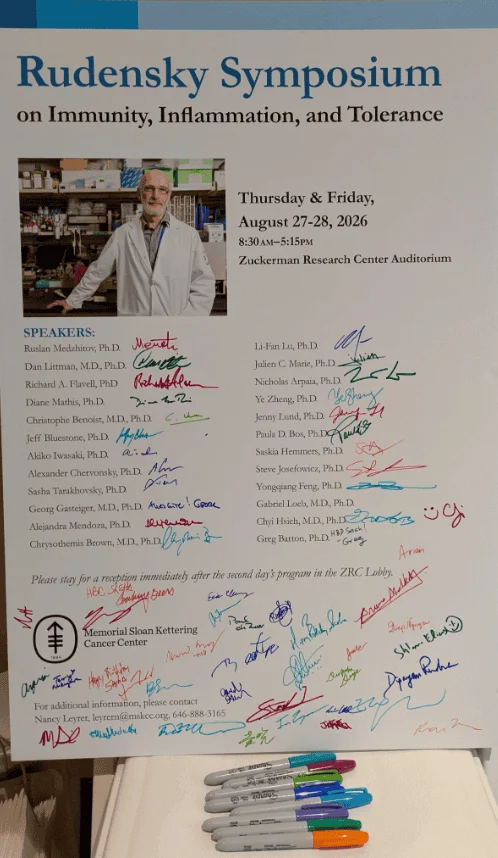
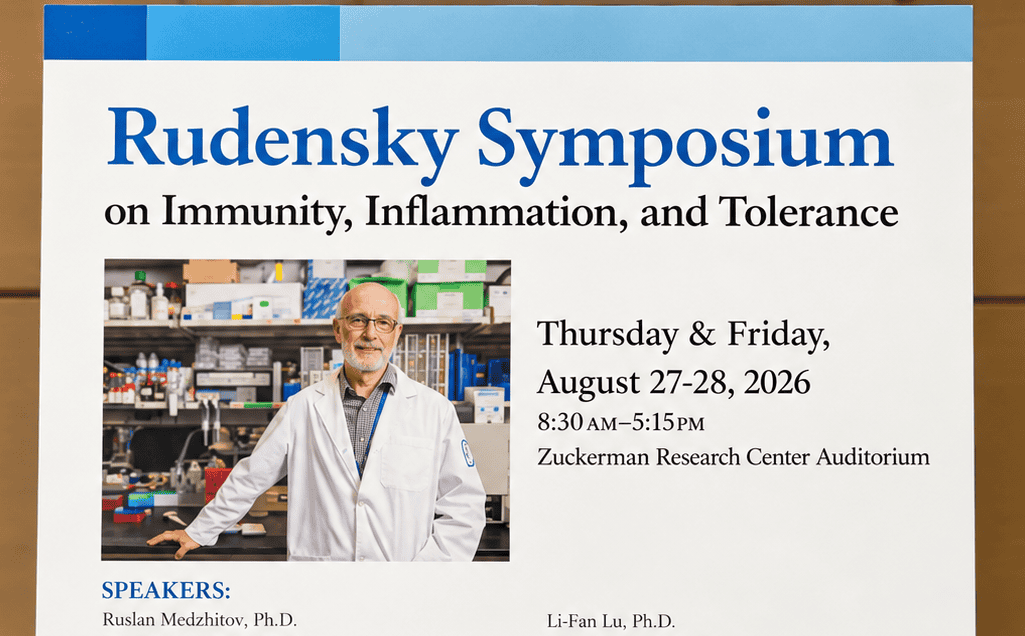
On August 27–28, 2026, the scientific community gathered not merely for a conference, but for a celebration of a life’s work that has fundamentally altered our understanding of human health. The Rudensky Symposium on Immunity, Inflammation, and Tolerance served as a milestone event, marking the 70th birthday of Dr. Alexander “Sasha” Rudensky, a titan of immunology at the Memorial Sloan Kettering Cancer Center (MSKCC).
The symposium was far more than a typical academic gathering. It represented a convergence of generations—former trainees, lifelong collaborators, and esteemed peers—whose collective history spans decades of breakthrough research. While the presentations focused on the bleeding edge of immunology, the atmosphere was defined by a profound appreciation for the mentorship and human connection that fuels scientific progress. For the Cancer Research Institute (CRI), which has supported Dr. Rudensky’s lab for over two decades, the event was a poignant reminder that the most revolutionary medical advances are often rooted in the quiet, persistent pursuit of basic biological questions.
Chronology of a Scientific Journey
The symposium’s agenda served as a roadmap of Dr. Rudensky’s influence, tracing the evolution of his career and the expansion of the field of regulatory T cell (Treg) biology.
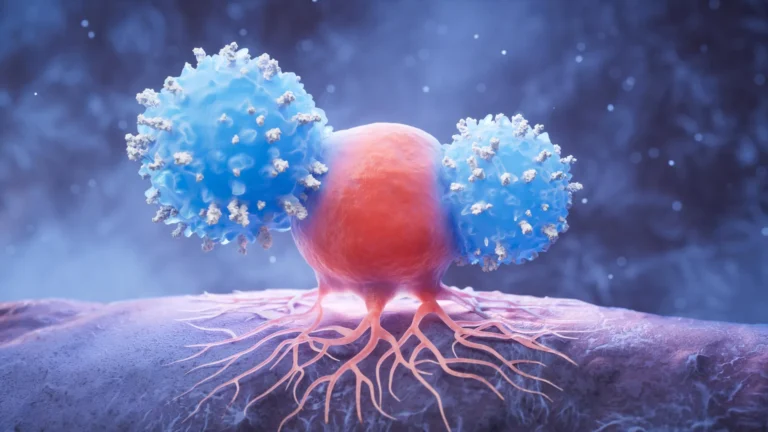
Dr. Rudensky’s work has been central to the CRI mission since the early 2000s. A pivotal moment in this timeline arrived in 2015, when he was honored with the prestigious CRI William B. Coley Award. This accolade recognized his pioneering efforts in characterizing Tregs—the specialized immune cells that act as the body’s "brakes," restraining excessive inflammatory responses and preventing autoimmune damage.
Over the years, the "Rudensky Lab" has become an incubator for talent, training over a dozen CRI-funded fellows who have since branched out to lead their own laboratories globally. The symposium highlighted this intellectual lineage, showcasing how a single lab’s discoveries in basic immunology have rippled outward to define the modern approach to cancer immunotherapy.
Supporting Data: The Symbiosis of Science
The symposium presentations were structured around four critical pillars: tissue homeostasis, early-stage cancer immunosurveillance, the gut-cancer axis, and the tumor microenvironment.
Basic Science as the Foundation of Defense
Dr. Ruslan Medzhitov, a 2003 CRI Coley Awardee, set the tone by challenging the traditional perception of immune cells as simple soldiers. He detailed how stressed cells recruit macrophages to remove protein “garbage.” This characterization of immune cells as “tissue maintenance crews” suggests that our defense systems are inherently linked to the structural integrity of our organs.
Complementing this, 2024 CRI Coley Awardees Dr. Diane Mathis and Dr. Christophe Benoist provided deep dives into the functional plasticity of Tregs. Their work demonstrates that Tregs are not a monolithic population; rather, they are highly specialized entities that guide muscle repair, control inflammation, and possess distinct molecular signatures that dictate their identity. These findings are crucial for clinical application: if we can harness these cells to control inflammation without fully suppressing the immune system, we could revolutionize the treatment of both cancer and autoimmune disorders.
The Front Lines: Immunosurveillance Before the Tumor
One of the most compelling sessions explored whether we can intervene before a cancer is even visible. Dr. Richard A. Flavell, a 2012 CRI Coley Awardee, presented data from mouse models indicating that the immune system is actively "weeding out" cells carrying oncogenic mutations, such as BRAF, long before they form a detectable tumor.
This suggests that early-stage cancer development is a highly competitive, dynamic process. When mutant cells lose the ability to "talk" to T cells, they gain a survival advantage, essentially hiding from the immune system’s early detection protocols. Simultaneously, Dr. Julien C. Marie demonstrated that inflammatory signaling—specifically the TGF-β pathway—is a critical switch. By manipulating this signal, researchers were able to reverse the inflammatory state of Th17 cells, suggesting that the "pro-cancer" programs in our cells might remain flexible and susceptible to therapeutic reprogramming.
The Tumor Ecosystem: Neighborhoods and Networks
The final sessions focused on the complex "neighborhoods" tumors create to protect themselves. Dr. Dan Littman, a 2016 CRI Coley Awardee, bridged the gap between the gut microbiome and systemic cancer therapy. His research confirms that the composition of gut bacteria acts as a training ground for T cells, directly influencing the patient’s subsequent response to checkpoint immunotherapy.
Dr. Paula D. Bos offered a breakthrough in understanding the physical landscape of cancer. Her research revealed that Tregs, by interacting with macrophages and collagen fibers, essentially build "highways" that facilitate the escape of tumor cells. By temporarily disrupting these specific Treg interactions, researchers were able to reduce metastatic spread in mice without triggering the dangerous systemic side effects that usually accompany broad immunosuppression.
Dr. Nicholas Arpaia furthered this discussion by identifying specific fibroblast populations that act as architects for tumor-suppressive neighborhoods. His collaboration with CRI Lloyd J. Old STAR Dr. Tal Danino has led to the development of "engineered bacteria"—a technology designed to deliver therapies directly to the tumor, creating a precision strike against the immunosuppressive environment while sparing healthy tissue.
Official Perspectives: The CRI Commitment
The Cancer Research Institute’s involvement in the symposium reflects its long-term strategy of funding fundamental discovery. For over 70 years, CRI has maintained that to cure cancer, one must first master the language of the immune system.
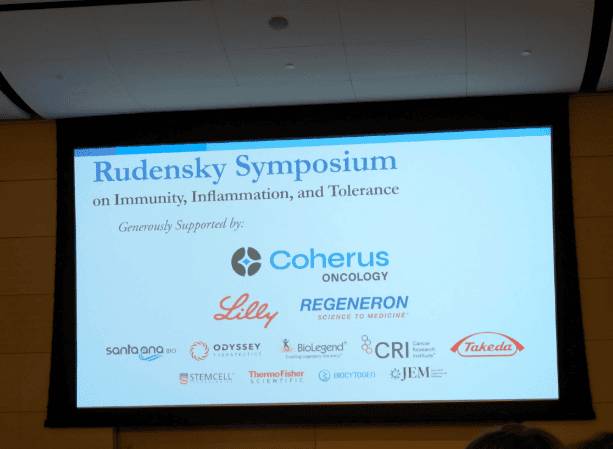
"The Rudensky Symposium was a microcosm of what we strive to achieve," noted a representative from the organization. "By funding basic science—work that doesn’t always have an immediate clinical application—we create the bedrock upon which future therapies are built. Dr. Rudensky’s career is the perfect example of this: a curiosity about how cells maintain balance has led to entirely new paradigms in how we treat, and potentially prevent, cancer."
The CRI’s investment in the "Rudensky family" of researchers underscores a commitment to human capital. By funding trainees and providing the independence required for high-risk, high-reward inquiry, the institute ensures that the ripple effects of discovery continue to expand across decades.
Implications for Future Oncology
The synthesis of these findings points to a fundamental shift in oncology. We are moving away from the "war" metaphor of cancer treatment—where we simply attempt to destroy tumors—toward a model of "ecosystem management."
- Precision Intervention: The ability to modulate specific Treg populations rather than eliminating them entirely promises a future with fewer treatment-related side effects.
- Early Detection and Prevention: If we can identify the molecular signals that allow cancer cells to evade early immunosurveillance, we may develop preventative vaccines or prophylactic therapies for high-risk individuals.
- Microbiome-Directed Therapy: The gut-immune axis is no longer a fringe theory; it is becoming a central component of clinical trial design, with doctors looking at a patient’s microbiome as a predictor of immunotherapy success.
Conclusion: A Legacy of Collaboration
As the symposium concluded, the focus shifted back to the human element. The sight of generations of scientists—from senior mentors to early-career fellows—signing a communal poster board highlighted that science is a collective endeavor.
The Rudensky Symposium served as a powerful testament to the value of rigorous, open-minded collaboration. It reinforced the notion that scientific breakthroughs are rarely the result of a single "eureka" moment in isolation. Instead, they are the product of years of mentorship, the bravery to pursue unconventional questions, and the resilience to weather failures in the pursuit of truth.
As we look toward the next decade of immunology, the lessons learned from the Rudensky lab will continue to guide researchers, inspire new trainees, and, most importantly, provide hope for patients awaiting the next generation of life-saving immunotherapies. The ripple effect of Dr. Rudensky’s work is only just beginning, and the foundation laid in these two days in August will undoubtedly support the next great leap in medicine.