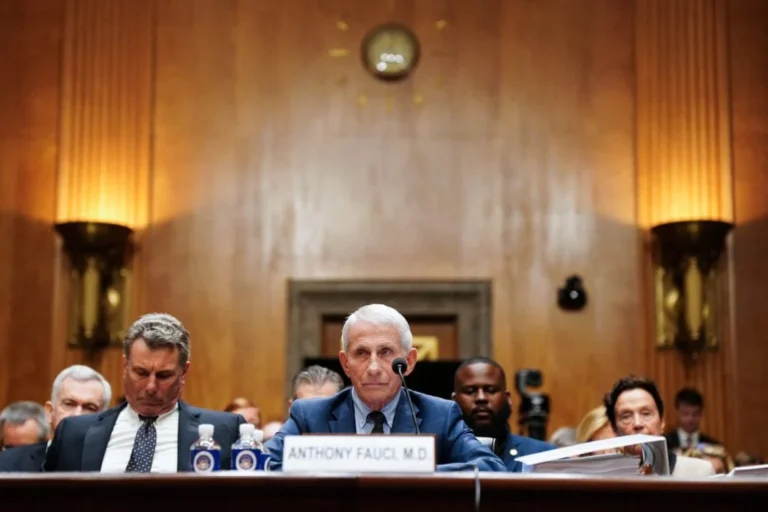








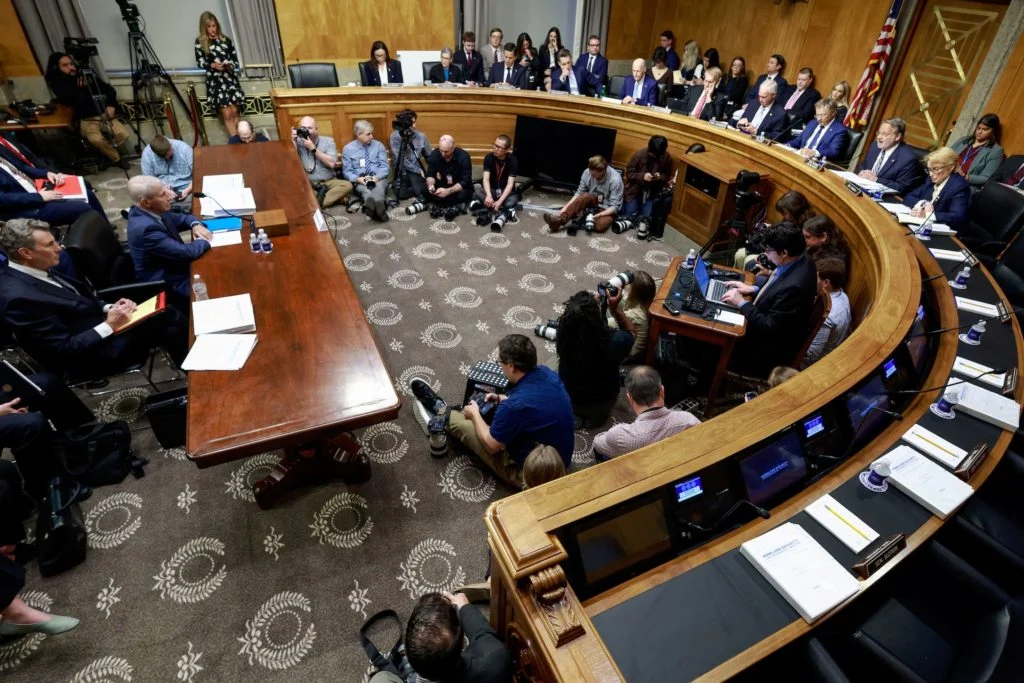
For over four decades, Dr. Anthony Fauci served as the bedrock of American infectious disease policy. From the harrowing days of the HIV/AIDS epidemic in the 1980s to the global upheaval of the COVID-19 pandemic, he stood as the nation’s foremost non-partisan scientific voice. However, his post-government life has been defined by a starkly different reality. Recently, the former director of the National Institute of Allergy and Infectious Diseases (NIAID) appeared before Congress under subpoena, a moment that underscored the profound shift in his public standing. By invoking his Fifth Amendment rights over 100 times, Fauci signaled a defensive posture against a political climate that has transitioned from bipartisan reverence to aggressive, targeted retribution.
The Congressional Hearing: A Study in Defensive Silence
The recent hearing served as a crucible for the legacy of the man who once guided the White House pandemic response under both Presidents Trump and Biden. As questions regarding the origins of COVID-19 and the internal decision-making processes of the pandemic era rained down, Fauci’s decision to repeatedly invoke his Fifth Amendment rights dominated the discourse.
According to Katherine Wu, a staff writer for The Atlantic and author of the investigative piece "The Unmaking of Anthony Fauci," this silence was not a sign of guilt, but a calculated defense mechanism. "He has been threatened so repeatedly with prosecution," Wu noted during an interview with the PBS News Hour. "It was ultimately a defense mechanism. He was doing that because he had been threatened with this very, very real and repeated attack from his political opponents."
Fauci’s legal strategy was necessitated by the expiration of a limited presidential pardon issued by Joe Biden in early 2025. Because that pardon did not cover potential future legal exposure, any statement made during the hearing could have been leveraged by his political detractors to construct a perjury case. In a Washington environment increasingly defined by institutional weaponization, Fauci’s silence reflects a man attempting to navigate a landscape where scientific expertise is no longer shielded from political litigation.
A Chronology of a Career Under Siege
To understand the current hostility directed toward Dr. Fauci, one must look at the arc of his professional life. For nearly 40 years, Fauci was the consummate "insider-outsider." He served six presidential administrations, earning the trust of leaders from both sides of the aisle through a strategy of "statedly unpolitical" adherence to data.
The Rise of the Scientific Statesman
In the 1980s, Fauci rose to prominence during the HIV/AIDS crisis. While he initially faced intense criticism from activists, he ultimately transformed his approach, becoming one of the first government officials to incorporate the voices of patients into scientific research. This period established his reputation as a pragmatist who could bridge the gap between complex laboratory research and the urgent needs of the public.
The Pandemic Breaking Point
The consensus regarding Fauci’s role began to fracture in 2020. As the COVID-19 pandemic required unprecedented government interventions, Fauci became the public face of unpopular mandates and shifting guidelines. The scientific community, particularly virologists and evolutionary biologists, largely maintains that the preponderance of evidence points to a natural zoonotic origin of the virus. However, the "lab leak" theory—which posits that the virus originated in a Chinese laboratory—remains a subject of intense political and, to a lesser extent, scientific debate. As the debate grew more polarized, Fauci became the primary avatar for the frustrations of a public exhausted by lockdowns, school closures, and economic volatility.
The Post-2024 Retribution
Following the 2024 election and the return of Donald Trump to the White House, the environment for Fauci shifted from policy disagreement to systemic dismantling. The campaign against him, as described by Wu, has been "petty" and "targeted." Actions taken by the new administration include the removal of his federally sponsored security detail—despite ongoing, credible death threats—the destruction of a mural depicting his likeness at the National Institutes of Health (NIH), and the systematic removal of his closest colleagues from their posts.
Supporting Data and the Consensus Gap
The divide between the scientific consensus and the political narrative remains a defining feature of the "unmaking" of Fauci. While government agencies have offered varying assessments on the origins of COVID-19, the majority of the scientific community continues to favor the theory of natural spillover from animals to humans.
"The consensus has largely been the same for the past few years," Wu explained. "The preponderance of evidence that we have so far points to a natural origin, that this virus spilled over from a wild animal into the human population, as so many other pathogens that we know about have."
Despite this, the desire for accountability has turned into a demand for culpability. The public’s need to assign blame for the pandemic’s trauma has transformed Fauci from a public health leader into a political scapegoat. This phenomenon is not merely an academic dispute; it is a manifestation of the societal trauma caused by the pandemic, where the lack of a clear, satisfying answer regarding the virus’s origins has been filled by political theater.
Official Responses and Institutional Fragility
The current administration’s approach to Fauci has been characterized by a desire to "dismantle, destroy, or obliterate" his legacy, according to his former colleagues. This effort has extended beyond Fauci himself, affecting his family and even his wife, who was ousted from her position at the NIH despite operating in a separate department.
The institutional response highlights a dangerous precedent: the total politicization of the scientific bureaucracy. When the security of a long-serving civil servant is stripped away as a result of political disagreement, the message to the scientific community is clear: expertise that conflicts with political messaging will be met with institutional retaliation. This shift threatens to undermine the credibility of public health institutions that rely on the independence of their experts to guide policy in times of crisis.
Implications: The Future of Public Health
The "unmaking" of Anthony Fauci serves as a cautionary tale for the future of scientific governance in the United States. If the nation’s most prominent health experts are to be treated as political combatants rather than advisors, the ability of the government to manage future public health threats is severely compromised.
The Loss of Institutional Memory
By systematically removing those who worked under Fauci, the current administration is effectively stripping the NIH of its institutional memory. The experience gained from decades of navigating epidemics—from HIV to Ebola to Zika—is being discarded in favor of ideological alignment.
The Erosion of Trust
The public’s view of Fauci as either an "undisputed hero" or an "undisputed villain" illustrates the loss of a shared, fact-based reality. When science becomes a partisan identity, the ability to implement effective, evidence-based interventions during a crisis vanishes. The tragedy of the current climate is that the vitriol directed at Fauci has obscured the necessity of learning from the pandemic’s failures to improve future preparedness.
A Legacy in Flux
Ultimately, the legacy of Anthony Fauci will likely remain a subject of historical revisionism for decades. He remains a man who navigated the maze of Washington politics by holding science as his compass, but the map has changed. The "unmaking" of his image—from the savior of the pandemic era to a target of congressional subpoenas—is not just a story about one man. It is a story about a nation struggling to reconcile the realities of scientific uncertainty with the demands of a high-stakes, partisan political culture.
As the litigation of his tenure continues, the questions remains: Can the American public health system recover its status as an objective, non-partisan entity, or is the era of the "statesman scientist" over? For now, the silence of Dr. Fauci in the halls of Congress acts as a poignant, if unsettling, bookend to a career that defined, and was ultimately defined by, the most challenging health crisis of the 21st century.