










By MedTech Staff
Published July 31, 2026
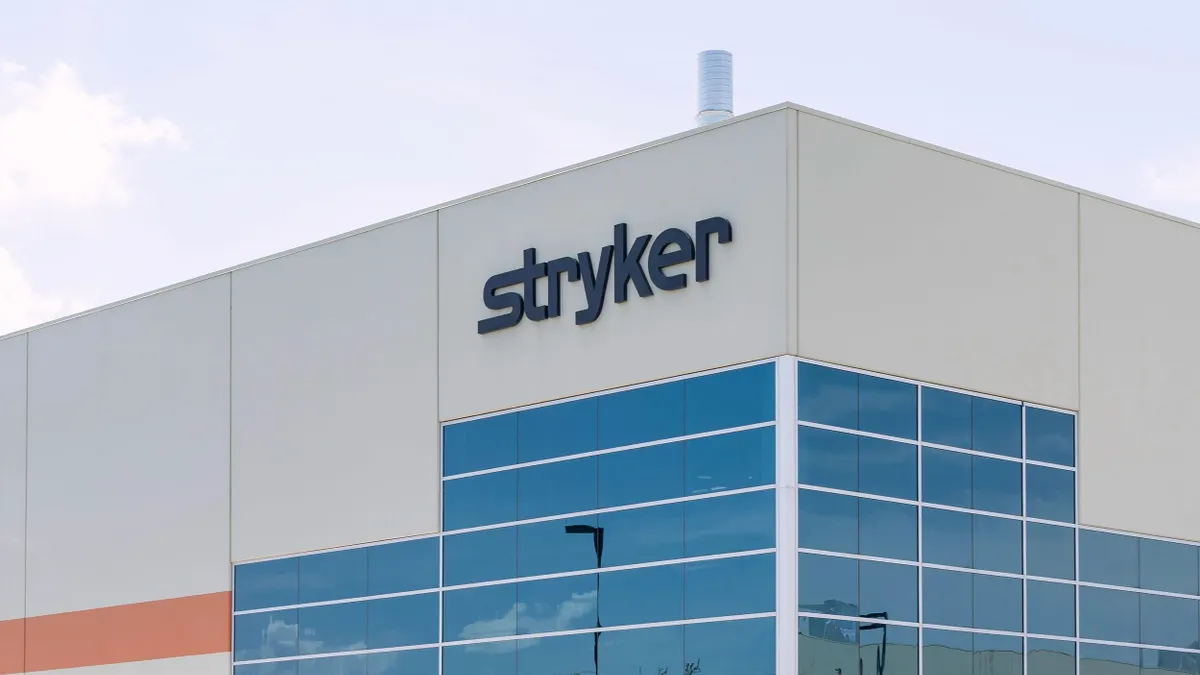
Stryker Corporation, a global leader in medical technology, is currently navigating a complex period of operational recovery and strategic realignment. Following a devastating March cyberattack that brought much of the company’s manufacturing, order processing, and shipping infrastructure to a standstill, the medical device giant is now focused on clearing a significant order backlog.
Despite these challenges, the company’s second-quarter results paint a picture of resilience. Stryker reported $6.6 billion in revenue for the quarter—a 9.4% increase year-over-year—and a notable 44.3% jump in net earnings to $1.3 billion. While these figures suggest a robust underlying business, they are accompanied by a series of operational hurdles, including a supply disruption within its newly acquired Inari Medical division and lingering costs from the spring security breach.
Main Facts: A Quarter of Resilience and Remediation
The core narrative for Stryker in mid-2026 is one of "making up for lost time." When the March cyberattack paralyzed operations for nearly a month, the ripple effects were felt across every business unit. Today, the primary objective for CEO Kevin Lobo and his executive team is the fulfillment of capital equipment orders that accumulated during the downtime.
Lobo remains optimistic, framing the situation as a logistical challenge rather than a demand-side failure. "We feel good about the overall health of our businesses, and they’re going to recover at different points in time," Lobo stated during the company’s Q2 earnings call.
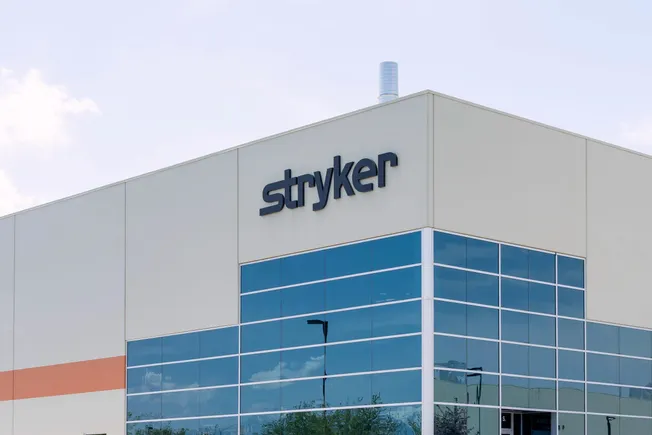
The financial performance, while strong, is nuanced. The $1.3 billion in net earnings was bolstered by specific non-operational factors, including tariff refunds, as noted by CFO Preston Wells. Simultaneously, the company continues to absorb the costs of IT remediation, manufacturing inefficiencies, and fluctuating raw material prices, particularly in the oil and metal markets.
Chronology of the 2026 Disruption
The timeline of Stryker’s current operational state can be traced back to the first quarter of the year, creating a narrative of crisis management followed by a painstaking return to normalcy.
- March 2026: A significant cyberattack hits Stryker, effectively halting order processing, shipping, and core manufacturing workflows for approximately four weeks. This event heavily impacts Q1 financial results.
- April 2026: Post-remediation, Stryker begins the slow process of restarting its manufacturing lines, though the accumulation of backorders becomes apparent.
- May 2026: The company prioritizes critical medical equipment, though lead times remain extended across various product lines.
- July 2026: During the second-quarter earnings call, leadership confirms that while the company is ramping up production, significant backlogs remain, particularly in the medical bed division.
- Late 2026 (Outlook): Management expects the backlog to return to a "manageable level" by the end of the third quarter, shifting the focus to Q4 as a critical window for normalization.
Supporting Data: The Financial Landscape
Stryker’s ability to generate nearly 10% revenue growth in the face of a month-long shutdown underscores the strength of its market position. The following metrics highlight the firm’s current fiscal health:
| Metric | Q2 2026 Performance | Year-Over-Year Change |
|---|---|---|
| Total Revenue | $6.6 Billion | +9.4% |
| Net Earnings | $1.3 Billion | +44.3% |
| Organic Sales Growth Forecast | 8.3% – 9.3% | Adjusted from 8% – 9.5% |
The adjustment to the organic sales growth forecast reflects a cautious approach to the second half of the year. While the demand for capital equipment—such as surgical robotics, implants, and medical beds—remains high, the company is managing the realities of supply chain constraints that hinder its ability to capitalize on that demand immediately.
Official Responses and Strategic Challenges
The Bed Manufacturing Bottleneck
CEO Kevin Lobo provided candid insight into the challenges surrounding the company’s medical bed production. "Making beds takes time, and we were out of production for a long period of time," Lobo admitted. The specialized nature of these products means that production lines cannot simply be "switched back on" to full capacity; they require precise calibration and consistent raw material availability. As a result, the bed division currently holds the most significant backlog of the entire company portfolio.

The Inari Medical Supply Disruption
Beyond the cyberattack, Stryker is grappling with a secondary crisis: a supply disruption at Inari Medical. Stryker acquired the thrombectomy system manufacturer for $4.9 billion just last year, viewing it as a cornerstone of its interventional vascular strategy. However, an issue at a primary manufacturing plant—which produces the bulk of Inari’s products—has triggered substantial backorders. While Lobo did not disclose the specific root cause of the plant’s failure, he indicated that it remains a top-priority remediation project.
Financial Remediation and External Costs
CFO Preston Wells emphasized that while the company is moving forward, the "long tail" of the cyberattack persists. Beyond the initial loss of production, Stryker is still paying for IT system upgrades and security hardening measures. Furthermore, the global commodities market continues to apply pressure. The cost of oil and raw materials remains volatile, and Stryker is currently absorbing these costs to maintain competitive pricing for its hospital clients.
Implications: The Road to Year-End
The broader implications of Stryker’s current situation are twofold: investor confidence and market share stability.
The Analyst Perspective
Wall Street analysts are currently divided on the timing of the recovery. Ryan Zimmerman of BTIG highlighted a critical point in a recent research note: even with a solid third quarter, the pressure will be immense on the fourth quarter to meet annual targets. The market is looking for evidence that the supply chain can sustain high output without encountering further bottlenecks.
Demand vs. Supply
Lobo’s message to investors is that the "demand" part of the equation is solved. Stryker has the orders; the challenge is entirely internal. "Honestly, on a $25 billion business, to be growing at around the 9% range, it’s still a pretty good year, given that we were knocked out for almost an entire month," Lobo noted.

This sentiment is crucial. Stryker is not suffering from a loss of customer interest or a decline in surgical procedures. Instead, it is suffering from a temporary, self-contained capacity deficit. If the company can successfully clear its backlog by the close of Q3, it positions itself to enter 2027 with a clean slate and momentum.
However, the "Inari factor" introduces a layer of unpredictability. Because Inari represents a high-growth segment, any prolonged disruption there could weigh on the company’s ability to meet the upper end of its newly narrowed 8.3% to 9.3% organic sales growth forecast.
Long-term Outlook
Looking ahead, Stryker’s investment in its internal infrastructure—both physical and digital—will likely become a case study in corporate resilience. The company has demonstrated that a Fortune 500 entity can survive a near-total operational blackout. The question now is whether the systems put in place to recover from this crisis will result in a more efficient, hardened organization, or if the lingering costs of the March attack will continue to compress margins well into the next fiscal year.
For now, investors, hospital administrators, and competitors alike are watching the shipping docks. As long as the products continue to flow, Stryker remains in a position of strength, effectively weathering a storm that would have likely capsized a less diversified organization. The final verdict for the 2026 fiscal year will be determined by how quickly the "manageable level" of backlogs can be translated into revenue, ensuring that the company’s reputation for reliability remains untarnished.