





17 September, 2026
In a decisive move toward transforming the landscape of public health across the continent, the European Parliament has formally adopted the Public Health Committee’s comprehensive report on cardiovascular diseases. This landmark policy shift signals a move away from siloed medical approaches, favoring an integrated, holistic strategy that prioritizes prevention, early detection, and the management of non-communicable diseases (NCDs) as a collective burden rather than isolated conditions.
The vote follows the European Commission’s introduction of the Safe Hearts Plan, a strategic framework designed to tackle the leading causes of morbidity and mortality in Europe. By championing this report, MEPs have signaled their commitment to addressing the complex comorbidities that define modern European healthcare, specifically acknowledging the intrinsic and lethal connection between cardiovascular and respiratory health.
Main Facts: A Paradigm Shift in EU Health Policy
The adopted report represents more than just a procedural victory; it is a fundamental shift in how the European Union conceptualizes chronic disease management. For decades, health policy has often treated cardiovascular diseases (CVD) and respiratory illnesses as distinct entities. The new parliamentary mandate acknowledges that the two are frequently intertwined, sharing common risk factors, biological pathways, and socioeconomic determinants.
The key components of the report include:
- Prioritizing Early Detection: A shift in focus from reactive treatment to proactive screening, particularly for high-risk populations.
- Integrated Care Pathways: Mandating that health systems move toward "cross-disease" assessment, ensuring that a patient presenting with cardiovascular issues is also evaluated for respiratory conditions like Chronic Obstructive Pulmonary Disease (COPD).
- Addressing Comorbidities: Specifically highlighting obstructive sleep apnea (OSA) and COPD as major influencers of cardiovascular health outcomes.
- Institutional Alignment: Aligning the European Parliament’s legislative agenda with the Commission’s Safe Hearts Plan to ensure a cohesive, EU-wide response.
Chronology: The Path to Policy Integration
The journey toward this legislative milestone has been marked by years of advocacy, scientific research, and inter-institutional negotiation.
2024–2025: Building the Evidence Base
As the European Commission began drafting the Safe Hearts Plan, leading scientific bodies—most notably the European Respiratory Society (ERS)—began publishing data highlighting the "cardio-respiratory nexus." Studies increasingly showed that patients with COPD were at significantly higher risk of cardiovascular events, including heart failure and myocardial infarction.
Early 2026: The Legislative Drafting
The European Parliament’s Public Health Committee began deliberating on the report, incorporating feedback from civil society, patient advocacy groups, and the scientific community. The focus remained on ensuring that the Safe Hearts Plan did not narrowly define "heart health" but rather acknowledged the lungs as a critical piece of the circulatory puzzle.
September 2026: The Parliamentary Vote
On 17 September 2026, the plenary vote took place, securing strong support from MEPs across the political spectrum. This vote serves as the legislative bedrock upon which the European Commission will now build specific funding mechanisms and implementation guidelines for Member States.
Supporting Data: Why Integration is Non-Negotiable
The urgency behind this report is underscored by staggering public health data. Cardiovascular disease remains the leading cause of death in the European Union, accounting for nearly 4 million deaths annually. However, the silent drivers of these deaths are often respiratory.
The Cardio-Respiratory Connection
- The Burden of COPD: According to clinical research, up to 30% of patients with COPD die from cardiovascular complications. Despite this, these patients are frequently managed in respiratory-only clinics, missing the opportunity for early cardiac intervention.
- Sleep Apnea and Heart Health: Obstructive Sleep Apnea (OSA) is a major, yet underdiagnosed, risk factor for hypertension and stroke. The report explicitly highlights that standardized screening for sleep disorders in cardiovascular clinics could prevent thousands of adverse cardiac events annually.
- Socioeconomic Disparities: The data suggests that lower-income populations in Europe are disproportionately affected by both heart and lung diseases due to environmental exposure, smoking rates, and limited access to preventative care. The parliamentary report mandates that these health inequalities be addressed through targeted, local initiatives.
Official Responses: A Call to Action
The response from the scientific and advocacy community has been one of cautious optimism. The European Respiratory Society (ERS), which has been at the forefront of the advocacy effort, views this as a vital step in "putting respiratory health on the map."
Raquel Duarte, the ERS Director of Scientific Affairs to the EU, issued a robust statement following the vote:
"This vote by the European Parliament marks an important step towards strengthening cardiovascular and respiratory health together. The Safe Hearts Plan provides a valuable framework for addressing cardiovascular disease, and importantly its comorbidities and precursors across the entire health pathway—from prevention and early detection to treatment and rehabilitation. We particularly welcome the strong focus on prevention, COPD and on addressing the risk factors and inequalities that continue to shape cardiovascular health outcomes across Europe."
Duarte emphasized that the scientific community is now prepared to partner with policy-makers to turn these legislative goals into clinical realities. "The next step now is to ensure that the Safe Hearts Plan translates into clear and effective measures across the EU with the cooperation between European institutions, Member States, the scientific community, healthcare professionals, patients and civil society," she added.
Implications: The Road Ahead for European Healthcare
The adoption of this report carries profound implications for the future of healthcare delivery across the EU.
1. Reforming Clinical Practice
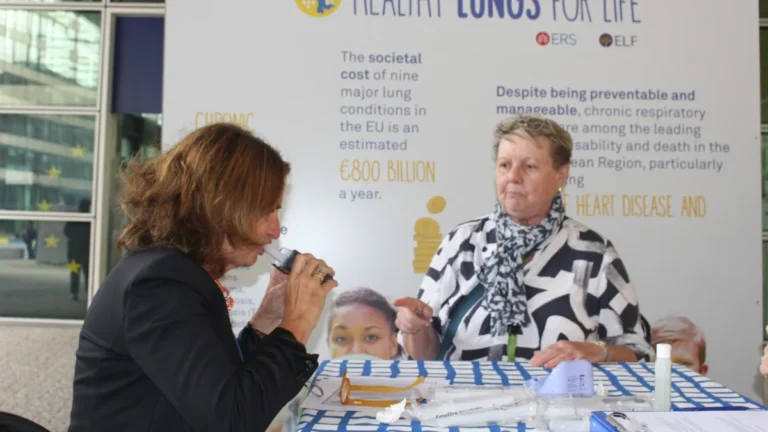
The primary implication for clinicians is the move toward "integrated health checks." The ERS has long urged that respiratory function assessment—such as spirometry or pulse oximetry—become a standard component of cardiovascular risk stratification. Hospitals and primary care centers will likely see new guidelines suggesting that patients at high risk for heart disease be routinely screened for respiratory conditions, and vice versa.
2. EU Screening Week and Standardization
The report aligns perfectly with the momentum behind EU Screening Week. By advocating for the inclusion of respiratory health in standardized check-ups, the Parliament is pushing for a digital and procedural transformation. This could involve the rollout of integrated patient health records that track both respiratory and cardiac markers, ensuring that patients do not "fall through the cracks" between specialized departments.
3. Funding and Member State Cooperation
While the Parliament has set the vision, the implementation lies with individual Member States. The EU’s role will be to provide the framework and, likely, the funding through initiatives like the EU4Health program to support countries in upgrading their screening infrastructure. Member States will be expected to update their national health strategies to reflect this integrated approach, moving away from fragmented, disease-specific funding models.
4. Patient-Centered Outcomes
Ultimately, the goal is to improve the quality of life for the millions of Europeans living with chronic conditions. A patient with COPD who is treated for heart disease concurrently will experience fewer hospitalizations, better physical function, and a higher quality of life. The move toward early detection means that many of these conditions can be managed through lifestyle interventions and early pharmaceutical support, reducing the long-term strain on healthcare systems.
Conclusion
The European Parliament’s adoption of the report on cardiovascular diseases is a milestone that marks the end of an era of medical silos. By recognizing that the heart and lungs exist in a symbiotic relationship—both in health and in disease—the EU is setting a global benchmark for how to approach the NCD epidemic.
As the Safe Hearts Plan moves from a legislative document to an operational reality, the focus will turn to the "ground game": training healthcare professionals, upgrading screening technologies, and ensuring that every citizen in the EU, regardless of geography or socioeconomic status, has access to integrated care. The message from Brussels is clear: to protect the heart of Europe, one must also safeguard the breath of its people.