



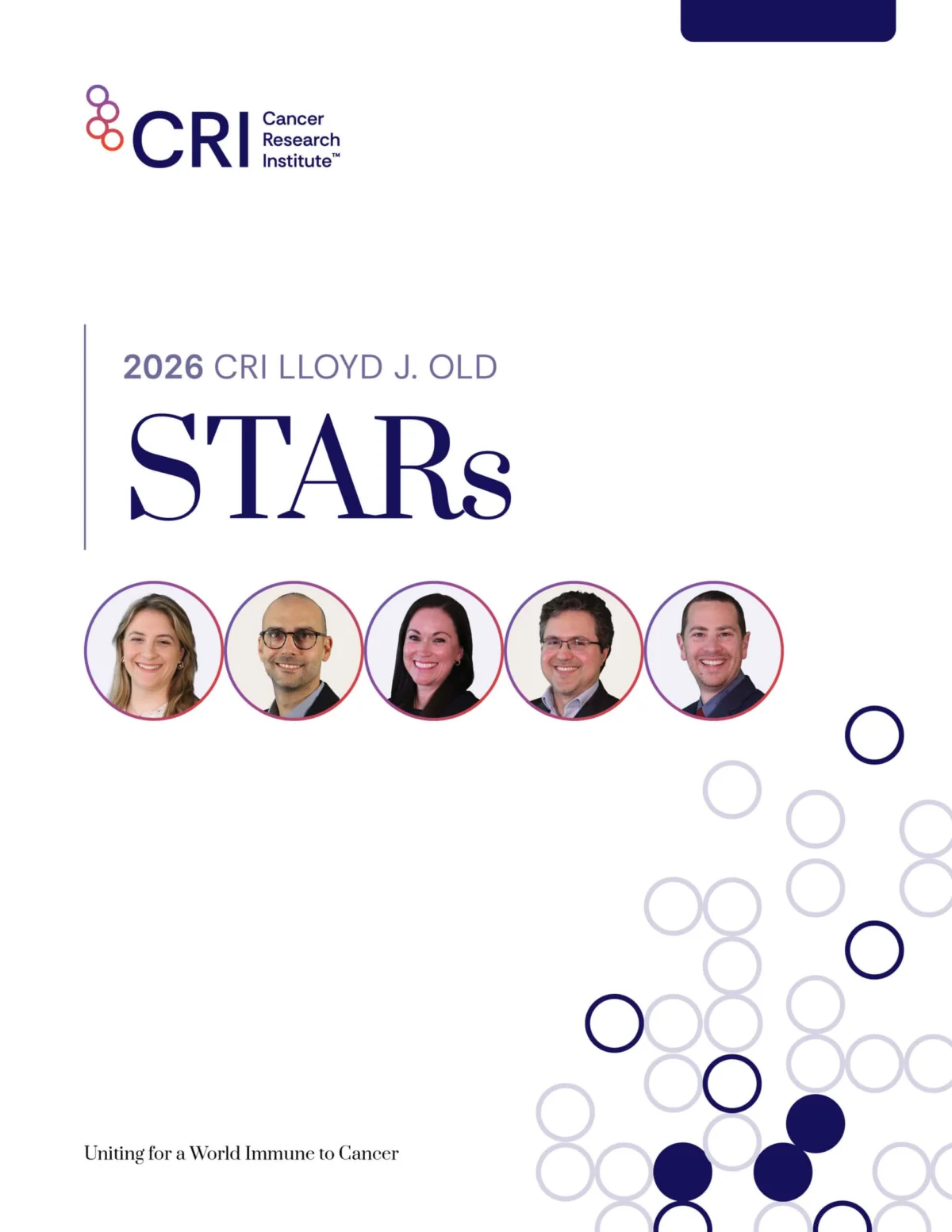
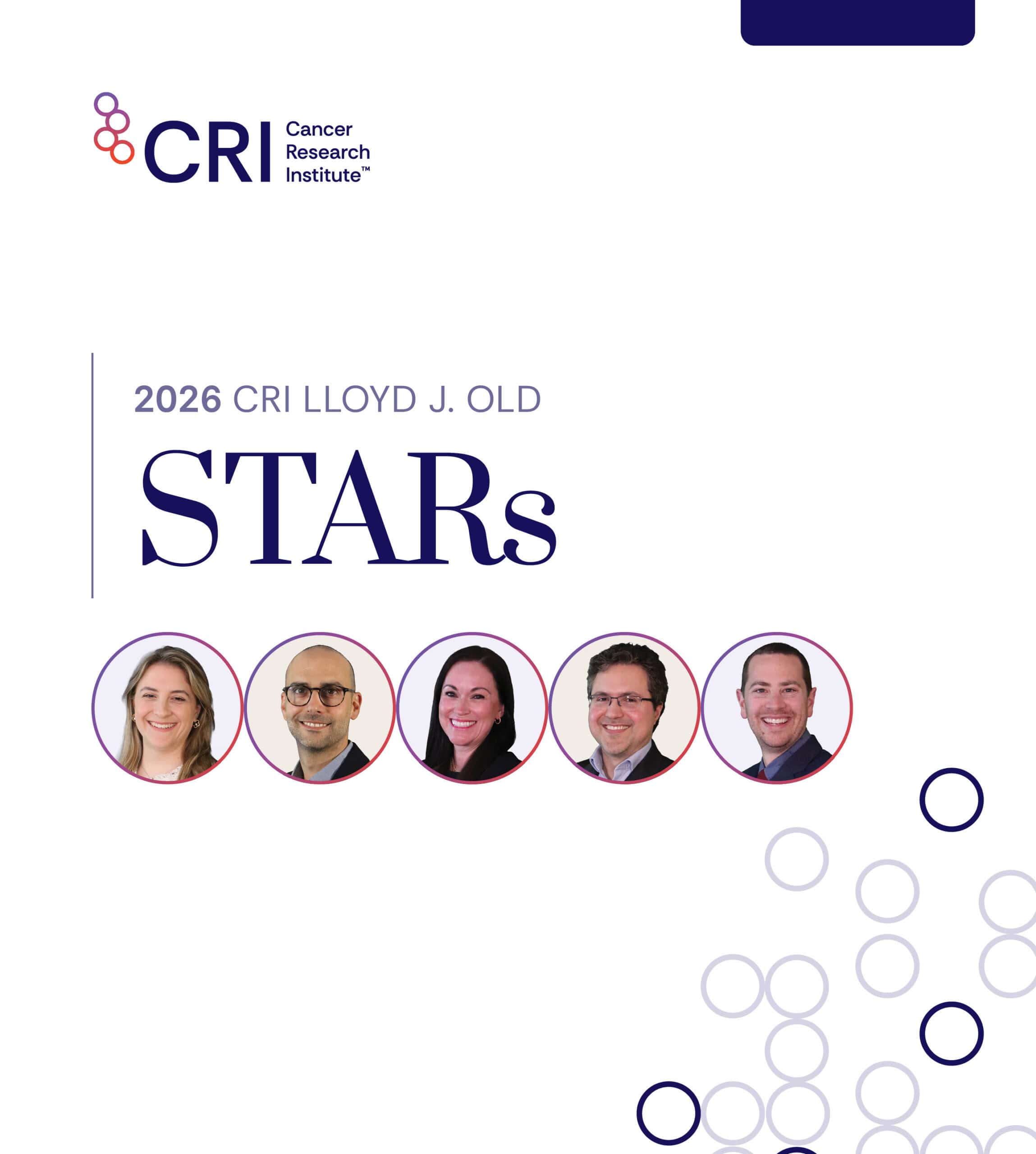
In the high-stakes world of oncology, where the margins between success and failure are measured in cellular responses and patient outcomes, the Cancer Research Institute (CRI) has once again signaled its commitment to bold, transformative science. The organization has officially unveiled its 2026 class of Lloyd J. Old STARs (Scientists Taking Risks), a select group of five visionary researchers tasked with redefining the boundaries of cancer immunotherapy.
By awarding each scientist $1.25 million in flexible funding over a five-year tenure, the CRI is not merely subsidizing research; it is providing the intellectual freedom necessary to pursue high-risk, high-reward projects that traditional grant mechanisms often overlook. This initiative represents a strategic shift in how the medical community fosters innovation, moving away from rigid, project-based silos toward a model that bets on the pedigree, creativity, and tenacity of the individual scientist.
The Genesis of the STAR Program: A Legacy of Disruption
To understand the weight of the 2026 appointments, one must look back at the program’s namesake, Dr. Lloyd J. Old. Often referred to as the "father of modern tumor immunology," Dr. Old spent his career championing the idea that the immune system could be harnessed to eradicate cancer—a concept that was considered fringe, if not impossible, for much of the 20th century.
The Lloyd J. Old STAR program was established to honor this spirit of scientific defiance. CRI’s history is defined by its willingness to fund "impossible" ideas—such as checkpoint inhibitors and CAR T-cell therapy—long before they were validated by clinical success. The 2026 class continues this legacy by supporting researchers who are currently at a critical inflection point in their careers: the transition from promising investigators to industry-defining leaders.
Chronology: From Selection to Scientific Impact
The selection of the 2026 class was a rigorous, year-long process led by the CRI’s Scientific Advisory Council. The council scoured the global landscape for candidates who not only possess technical brilliance but also demonstrate a "fearless" approach to biological problem-solving.
- Early 2025: Nominations open for researchers demonstrating extraordinary potential in immunotherapy.
- Mid-2025: Peer-review cycles begin, focusing on the candidate’s track record of lateral thinking and their ability to challenge established paradigms in immunology.
- Late 2025: Finalists undergo rigorous interviews, presenting their "moonshot" visions for the next decade of cancer treatment.
- July 2026: Official announcement of the five awardees, marking the beginning of their five-year funding cycles.
This chronology reflects a shift in the funding landscape. Rather than demanding a project proposal with predictable results, the CRI provides "jet fuel"—as described by leadership—allowing these scientists to pivot, fail, and iterate until they reach breakthroughs that could fundamentally alter the standard of care for millions of patients worldwide.
Supporting Data: Why "Flexible Funding" Matters
The current model of scientific funding in the United States and abroad is often criticized for being overly cautious. Most grants require researchers to present a hypothesis and a plan for how that hypothesis will be proven. While this ensures accountability, it frequently discourages scientists from pursuing projects where the outcome is uncertain or where the path to discovery is non-linear.
The $1.25 million awarded to each 2026 STAR is distinct because it is unrestricted. Data suggests that when top-tier researchers are freed from the administrative burden of constantly reapplying for small, project-specific grants, the quality of their output increases significantly.
The CRI Investment Model:
- Financial Runway: $1.25 million per researcher ensures long-term stability.
- Scientific Autonomy: No requirement to stick to a rigid project roadmap.
- Focus on People, Not Proposals: The vetting process prioritizes the researcher’s intuition over a singular data set.
- Risk-Tolerance: The program explicitly encourages the exploration of "high-risk" areas that have been abandoned by other labs.
This approach is intended to accelerate the timeline of immunotherapy. Historically, it can take 15 to 20 years for a discovery to move from a lab bench to a clinical bedside. By providing early-to-mid-career scientists with the resources to pursue radical ideas, the CRI aims to compress that timeline.
Official Responses: The Philosophy of "Jet Fuel"
The leadership at the Cancer Research Institute views the 2026 class as the next generation of scientific pioneers.
Dr. E. John Wherry, Associate Director of CRI’s Scientific Advisory Council, articulated the program’s intent during the announcement: "These are people who are hitting their stride scientifically and career-wise, and this is where you really want to put some jet fuel in the tank. We aren’t looking for incremental improvements; we are looking for the scientists who have the vision to see around corners and the courage to pursue those visions even when the path is unclear."
Dr. Elizabeth Jaffee, also an Associate Director, highlighted the human element of the selection process. "We’re not just funding science; we’re investing in the next leaders of the field. When we pick these individuals, we are looking for that rare combination of intellectual rigor and the audacity to challenge the status quo. We are confident that this group will define the next decade of cancer immunotherapy."
Implications: Reshaping the Future of Oncology
The appointment of the 2026 Lloyd J. Old STARs carries profound implications for the future of medicine. As cancer becomes increasingly understood as a disease of the immune system, the need for novel therapeutic approaches has never been more urgent.
1. Moving Beyond Traditional Checkpoints
While checkpoint inhibitors (such as anti-PD-1/PD-L1 therapies) have revolutionized the treatment of melanoma and lung cancer, they remain ineffective for many patients. The 2026 STARs are expected to move beyond these established pathways, investigating topics such as the tumor microenvironment (TME), metabolic reprogramming of T-cells, and the integration of artificial intelligence in predicting patient responses.
2. A Paradigm Shift in Grant Making
The success of the STAR program may serve as a blueprint for other funding bodies. By demonstrating that high-level, flexible funding yields better outcomes than restrictive, micro-managed grants, the CRI is challenging the broader scientific community to rethink how it supports its most valuable asset: the creative, independent scientist.
3. Patient Outcomes as the North Star
Ultimately, the implications of this research are measured in years of life saved. By empowering these five leaders, the CRI is creating a ripple effect. Each STAR leads a laboratory, mentoring graduate students and postdoctoral fellows who will carry these lessons of "risk-taking" into their own careers. This creates a sustainable pipeline of innovation that ensures the fight against cancer remains aggressive, adaptive, and effective.
Conclusion: The Horizon of Possibility
The 2026 Lloyd J. Old STARs represent more than just a list of names; they represent a bold declaration that the war on cancer is not a static endeavor. It is a dynamic, evolving field that requires constant reinvention.
As these five scientists embark on their five-year journey, the medical community will be watching closely. Whether through the development of next-generation cellular therapies, the unraveling of complex immune resistance mechanisms, or the creation of entirely new drug delivery systems, their work promises to be the bedrock upon which the next major breakthroughs in immunotherapy are built.
The Cancer Research Institute has placed its bet on these individuals, trusting that their curiosity and courage will provide the answers to the questions we haven’t yet learned to ask. In the pursuit of curing cancer, there is no greater investment than the human mind—and the 2026 class of STARs is, undoubtedly, among the brightest to have ever taken on this vital challenge.