








In the relentless battle against cancer, scientists have long viewed the disease as a master of adaptation. As tumors grow, they undergo a rapid, chaotic evolution, shedding their initial characteristics to become more resistant, aggressive, and difficult to treat. For decades, researchers have asked what fuels this transformative process. A groundbreaking study recently published in the journal Science Advances provides a compelling, counterintuitive answer: the very mechanisms that allow cancer to thrive may be the primary engines of its own genetic undoing.
New research conducted at the Hebrew University of Jerusalem suggests that cancer’s "growth addiction"—the forcing of critical genes to operate at extreme, unsustainable levels—physically tears the cell’s DNA. This process creates a cycle of damage and repair that acts as a breeding ground for the mutations that drive tumor progression. By mapping these "break hotspots," researchers have identified a structural vulnerability that could redefine how we approach cancer therapy.
The Anatomy of Aggression: Understanding Super-Enhancers
To understand the study’s significance, one must first look at the "control panels" of the genome. Within our DNA are regulatory sequences known as super-enhancers. These are vast, dense clusters of transcriptional enhancers that work in tandem to drive the expression of genes involved in cell identity and rapid growth.
In a healthy cell, these regions function like a rheostat, carefully modulating gene activity to meet the body’s needs. However, in cancer cells, these super-enhancers are hijacked. They are locked into a state of hyper-activity, forcing the cell to churn out proteins that promote unchecked division, survival, and metabolic efficiency.
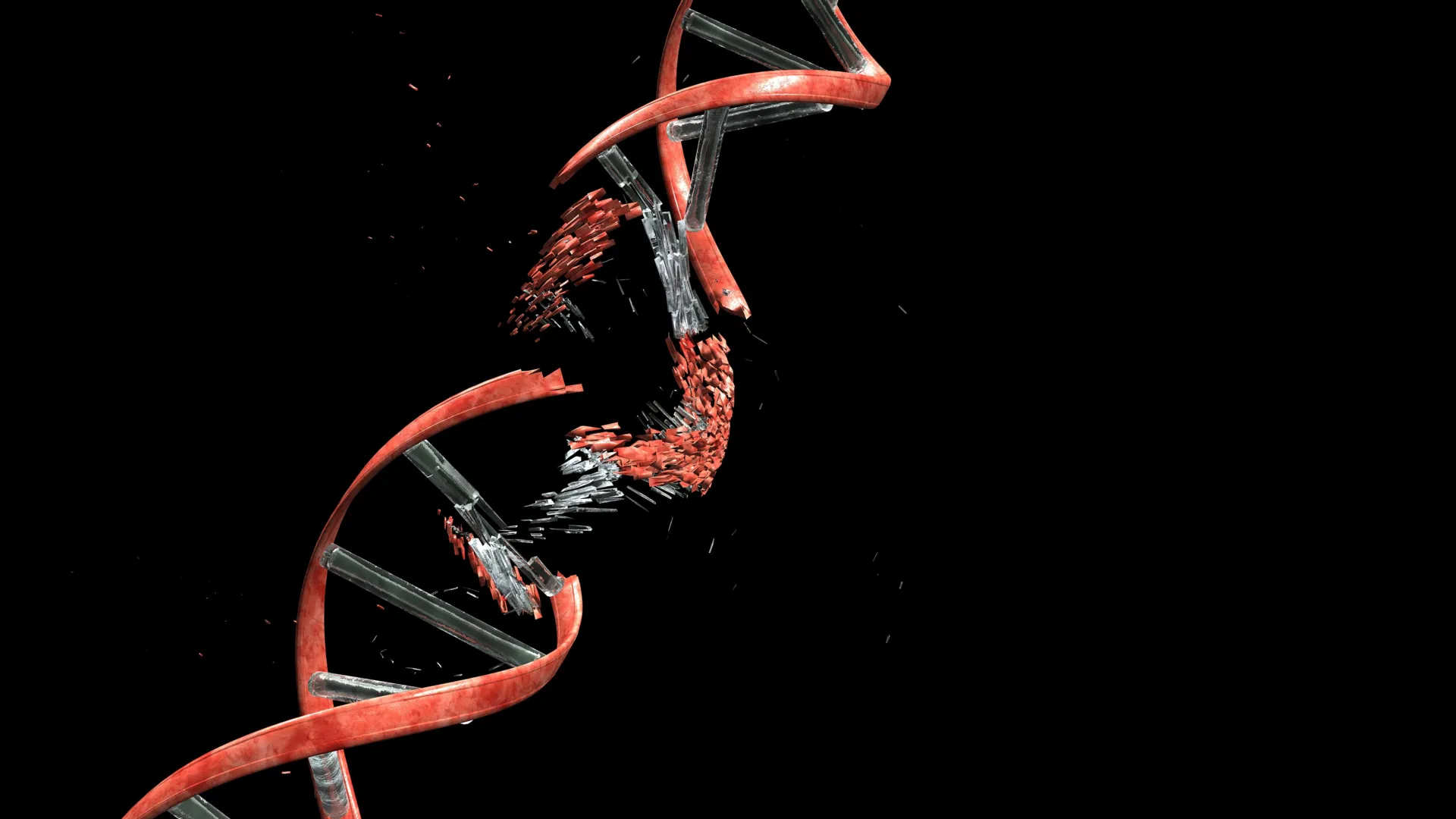
The research team, led by PhD student Osama Hidmi under the guidance of Professor Rami Aqeilan, discovered that this "full-throttle" gene expression comes at a catastrophic physical cost. As the transcriptional machinery races across the DNA to keep up with the cell’s insatiable demand for growth, the physical architecture of the DNA is placed under immense mechanical strain. This strain, the researchers found, frequently results in double-strand breaks (DSBs)—the most severe form of DNA damage, where both strands of the genetic helix are severed.
Chronology of a Discovery: Mapping the Genome’s Breaking Points
The path to this discovery involved a rigorous, multi-stage investigation into the spatial organization of the cancer genome.
Phase 1: Identifying the Hotspots
The researchers began by utilizing advanced genome-mapping technologies to create a high-resolution map of double-strand breaks across various cancer cell lines. Unlike previous assumptions, which suggested that DNA damage might occur randomly or be distributed based on general environmental exposure, the data revealed a striking pattern: the breaks were not random. They were clustered precisely within the regions governed by super-enhancers.
Phase 2: Correlating Activity with Damage
Once the locations of the breaks were identified, the team overlaid these maps with data on gene expression. The correlation was undeniable. The areas of the genome experiencing the most frequent physical breakage were exactly those areas where the super-enhancers were pushing gene activity to its absolute limit. This provided the first physical evidence that "transcriptional stress"—the sheer force of reading and copying DNA at high speeds—was snapping the genetic code.
Phase 3: The Repair Cycle
The final stage of the research involved tracking the cellular response to these breaks. The team monitored natural "alarm" signals—proteins that migrate to sites of DNA damage to recruit repair enzymes. They observed that cancer cells are constantly in a state of crisis management, repeatedly repairing these super-enhancer-induced breaks.
This cycle of destruction and restoration is where the danger lies. While the repair machinery is generally efficient, it is not infallible. Each time a break is mended, there is a statistical probability of a minor error. These errors accumulate as mutations, effectively "scrambling" the DNA over time.
Supporting Data: Why "More" is Not Always Better
The implications of this data challenge the traditional view of cancer as a stable entity. Instead, the findings suggest that the tumor’s drive for rapid growth acts as a self-inflicted mutagen.
Data from the study indicate that:
- Transcriptional Intensity: The higher the output of a gene regulated by a super-enhancer, the higher the frequency of DNA breaks in that specific region.
- The Mutation Reservoir: These "hotspots" of damage serve as the primary source of genetic variation within the tumor. This variation is the raw material that allows cancer to "evolve" resistance to chemotherapy and targeted drugs.
- Structural Vulnerability: The research proves that the regions most critical to the cancer cell’s survival—the super-enhancers—are also the most structurally unstable.
Official Perspectives: A Shift in Paradigms
"Cancer cells rely on super-enhancers to keep growth genes running at high speed," said Professor Rami Aqeilan. "What we found is that this same high-output activity can put real strain on the DNA, creating break hotspots that the cell has to repair again and again. That cycle may help tumors survive in the short term, but it also increases the risk of mutations that can fuel cancer’s evolution."
For Professor Aqeilan, this discovery shifts the focus from treating cancer as a static target to treating it as a dynamic, unstable process. By acknowledging that genetic instability is not just a side effect but a requirement for the tumor’s high-growth lifestyle, researchers can begin to view the cell’s internal repair machinery as a strategic weakness.
Osama Hidmi, the lead author of the study, emphasized the clinical potential of these findings. "What is especially exciting is that because cancer cells depend on these high-stress DNA regions to keep growing, they may also be more vulnerable there," Hidmi noted. "This opens the door to treatments that target the very processes tumors rely on to survive."
Implications for Future Oncology
The discovery that super-enhancers are sites of intense physical strain has profound implications for the future of oncology and drug development.
1. Targeting the "Repair Addiction"
If cancer cells are constantly breaking and repairing their own DNA, they are effectively "addicted" to their own repair machinery. New therapies could be designed to selectively inhibit the DNA repair enzymes that cancer cells use to fix these super-enhancer breaks. By preventing the repair of these specific hotspots, scientists could force the cancer cell into a state of "mitotic catastrophe," where the accumulation of damage becomes so severe that the cell can no longer function, leading to programmed cell death.
2. Precision Therapeutics
Current chemotherapy often causes widespread DNA damage, leading to debilitating side effects for patients. However, if treatments could be tailored to target the specific transcriptional stress induced by super-enhancers, it might be possible to kill cancer cells with far greater precision, sparing healthy cells that do not share the same hyper-active, growth-dependent profile.
3. Understanding Treatment Resistance
The study provides a potential explanation for why some cancers become resistant to therapy so quickly. If a tumor is already generating mutations at a high rate due to transcriptional stress, it is essentially "pre-loaded" with the genetic diversity needed to survive external pressures, such as drugs or radiation. Understanding these hotspots could allow clinicians to predict which tumors are likely to become aggressive and intervene before those resistant mutations take hold.
4. A New Class of Biomarkers
Mapping the super-enhancer-associated break sites could also provide a new way to classify tumors. By analyzing the "break signature" of a patient’s cancer, doctors might be able to gauge the level of genomic instability and tailor the intensity of the treatment accordingly.
Conclusion: Turning Strength into a Fatal Weakness
The research from the Hebrew University of Jerusalem reframes our understanding of the tumor as a biological entity. We are seeing that cancer’s aggressive, rapid-fire approach to growth is its greatest strength, but also its most glaring vulnerability.
The super-enhancers that act as the gas pedal for tumor growth are the same elements causing the engine to overheat and break down. By identifying these hotspots of DNA strain, researchers have unveiled a fundamental mechanism of cancer evolution. The future of oncology may lie in exploiting this tension—using the tumor’s own high-pressure requirements to push it past the point of no return.
While much work remains to translate these findings into clinical therapies, the study offers a beacon of hope. By looking at the "breaks" in the genetic code, scientists may have finally found the lever that can bring the machinery of cancer to a permanent halt. The irony of the discovery is clear: the very drive that fuels cancer’s persistence may ultimately provide the blueprint for its eradication.