








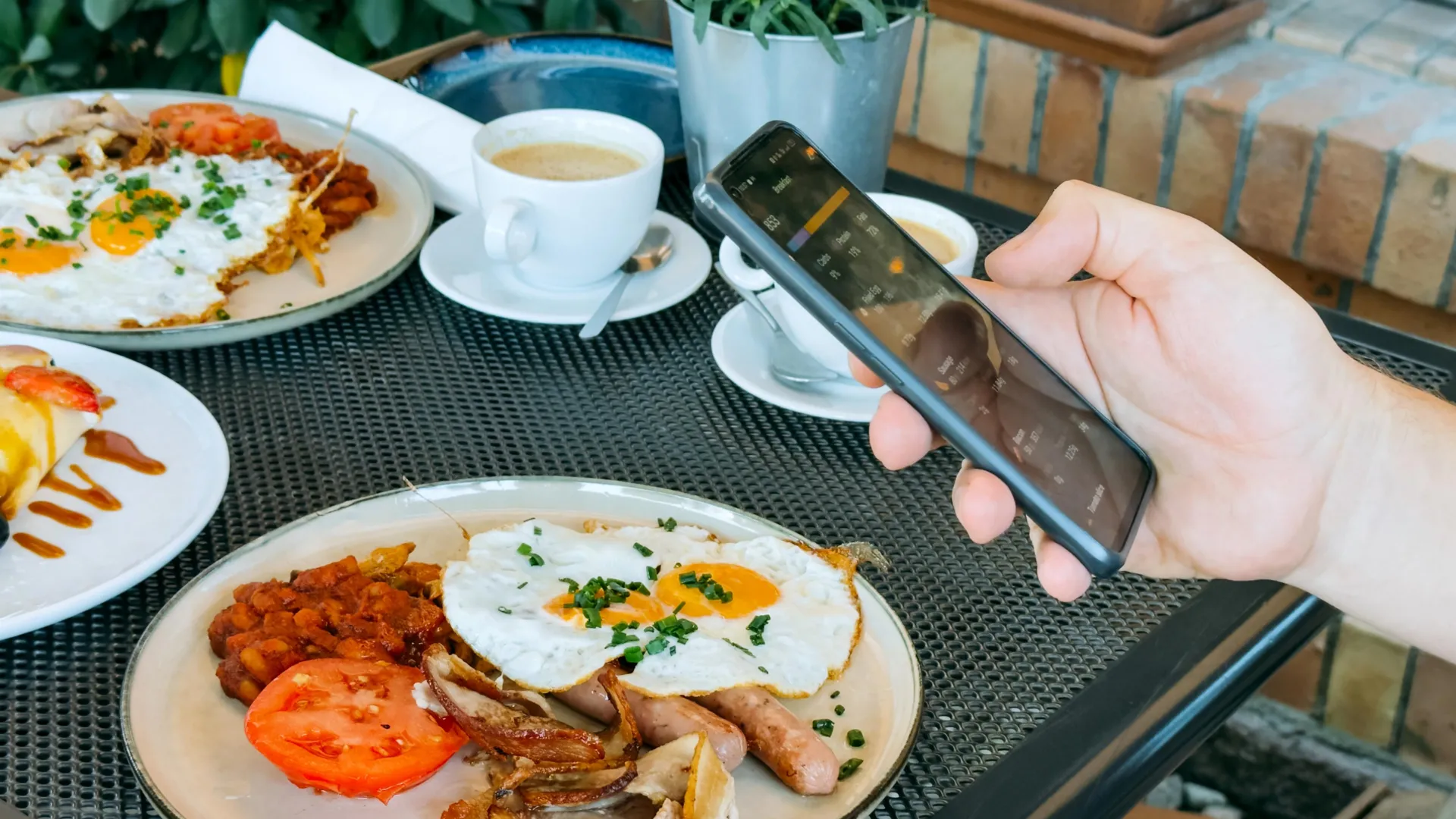
For millions of health-conscious individuals, the era of painstakingly logging every grape, slice of bread, or pat of butter into a digital journal is ostensibly coming to an end. In its place, a new wave of artificial intelligence-powered applications promises a frictionless future: simply snap a photo of your plate, and the app instantly calculates your caloric intake and macronutrient breakdown.
However, new research presented at NUTRITION 2026—the annual flagship meeting of the American Society for Nutrition—suggests that this technological convenience comes at a significant cost to accuracy. A rigorous study conducted by the National Institute of Diabetes and Digestive and Kidney Diseases (NIDDK), part of the National Institutes of Health (NIH), reveals that these AI-driven tools may be consistently underestimating the energy content of meals by a startling margin.
The Promise and Peril of AI Dietary Tracking
The appeal of photo-based calorie tracking is undeniable. Manual logging is notoriously tedious, prone to human error, and a significant barrier to long-term diet adherence. AI image recognition aims to solve this by identifying food items, estimating portion sizes, and cross-referencing those findings with comprehensive nutritional databases.
"Photo-based calorie tracking apps are very popular, especially for people trying to manage their health or lose weight," explains Aaron Hengist, a postdoctoral visiting fellow at the NIDDK. "However, the accuracy of many of these apps has not been thoroughly evaluated. Our study helps address this question by looking at whether these apps can reliably estimate calories."
While the technology offers a streamlined user experience, the NIDDK study serves as a sobering reminder that algorithms are only as good as the data—and the visual cues—they are trained to interpret. When the technology fails to accurately capture the true energy density of a meal, the consequences for someone attempting to maintain a caloric deficit or monitor specific health metrics can be profound.
A Chronology of the Investigation
The project began as an offshoot of a broader, high-stakes nutrition study at the NIH Clinical Center. Researchers were investigating the metabolic impacts of different dietary patterns, specifically comparing low-carbohydrate (ketogenic) diets against standard dietary protocols.
Phase I: Establishing the Gold Standard
To test the efficacy of the AI, the research team needed a "ground truth"—a set of data points so accurate they could serve as an unimpeachable benchmark. They turned to the NIH Clinical Center’s controlled metabolic kitchen. In this highly sterile and precise environment, every ingredient is measured to the nearest 0.1 gram. By using these meals, the researchers created a high-quality, controlled dataset that has historically been unavailable in consumer-grade app testing.
Phase II: The Testing Methodology
The team collected standardized, high-quality photographs of 102 distinct meals prepared for the clinical trial. These images were then processed through four of the industry’s most prominent tracking applications: MyFitnessPal, LoseIt!, CalAI, and Appediet. The researchers compared the AI-generated output for calories and macronutrients against the actual, verified data from the metabolic kitchen.
Phase III: The Expansion
Following the initial findings, the research team expanded their scope, testing an additional 200 meals. This phase was specifically designed to tease out the variables influencing accuracy, such as the composition of the meal (e.g., high-fat vs. high-carb) and the potential limitations of visual recognition in complex, multi-ingredient dishes.
Supporting Data: The Magnitude of the Discrepancy
The results of the study were striking. Across all four platforms tested, the AI consistently missed the mark, resulting in a significant underestimation of total energy.
- Caloric Deficit: On average, the apps underestimated the total caloric content of a meal by 250 to 345 calories.
- The Fat Factor: The apps showed a particular blind spot for fats, underestimating this macronutrient by approximately 30 grams per meal. Given that fat is the most energy-dense macronutrient (at 9 calories per gram), this error accounts for a massive portion of the missing total.
- The Consistency Gap: While the apps demonstrated more consistent performance when estimating carbohydrates, their reliability plummeted when analyzing meals with higher fat content.
"By using meals prepared in a tightly controlled metabolic kitchen, we were able to compare the apps’ estimates against a precise reference," Hengist noted. "This kind of direct, high-quality comparison hasn’t been available before."
Interestingly, the study found that MyFitnessPal and LoseIt! exhibited a "performance bias," showing greater accuracy when analyzing higher-calorie meals compared to lower-calorie ones. However, even at their best, the apps failed to reach a level of precision that would satisfy a nutritionist or a patient on a strictly controlled diet.
The Keto Conundrum: Why Certain Diets Pose a Challenge
One of the most compelling findings from the expanded testing phase involves the "Keto" diet. Because ketogenic meals are by definition high in fat, they appear to be particularly difficult for current AI models to interpret correctly.
The researchers hypothesize that the visual density and texture of high-fat foods may be harder for image recognition algorithms to quantify. An AI might recognize a piece of steak or an avocado, but it lacks the ability to "see" the oils, butter, or hidden fats that may be drizzled over the dish or used in the cooking process. As a result, the algorithm defaults to more conservative or standard estimates, leading to a consistent underreporting of caloric intake.
Official Perspectives and Professional Advice
The findings were formally presented by Olivia Charles, a postbaccalaureate intramural research training fellow at NIDDK, on July 25 at the NUTRITION 2026 conference in National Harbor, Maryland. The presentation was part of the prestigious President’s Oral Session, underscoring the importance of the work in the current landscape of digital health.
The core message from the NIDDK researchers is one of cautious skepticism. "People using a photo-based tracking app without adjusting the portions or entering the amounts of food should take the results with a grain of salt," Hengist advised. "These apps tend to underestimate calories, especially from fats, so what they actually ate is likely higher than what the app shows."
While the researchers stop short of recommending that users abandon these apps entirely, they suggest a hybrid approach. Combining the convenience of photo-based logging with traditional, manual adjustments—or verifying the app’s output against known nutritional labels—could bridge the accuracy gap.
Implications for Public Health and the Future of AI
The implications of this research are far-reaching. As the healthcare industry pushes toward "digital therapeutics," where patients manage chronic conditions like obesity or Type 2 diabetes through mobile apps, the accuracy of these tools becomes a matter of public health.
- The Over-Reliance Trap: If a user relies on an app that systematically underestimates their caloric intake, they may inadvertently consume hundreds of extra calories per day, potentially stalling their health goals.
- The Need for Better Training Data: The study highlights that AI models are likely trained on standard, balanced diets. As specialized diets (like Keto, Paleo, or Vegan) become more common, developers must ensure their algorithms are trained on diverse, complex meal compositions.
- The "Preliminary" Caveat: It is important to note that the study results presented at NUTRITION 2026 have been reviewed by experts but have not yet undergone the full rigors of a peer-reviewed journal publication. While the findings are robust and provide a strong foundation for future research, the field is evolving rapidly, and app developers are likely already working to improve their recognition algorithms based on similar internal testing.
Conclusion: A Tool, Not a Truth
The promise of AI in nutrition is immense. The ability to simply photograph a meal and receive an instant nutritional breakdown is a technological marvel that could revolutionize how we manage our health. However, as the NIDDK research demonstrates, we have not yet reached the point where we can outsource our health tracking entirely to a machine.
For now, the best strategy is to view these apps as a useful guide rather than an objective authority. For those whose health goals require precise caloric control, the traditional methods of weighing and measuring remain, for the time being, the most reliable path forward. As AI continues to advance, the gap identified by Hengist and Charles will likely narrow, but until then, the human element—the ability to verify, question, and manually adjust—remains the most important component of any successful dietary strategy.