By Jackie Keating, LCSW
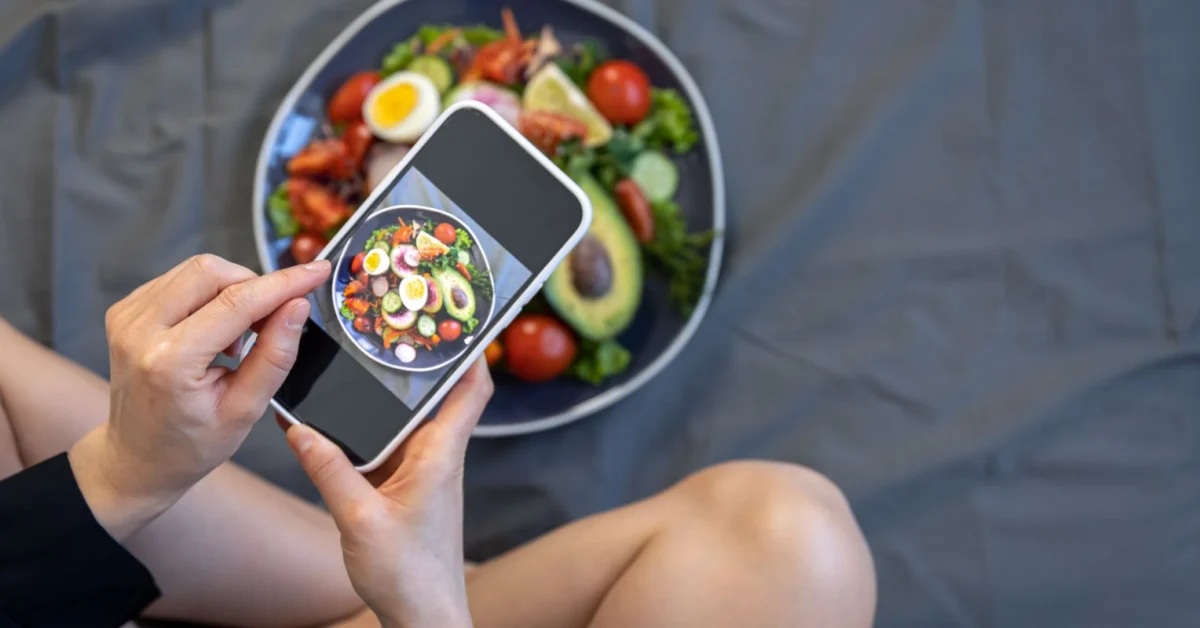
It is a familiar Sunday night ritual: you are lying in bed, the blue light of your smartphone illuminating the dark room as you scroll through endless feeds. In search of a quiet escape, you are instead bombarded by an algorithmically curated reality. An influencer appears on your screen, presenting a "what I eat in a day" video—a collection of perfectly plated, carb-free, calorie-depleted meals. A moment later, a different creator jokes about their weekend binge-drinking, while another post features a "mom-fluencer" framing wine as a necessary survival tool for parenthood. Interspersed between these are aggressive advertisements for fitness programs promising to "fix your life in three simple steps."
By Monday morning, this digital pressure manifests in the physical world. A coworker discusses a new, restrictive diet they are starting; a friend sends a text about needing to lose weight to be "summer-ready." Public figures like Tom Brady advocate for specific plant-based regimens, turning personal lifestyle choices into global mandates. The message is pervasive, relentless, and increasingly dangerous: your worth is defined by your discipline, your body is a project to be managed, and your happiness is just one restrictive meal plan away.
The Architecture of Diet Culture in the Digital Age
Social media was built on the promise of connection, but it has evolved into a powerful engine for diet culture—a system of beliefs that equates thinness with health and moral superiority. While these platforms offer community, they simultaneously expose users to unrealistic beauty ideals that are fundamentally unattainable.
Diet culture thrives by weaponizing human insecurity. It offers the allure of health and happiness but, in practice, frequently delivers a payload of shame, guilt, and anxiety. The wellness industry has become a massive profit engine, capitalizing on the psychological vulnerability of its users. According to industry data, the global wellness market reached $160 billion in 2024 and is projected to balloon to $360 billion by 2034 (Finklea, 2025).
Digital creators are the foot soldiers of this expansion. By promoting specific supplements, fitness trends, and "hacks," they often demonize entire food groups and engage in fat-shaming as a way to validate their own regimes. The implicit promise is seductive: if you mirror the influencer’s habits, you will achieve their perceived happiness and physical aesthetic. However, beneath the curated filters lie hidden realities—extreme restriction, chronic stress, and deep-seated psychological suffering.
The impact on youth is particularly alarming. Nearly half (46%) of teens aged 13–17 report a decline in self-esteem following social media use. Furthermore, the REACH Institute (2025) notes that individuals who spend more than three hours a day on social media are twice as likely to develop eating disorders compared to their peers with lower screen time.
The Shadow Intersection: Eating Disorders and Substance Use
While eating disorders (EDs) and substance use disorders (SUDs) may appear distinct to the casual observer, they are deeply linked at the clinical level. Both function as maladaptive coping mechanisms—attempts to manage, suppress, or avoid underlying emotional distress, trauma, or environmental pressure.
The data on this intersection is sobering. The National Eating Disorders Association (NEDA, 2023) reports that 50% of individuals struggling with an eating disorder also misuse alcohol or other drugs. This is not a coincidence; research indicates an interdependent relationship where each disorder acts as a risk factor for the other (Xi & Galaj, 2025).
Social media platforms like TikTok and Instagram often act as amplifiers for this dangerous overlap. By simultaneously glamorizing extreme restrictive dieting and normalizing "wine culture" or substance-based escapism, these platforms erode the boundaries between healthy living and dangerous addiction. The normalization of both behaviors creates a slippery slope where a user can transition from a "clean eating" obsession to a substance-dependency issue without ever identifying that they have entered a state of crisis.
Chronology of a Crisis: From Influence to Impairment
The progression into a co-occurring disorder often follows a distinct, albeit invisible, timeline:
- The Exposure Phase: The individual is repeatedly exposed to "wellness" content that frames food as a moral choice (e.g., "good" vs. "bad" foods).
- The Restriction Phase: The individual adopts a rigid diet, often prompted by a desire for control or external validation. This leads to increased anxiety and, eventually, a depletion of the neurochemicals that regulate mood.
- The Coping Phase: As the stress of restriction mounts, the individual seeks a secondary outlet to numb the hunger or the anxiety. This is where substances—alcohol, stimulants, or other drugs—are often introduced as a "supplement" to the diet or a way to handle social stress.
- The Comorbidity Phase: The disorders become intertwined. The substance use masks the symptoms of the eating disorder, while the eating disorder fuels the metabolic and psychological instability that drives the substance use.
The Deadly Reality of Co-Occurring Disorders
The medical community views the co-occurrence of EDs and SUDs as a high-acuity crisis. Anorexia nervosa already holds the highest mortality rate of any mental health condition; when compounded by substance misuse, the risk factors shift from dangerous to potentially fatal.
Data from Mellentin et al. (2022) indicates that the presence of alcohol or hard drug use nearly quadruples the mortality risk for patients with eating disorders. These patients face a "perfect storm" of physical complications—including electrolyte imbalances, cardiac stress, and nutritional deficiencies—coupled with an increased risk of suicide and severe psychiatric comorbidities, such as major depressive disorder and generalized anxiety (SAMHSA, 2025).
Fragmented Care: A Failure of the System
Despite the clear biological and psychological overlap between these disorders, the current healthcare landscape is largely ill-equipped to treat them in tandem. Treatment systems remain stubbornly siloed. A patient may enter a specialized eating disorder clinic only to be told they must first address their substance use elsewhere, or they may enter a drug rehabilitation facility that fails to account for their underlying nutritional or body-image pathology.
This fragmented approach turns recovery into a exhausting game of "whack-a-mole." Patients are forced to navigate conflicting treatment philosophies, leaving them to manage their own care without the benefit of a holistic, integrative team. Research by Pierce, Joy, and David (2025) underscores the necessity of moving away from this compartmentalized model toward an integrated, multidisciplinary approach that addresses the "whole person" rather than the "separate symptoms."
Toward a Path of Integrative Healing
To address the rising tide of these co-occurring disorders, the medical community must pivot toward comprehensive, integrated care. This requires:
- Integrated Clinical Models: Treatment centers must be staffed by professionals trained in both nutritional psychology and addiction medicine.
- Media Literacy Initiatives: Public health campaigns must prioritize digital literacy, helping individuals understand how algorithms are designed to exploit their insecurities for profit.
- Early Intervention: Schools and primary care providers need to look past the symptoms of "weight loss" or "lifestyle changes" to screen for the underlying psychological drivers that precede these behaviors.
- Cultural Advocacy: We must challenge the societal narrative that equates health with a specific body type. By de-stigmatizing the recovery process, we can empower individuals to reclaim their health in a world that consistently profits from their struggle.
The digital mirror is cracked. It shows us a reflection that is not only distorted but designed to keep us reaching for a version of ourselves that does not exist. Recognizing the influence of this digital landscape—and the dangerous physical toll it takes on our bodies and minds—is the first, essential step toward reclaiming our agency and our lives. Recovery is possible, but it requires that we stop treating the symptoms in isolation and start healing the underlying pressures of the culture that created them.
References
- Dane, A., & Bhatia, K. (2023). The social media diet: A scoping review to investigate the association between social media, body image and eating disorders amongst young people. PLOS Global Public Health.
- Finklea, K. (2025). The wrong influence: The link between diet culture and eating disorder. HopeHealth.
- Holland, G., & Tiggemann, M. (2023). Social media and body image: A systematic review of experimental studies. PLOS Global Public Health.
- Mellentin, A. I., et al. (2022). The impact of alcohol and other substance use disorders on mortality in patients with eating disorders. The American Journal of Psychiatry.
- National Eating Disorders Association. (2023). Substance use and eating disorders.
- Pierce, S., Joy, J. M., & Wiss, D. A. (2025). Abstinence-based treatment of comorbid eating disorders and ultra-processed food addiction. Frontiers in Psychiatry.
- SAMHSA. (2025). Breaking the silence: What everyone should know about eating disorders.
- The REACH Institute. (2025). How social media is impacting teens.
- Xi, Z.-X., & Galaj, E. (2025). Novel potential pharmacological approaches in treating eating disorders comorbid with substance use disorders. Biomedicine & Pharmacotherapy.