







In an era where biometric tracking has become ubiquitous, the sleep technology sector is undergoing a profound transformation. Moving beyond basic step-counting or simple wrist-worn heart-rate monitors, the industry is pivoting toward "frictionless" integration—environments that adapt to the user rather than requiring the user to adapt to the technology. Leading this charge is Ergomotion, a global pioneer in adjustable bed bases, which has officially announced the launch of Sleep Assist, a unified, subscription-free platform powered by "Ergomotion Intelligence."
Set to debut on iOS devices on August 1, with an Android rollout following in mid-August, Sleep Assist promises to bridge the gap between clinical-grade biometric data and the physical comfort of a smart bed. By eliminating the need for wearables and subscription paywalls, Ergomotion is positioning itself as a central hub in the burgeoning smart-home health ecosystem.
Main Facts: The Intersection of AI and Ergonomics
The core of the Sleep Assist platform lies in its ability to synthesize data and physical action. Unlike many sleep-tracking solutions that merely provide a "sleep score" and leave the user to decipher the data, Sleep Assist acts as both an analyst and an operator.
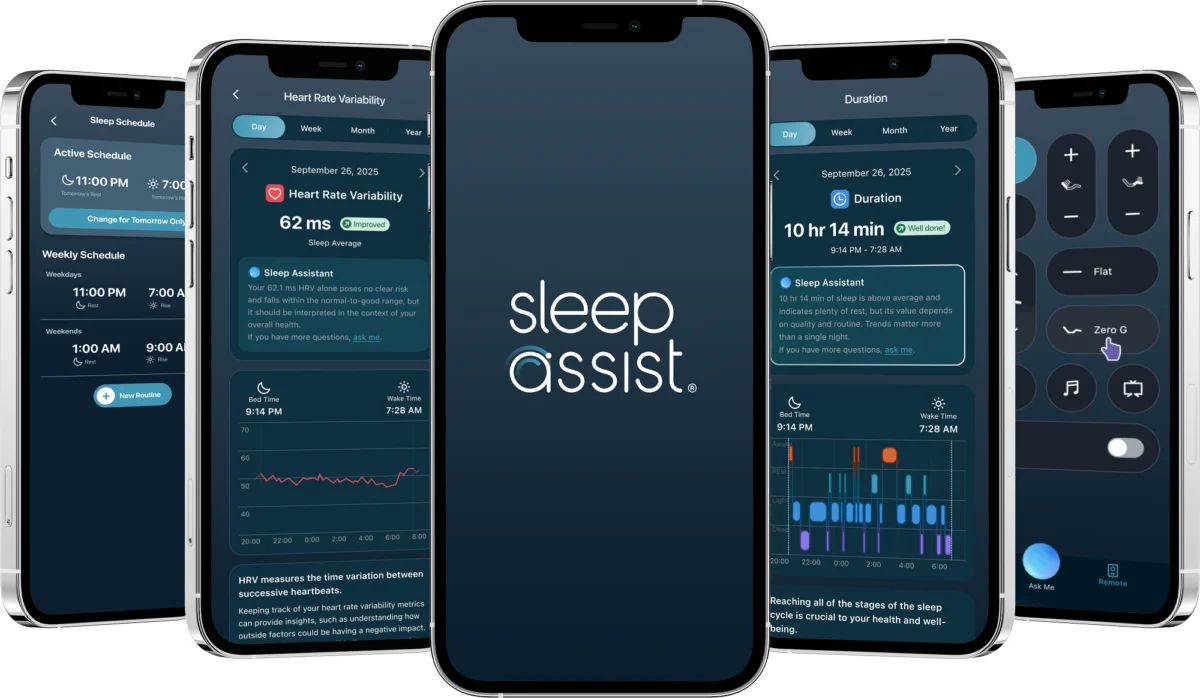
The system utilizes high-precision sensors embedded directly into the chassis of the bed base. This non-contact approach is a significant shift in consumer sleep tech; it allows the bed to monitor vitals and sleep cycles without the user needing to wear a watch, ring, or chest strap. The data captured is comprehensive, covering:
- Sleep Efficiency and Timing: Tracking the latency of sleep onset and total duration.
- Physiological Metrics: Heart rate variability (HRV) and lowest resting heart rate.
- Restfulness Indicators: Frequency of nighttime awakenings and duration of deep versus light sleep phases.
- Environmental Factors: Detection of snoring and overall restfulness scores.
By leveraging Ergomotion Intelligence, the platform processes this data to provide daily, weekly, and monthly trends. Perhaps most impressively, the app features an integrated AI-driven conversational assistant. Users can query the app in plain language—asking, for example, "Why was my sleep quality poor last night?"—and receive actionable insights based on their own physiological history.
Chronology: From Concept to Consumer Availability
The journey of Sleep Assist reflects a multi-year investment in R&D and a strategic pivot toward the "connected sleep" market.
- Early 2026 (The CES Preview): Ergomotion first showcased the potential of their intelligent bed systems at the Consumer Electronics Show (CES) in Las Vegas. The industry response was overwhelmingly positive, noting the shift away from intrusive wearables toward ambient, "invisible" computing.
- Q2 2026 (Refinement Phase): During the months following CES, Ergomotion focused on integrating the app with their flagship RIO Eco platform. This period was dedicated to stabilizing the sensor-to-cloud communication and ensuring the AI assistant could interpret complex biometric datasets accurately.
- August 1, 2026 (The iOS Launch): The official release of the Sleep Assist app on the Apple App Store marks the first public availability of the platform.
- Mid-August 2026 (Android Expansion): A wider rollout to the Google Play Store will ensure parity across the mobile landscape.
- Fall 2026 (Hardware Expansion): The ecosystem will expand to support the upcoming Ergomotion Legacy Venti adjustable smart bed, signaling a long-term commitment to a hardware-software unified experience.
Supporting Data: Why "Frictionless" Matters
The smart-bed market is currently crowded with subscription-based services that often lock high-level analytics behind monthly fees. Ergomotion’s decision to offer a subscription-free model is a disruptive move that challenges the current industry standard.
According to recent industry reports on sleep health, "wearable fatigue" is a growing phenomenon. Many users abandon sleep trackers because they find the nightly ritual of charging devices or dealing with wrist irritation disruptive to their sleep hygiene. Ergomotion’s sensor-integrated base addresses this directly. By moving the tracking hardware from the user’s body to the furniture itself, the company removes the barrier to entry for long-term health monitoring.
The technical capabilities of the RIO Eco platform, which serves as the launchpad for Sleep Assist, are substantial. It integrates:
- Head and Foot Articulation: Precision motors for optimal posture.
- Active Pillow Tilt: Adjusting the angle of the head to improve breathing and alleviate snoring.
- Lumbar Support and Sonic Massage: Utilizing physical feedback to aid in muscle recovery.
When the Sleep Assist app detects restlessness, it can autonomously trigger these physical responses, such as shifting the bed into a "Zero-G" position—a neutral posture that reduces pressure on the spine—or adjusting the head tilt to stop snoring in real-time.

Official Responses and Strategic Vision
The leadership at Ergomotion views this launch not merely as an app release, but as a fundamental evolution of the company’s identity.
"Sleep Assist represents the next step in Ergomotion’s evolution as a connected sleep technology leader," says Gui Peres, CEO of Ergomotion. In a recent press release, Peres emphasized that the platform is designed to provide consumers with a "clearer understanding" of their nightly rest.
The philosophy behind this development is rooted in the belief that data is only as valuable as the action it prompts. By linking personal wellness data with individualized comfort settings, Ergomotion aims to turn the bedroom into a proactive health tool rather than a passive space. The "AI-powered" aspect of the platform is designed to learn over time; the more the user sleeps in the bed, the more the AI understands their specific preferences and physical recovery needs, allowing for increasingly sophisticated "smart routines" that automate the comfort experience before the user even drifts off.
Implications: The Future of the "Smart Bedroom"
The launch of Sleep Assist has broader implications for the smart home and healthcare industries.
1. The Death of the Subscription Barrier
By eschewing a subscription model, Ergomotion is betting that the value of their hardware—and the stickiness of the app—will be enough to drive brand loyalty. This puts pressure on competitors who rely on recurring revenue models, potentially forcing a market-wide shift toward more consumer-friendly pricing.
2. The Bedroom as a Diagnostic Hub
The ability to track metrics like heart rate variability and snoring without a wearable positions the bed as a primary diagnostic tool. While these products are not intended to replace medical devices, they provide longitudinal data that could prove invaluable to primary care physicians. Patients could potentially export monthly trends to share with doctors, facilitating better conversations regarding sleep apnea or chronic fatigue.
3. Real-Time Physical Intervention
Most smart sleep tech is purely observational—it tells you how you slept. Ergomotion’s differentiator is its ability to intervene while you sleep. The automated anti-snore functionality and the programmable sleep scheduling represent a transition from "passive tracking" to "active management."
4. Scalability and Future-Proofing
The announcement that the platform will support the upcoming Legacy Venti bed demonstrates that Ergomotion is building a modular ecosystem. As sensor technology improves, the software can be updated to provide more accurate diagnostics without the user needing to replace their furniture, effectively extending the lifecycle of the smart bed.
Conclusion
As we approach the August 1 launch, the industry will be watching closely to see how effectively the Ergomotion Intelligence platform bridges the gap between sophisticated data analytics and seamless user experience. By removing the friction of wearables and the burden of monthly subscriptions, Ergomotion is not just selling a piece of furniture; they are selling a comprehensive approach to sleep hygiene.
In a world where high-quality, restorative sleep is increasingly elusive, the promise of a bed that monitors your vitals and adjusts its own geometry to optimize your recovery is a compelling vision of the future. With the Sleep Assist app, Ergomotion is taking a decisive step toward making that future a standard in the modern home.