







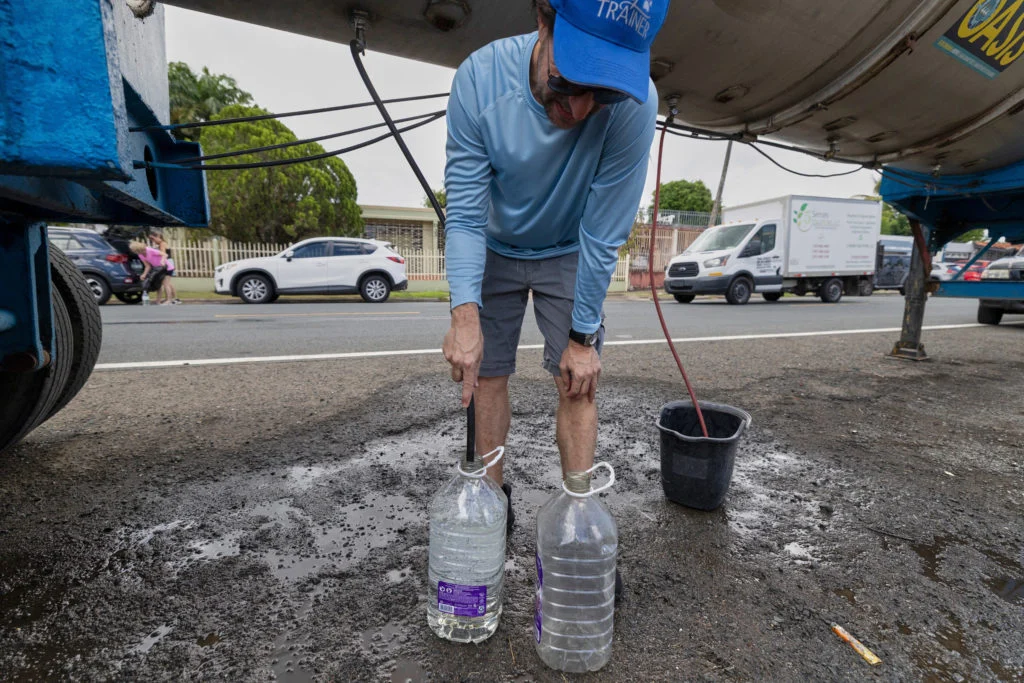
Puerto Rico is once again grappling with a crisis that threatens the daily lives and public health of its residents: a severe, escalating water shortage. As drought conditions tighten their grip on the island, the government has been forced to implement a rotating water-rationing schedule, leaving major metropolitan areas—including the capital, San Juan—subject to 48-hour shutoffs. The crisis has moved beyond a simple meteorological event; it has evolved into a scathing indictment of the island’s crumbling infrastructure, opaque administrative communication, and a long-standing history of systemic neglect.
The Reality on the Ground: A State of Uncertainty
For residents, the return to water rationing is a grim reminder of the island’s precarious existence. The current system mandates that water service be cut off in rotating cycles, but the reality on the ground is far more chaotic. Investigative reporter Laura N. Perez Sanchez, speaking from San Juan, describes a pervasive sense of confusion and frustration among the populace.
“People feel frustrated because, even with the rationing system, things are not going as planned,” Perez Sanchez explained. In many instances, the schedule fails to align with the actual delivery of services. Some residents find themselves without water when the schedule dictates they should have it, while others in vulnerable, outlying communities have endured consistent outages for over a year. This unpredictability has transformed simple household tasks—showering, cooking, laundry—into high-stakes logistical hurdles.
The psychological toll is significant. For a population already exhausted by chronic power outages and the lingering trauma of past natural disasters, the prospect of an indefinite drought—potentially stretching until the end of the year—is a daunting reality. As one resident noted, the simple, rhythmic sound of rainfall has become a memory, replaced by the silence of dry pipes and the anxiety of the unknown.
Chronology of a Slow-Motion Disaster
The current crisis did not emerge overnight. While meteorological drought conditions have been intensifying since May, the vulnerability of Puerto Rico’s water supply has been building for decades.
- May: The onset of severe dry conditions began to significantly impact reservoir levels across the island.
- Late Summer: As levels in primary reservoirs dropped below critical thresholds, authorities began warning of impending rationing measures.
- Implementation Phase: The government officially rolled out a 48-hour rotating shutdown schedule in major cities, intended to preserve dwindling reserves.
- Present Day: Widespread public confusion persists as the rationing schedule remains inconsistently applied, sparking protests and calls for greater transparency from the Puerto Rico Aqueduct and Sewer Authority (PRASA).
The situation is further complicated by climate experts’ warnings. Meteorologists have indicated that the full impact of the current "El Niño" cycle has yet to manifest, suggesting that the dry conditions could persist well into the final quarter of the year.
Supporting Data: The Infrastructure Gap
While climate change is a primary driver of the drought, experts argue that the severity of this crisis is largely man-made. The fundamental issue lies in an aging, neglected water infrastructure that is losing the battle against inefficiency.
According to data cited by independent experts, Puerto Rico’s water system suffers from an staggering loss rate: nearly 60 percent of the water treated and released into the system never reaches the consumer. This "non-revenue water" is lost to leaks, pipe bursts, and illegal connections, all of which stem from decades of deferred maintenance.
The numbers are stark. At the reservoir currently serving as the epicenter of the rationing effort, officials typically extract 90 million gallons per day. However, only 65 million gallons successfully enter the distribution system. This 25-million-gallon deficit is not a result of the drought—it is a result of a broken system that is hemorrhaging precious resources. When such massive quantities are lost daily, the margin for error during a drought vanishes, turning a manageable dry spell into a full-scale public emergency.
Official Responses and the Communication Void
In response to the growing unrest, government officials have focused their messaging on conservation. During a recent briefing, Governor Jenniffer Gonzalez-Colon urged citizens to take personal responsibility for the crisis.
“Sometimes, we’re showering and we leave the water running and we wash our hair and leave the water running,” Governor Gonzalez-Colon said through an interpreter. “Let’s shut it off when we’re washing and then turn it back on to rinse off. That can be the difference in reducing water consumption.”
While these measures are standard in drought management, they have been met with skepticism and anger by a public that feels the government is shifting the burden of failure onto the shoulders of residents. Critics argue that asking families to wash dishes more efficiently rings hollow when the utility provider is losing more than half of its supply to broken, unmaintained pipes.
The lack of clear, consistent communication from the government has only deepened this divide. Residents have reported receiving conflicting information regarding when water will be available, leading to widespread confusion. As Perez Sanchez noted, for a crisis with clear technical causes, the inability of the government to explain the roadmap forward is fueling a sense of abandonment.
Implications: A Call for Systemic Reform
The implications of this crisis are far-reaching. Beyond the immediate inconvenience, there are grave concerns regarding public health. Hospitals, schools, and care facilities are struggling to maintain sanitation standards without consistent water flow. Furthermore, the economic impact on local businesses—particularly those in the service and agricultural sectors—threatens to worsen the island’s fragile economic recovery.
However, there is a glimmer of hope among the experts who have studied the island’s resources. Puerto Rico is not without water; it is simply without the capacity to manage it. The island possesses significant underground aquifers and reservoir capacity that, if managed with modern technology and consistent maintenance, could sustain the population even during extended droughts.
“I know that there’s water there and that, if we manage our resource better, we should not run out of water,” Perez Sanchez emphasized. The path forward requires a shift from emergency crisis management to long-term structural investment. This includes:
- Infrastructure Overhaul: Prioritizing the repair of the leaking distribution network to recapture the 60 percent of water currently lost.
- Transparency and Accountability: Establishing a clear, real-time communication portal for residents to track water availability, rather than relying on confusing, outdated schedules.
- Modernizing Water Management: Investing in smart-grid technology for water utilities to detect leaks in real-time and optimize distribution.
- Resource Diversification: Utilizing groundwater resources more effectively and investing in desalination or water recycling technologies to insulate the island from future weather volatility.
As the island waits for a "miracle storm" to provide temporary relief, the people of Puerto Rico remain caught in a cycle of austerity and neglect. The crisis serves as a harsh reminder that while nature may provide the drought, it is the failure of governance and infrastructure that dictates the severity of the disaster. For now, the people of San Juan and beyond continue to fill their buckets, wait for the tap to sputter, and hope for a day when their basic needs are met with reliability rather than struggle.