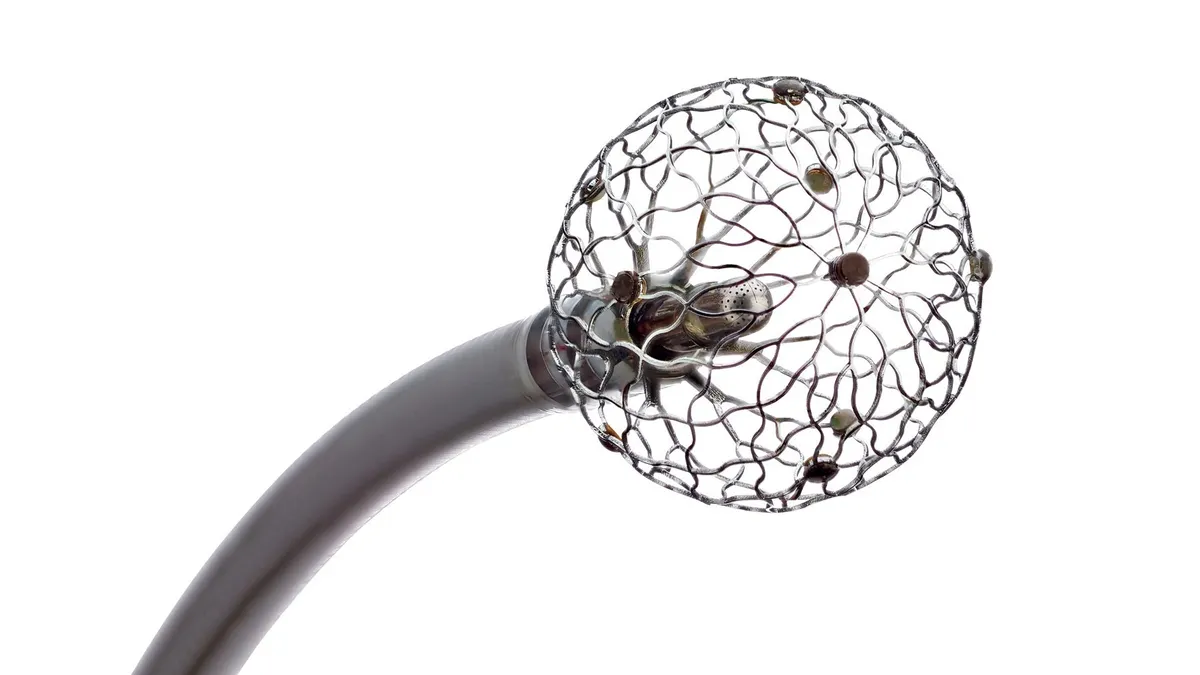
In a strategic move to solidify its dominance in the electrophysiology market, Medtronic has announced the expansion of its Affera mapping and ablation platform to include the treatment of ventricular tachycardia (VT) and premature ventricular complexes (PVC). By securing a CE mark expansion for its Sphere-9 catheter, the medical technology giant is pivoting from the crowded atrial fibrillation market toward the high-stakes, life-threatening domain of ventricular arrhythmias—a move that industry analysts suggest could redefine the standard of care for complex heart conditions.
Main Facts: A New Frontier in Electrophysiology
Ventricular tachycardia (VT) is a serious heart rhythm disorder originating in the heart’s lower chambers (the ventricles). When sustained, it can rapidly progress to sudden cardiac arrest, making it one of the most lethal conditions in cardiology. Historically, managing VT has relied on a combination of anti-arrhythmic medications and the implantation of cardioverter-defibrillators (ICDs), which act as a "safety net" to deliver shocks or pacing when the heart goes into a dangerous rhythm.
Catheter ablation—the procedure of destroying the precise areas of heart tissue responsible for the irregular signals—has long been the preferred long-term solution. However, traditional ablation methods, which primarily use thermal energy (radiofrequency) or extreme cold (cryoablation), have been described by Medtronic as "suboptimal." These thermal methods often struggle with the depth of lesions required for thick ventricular tissue or carry risks of damaging adjacent structures.
Medtronic’s solution lies in its Affera platform, which utilizes the Sphere-9 catheter. This technology is unique because it integrates high-density mapping with both pulsed field ablation (PFA) and radiofrequency (RF) capabilities. Unlike thermal ablation, which kills cells by burning or freezing, PFA uses non-thermal, high-voltage electrical pulses to selectively target cardiac tissue. This precision reduces the risk of damaging surrounding organs, such as the esophagus or phrenic nerve, and theoretically allows for faster, more durable lesion creation.
Chronology of Development
The journey to this announcement has been marked by rapid acquisition and aggressive innovation:
- 2022: Medtronic completes its acquisition of Affera, Inc., a Massachusetts-based developer of cardiac mapping and navigation systems and catheter-based ablation technologies. The move was widely seen as a response to the growing interest in PFA.
- 2023: Medtronic begins scaling the production of the Sphere-9 catheter as initial clinical data suggests that PFA is not only safer but significantly faster than legacy ablation methods.
- Early 2024: Medtronic reports double-digit growth in its electrophysiology segment, bolstered by the global adoption of its PFA offerings.
- Late 2024: Regulatory bodies grant CE mark expansion for the Affera system, officially clearing it for the treatment of ventricular arrhythmias. This approval signals a shift in the company’s regulatory strategy, moving beyond the standard treatment of atrial fibrillation (AFib) into more complex cardiac pathology.
Supporting Data and Market Dynamics
The global market for ablation catheters is currently undergoing a "paradigm shift." For years, radiofrequency ablation was the gold standard, but the entry of PFA has fundamentally changed the risk-benefit profile for patients.
The Competition
Medtronic is not acting in a vacuum. The race to capture the PFA market is fierce:
- Boston Scientific: Having acquired the Farapulse PFA system (pioneered by Steven Mickelsen), Boston Scientific currently holds a strong early-mover advantage in the PFA space.
- Johnson & Johnson (Biosense Webster): The industry heavyweight is aggressively integrating PFA into its existing ecosystem of mapping systems.
- Abbott: Through its own internal R&D and strategic investments, Abbott remains a key player, ensuring that the PFA market remains one of the most competitive segments in medical devices.
- Field Medical: A notable entrant, Field Medical, is currently developing a specialized PFA system explicitly designed for ventricular applications, signaling that even startups see the ventricular space as a primary growth driver.
The financial data supports this interest. Medtronic’s most recent quarterly earnings reports show that its electrophysiology revenue is growing at a rate that consistently outpaces the broader medical device market. The ability to offer a "one-stop-shop" system that performs both mapping and ablation—and now covers both atrial and ventricular conditions—positions Medtronic as a preferred partner for hospitals looking to streamline their lab equipment.
Official Responses and Strategic Vision
The transition to treating ventricular arrhythmias is a clear tactical choice for Medtronic. Rebecca Seidel, President of Electrophysiology Therapies at Medtronic, highlighted the significance of this expansion during a recent industry update:
"Indication expansion to include ventricular arrhythmias unlocks another fast-growing market opportunity to keep building on our momentum," Seidel stated. "Our focus remains on delivering the most advanced tools to electrophysiologists so they can provide the best possible outcomes for their patients."
The company emphasizes that the Sphere-9 catheter’s ability to combine multiple modalities (mapping + PFA + RF) gives physicians unprecedented flexibility. In the treatment of VT, where the anatomy of the heart wall can be scarred and difficult to map, the integration of high-density mapping with the non-thermal precision of PFA is a significant clinical advantage.
Implications for Patients and Healthcare Systems
The clinical implications of this development are profound. For patients suffering from VT, the procedure time is often long, and the recurrence rate is high. By moving to a PFA-based approach, physicians hope to:

- Reduce Procedure Times: Faster ablation means less time under anesthesia for the patient and higher throughput for hospital labs.
- Increase Safety: Because PFA is tissue-selective, the risk of collateral damage is minimized, which is especially critical in the ventricles where the heart tissue is thick and structural damage could be fatal.
- Improve Efficacy: More durable lesions mean fewer repeat procedures, which is the ultimate goal for managing chronic heart conditions.
Economic Impact
For hospital administrators, the adoption of the Affera platform represents a move toward efficiency. A single catheter that can perform both mapping and ablation reduces the inventory burden and the need for frequent equipment swaps during a procedure. Furthermore, by expanding the scope of the device to include PVCs and VT, hospitals can use the same system across a broader patient demographic, optimizing their capital investment.
Conclusion: The Path Forward
Medtronic’s expansion into ventricular tachycardia is more than just a regulatory win; it is a signal of the maturation of pulsed field ablation as a clinical modality. As the company continues to battle with Boston Scientific, Johnson & Johnson, and Abbott for the hearts of electrophysiologists, the primary winner remains the patient.
While the technology is currently cleared for use in markets under the CE mark, the industry is closely watching for potential FDA clinical trial updates in the United States. As more data is generated regarding the long-term success of PFA in the ventricles, the medical community will be able to determine if this technology truly represents the "holy grail" of arrhythmia management.
For now, Medtronic has successfully carved out a lead in the next phase of the "ablation wars." With its portfolio now spanning from simple atrial flutters to the complex and life-threatening ventricular arrhythmias, the company is well-positioned to maintain its trajectory as a leader in cardiovascular health. The next 24 months will be crucial as clinicians move from the initial adoption phase to gathering real-world evidence, which will ultimately dictate the long-term adoption of PFA as the definitive standard for treating the most dangerous of heart rhythms.