










As we navigate the later chapters of life, the definition of "fitness" shifts. It is no longer about maximizing muscle hypertrophy or achieving peak athletic performance; rather, it is about functional longevity—the ability to remain mobile, active, and independent well into our 60s, 70s, and beyond. While many turn to high-tech gym equipment to maintain their strength, experts are increasingly pointing to a simpler, more effective approach: standing exercises.
By leveraging gravity and your own body weight, standing movements build a resilient, stable frame that mirrors the demands of daily life. This article explores why standing exercises are the gold standard for healthy aging, backed by insights from leading fitness professionals and physical therapists.
The Core Philosophy: Why Standing Matters
The human body is designed to move in three dimensions, yet much of modern exercise happens in a seated position or on machines that provide external stability. According to Joe LaCerra, owner of W.O.L.F Gyms, this is a missed opportunity for the aging population.
"Standing exercises support full-body strength differently than seated or machine-based exercises because they inherently require greater core activation," LaCerra explains. When you are seated, the machine does the work of stabilizing your trunk. When you stand, your core, hips, and deep stabilizer muscles must fire in tandem to keep you upright and balanced.
This concept, known as proprioception—the body’s ability to sense its position in space—is critical as we age. "Standing exercises teach your body greater resiliency," LaCerra adds. "They challenge body mechanics, especially as trips and falls become more likely. The more capability your body has in a standing position, the less likely these falls are to occur."
Functional Fitness: Bridging the Gap Between Gym and Life
The primary objective of any exercise program for those over 60 should be the preservation of "Activities of Daily Living" (ADLs). Whether it is climbing a flight of stairs, hoisting a bag of groceries, or simply rising from a deep armchair, these tasks require a complex interplay of muscles.
Hazel Anderson, PT, DPT, ScD, DipACLM, an associate professor at the University of St. Augustine for Health Sciences, emphasizes that the goal is to train the body to work as a unified system. "Carefully chosen standing exercises give you so much bang for your buck," Anderson says. "They teach different parts of the body to work together during the same movements we use every day—squatting, stepping, pushing, pulling, lifting, and carrying."
By moving against resistance while simultaneously controlling posture, you are not just building muscle; you are building a "functional reserve." This reserve is what allows you to recover from a sudden stumble or lift a heavy object without injury.
The Chronology of Strength: A Five-Move Blueprint
To help you build this foundation at home, we have curated five fundamental exercises that prioritize safety, stability, and functional output. These movements do not require expensive equipment—only your commitment and consistent practice.
1. Goblet Squats: The Foundation of Lower Body Strength
The goblet squat is a foundational movement that targets the quads and glutes. By holding a weight (or a household object like a gallon of water) in front of your chest, you force the body to maintain a neutral spine.
- The Benefit: It teaches proper mechanics while counterbalancing your weight, making it safer for the lower back than traditional barbell back squats.
- Application: This move mimics the essential act of sitting down and standing up, reinforcing the lower-body power required for independent living.
2. Romanian Deadlifts: Spinal Resiliency
One of the most common fears among aging adults is lower back pain, often leading to a sedentary lifestyle where people avoid bending over. This is counterproductive, as a weak posterior chain (the back of the body) only exacerbates back issues.
- The Benefit: Properly executed Romanian deadlifts strengthen the hamstrings, glutes, and spinal erectors.
- Expert Insight: "A properly executed Romanian deadlift will actually make your spine more resilient over time," says LaCerra. By teaching the body to hinge at the hips rather than the waist, you gain the confidence to lift objects safely.
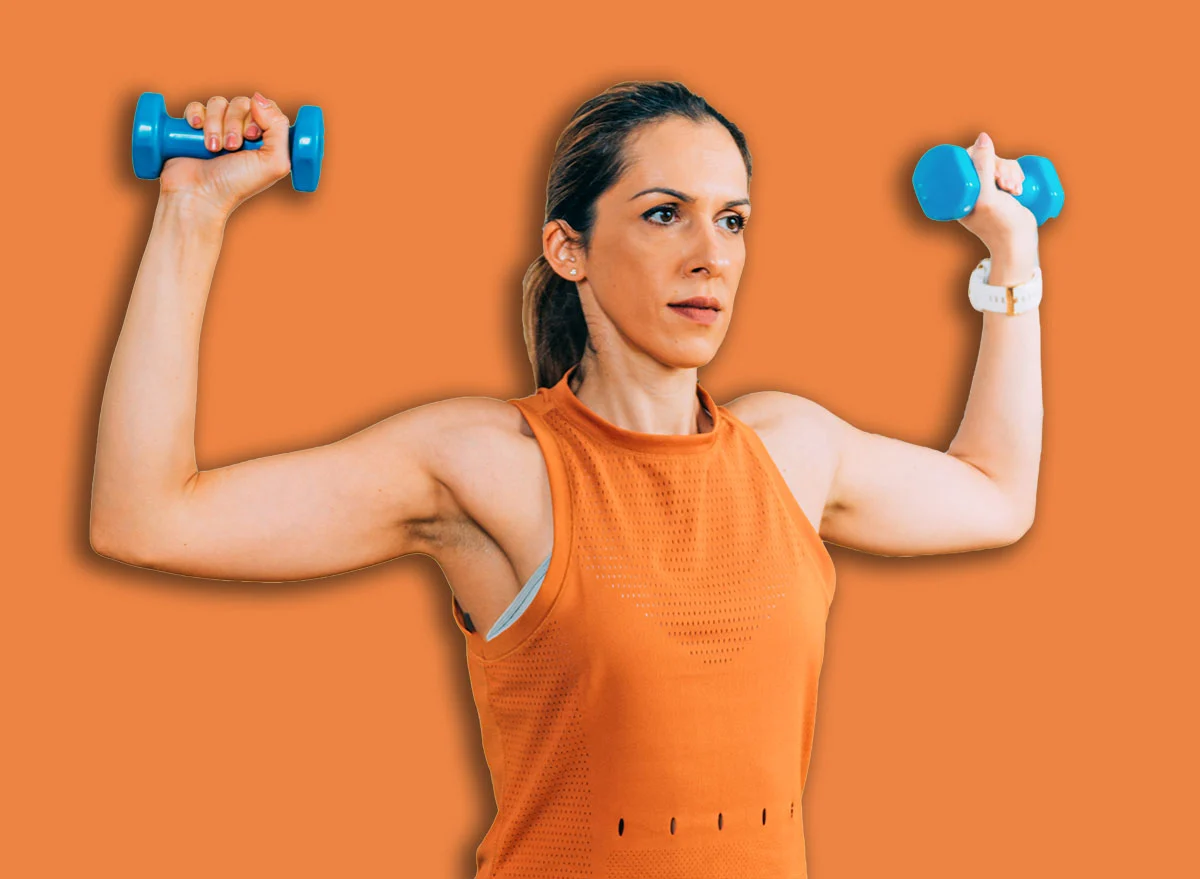
3. Standing Dumbbell Shoulder Press: Upper Body Stability
Overhead strength is vital for reaching into high cabinets or placing items on shelves. Performing this movement from a standing position, rather than sitting, turns it into a full-body exercise.
- The Benefit: It strengthens the shoulders and triceps while demanding intense core engagement to prevent the back from arching.
- Functional Goal: This exercise builds the "pushing" strength necessary for upper-body independence.
4. Squat to Chair: The Ultimate Daily Essential
For those who may struggle with balance or mobility, the "Squat to Chair" is the perfect entry point. It removes the fear of falling while ensuring you reach the correct depth.
- The Benefit: It practices the exact motor pattern used to navigate daily life—getting out of a car, using the restroom, or standing from a couch.
- Progression: As you get stronger, you can gradually reduce the depth or frequency of the chair touch until you are performing full, unsupported squats.
5. Incline Pushups: Pushing Toward Independence
Pushing is a fundamental human movement. Whether you are opening a heavy door or pushing yourself up from the floor after a gardening session, upper body pushing strength is non-negotiable.
- The Benefit: Incline pushups engage the chest, shoulders, triceps, and core without the extreme strain of a floor-based pushup.
- The Progression Model: Start with your hands against a wall. As your strength improves, move to a kitchen countertop, and eventually to a lower stable surface. This allows you to scale the resistance to your current ability.
Supporting Data: The Science of Aging and Muscle Loss
Sarcopenia, the age-related loss of muscle mass and strength, begins to accelerate after age 50. Studies consistently show that resistance training is the most potent intervention against this decline. However, the type of resistance training matters.
Research published in geriatric health journals suggests that weight-bearing, standing exercises stimulate bone density more effectively than non-weight-bearing exercises. By putting load through the joints while standing, you signal to your body that it must strengthen both the muscles and the skeletal structure. This dual approach is essential for preventing osteoporosis and maintaining the joint health required for an active lifestyle.
Official Responses and Clinical Implications
The medical community has shifted its stance on physical activity for seniors. Where doctors once advised "taking it easy," the current clinical consensus, supported by the American College of Lifestyle Medicine (ACLM), is that older adults should engage in moderate-to-vigorous resistance training at least two days a week.
Dr. Hazel Anderson notes that the psychological benefits are as significant as the physical ones. "When you feel stronger, you feel more capable," she says. "That confidence prevents the ‘fear of movement’ cycle that often leads to social isolation and health decline."
By incorporating these five exercises into a weekly routine, individuals can effectively "restore" their functional capacity. This does not require a gym membership or a complex fitness tracking app. It requires only the floor space in your living room and a commitment to moving with intention.
Conclusion: Investing in Your Future Self
The beauty of standing exercises lies in their simplicity and their direct correlation to the life you want to live. By prioritizing movements that challenge your balance, stabilize your core, and build functional strength, you are investing in your future self.
As you age, the goal is not to be a gym athlete; the goal is to remain the author of your own life, capable of carrying your own groceries, playing with your grandchildren, and moving through your home with grace and confidence. Start slowly, focus on your form, and remember: every time you stand up, you are building the foundation for a more independent tomorrow.
Disclaimer: Always consult with a physician or physical therapist before beginning a new exercise program, especially if you have pre-existing health conditions or mobility concerns.