




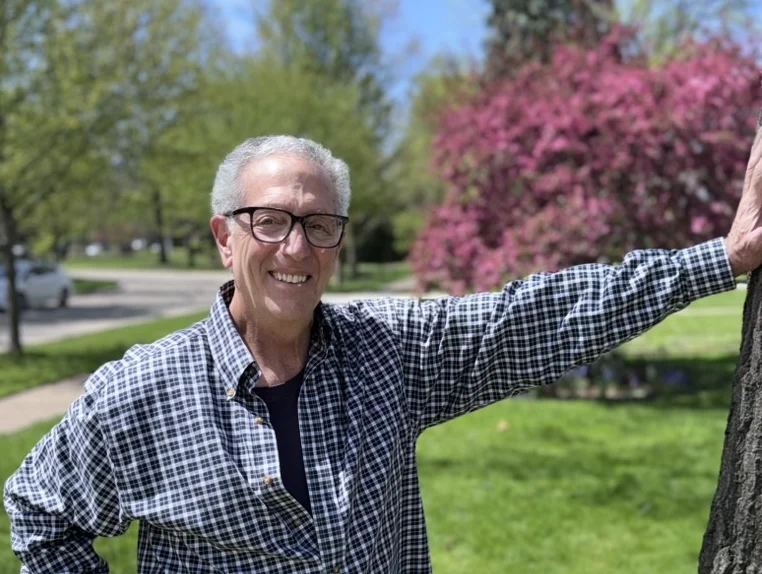
In the landscape of modern medicine, a paradigm shift is underway, moving from a purely structural understanding of human suffering to one rooted in the complex, predictive nature of the brain. On a recent episode of the Mad in America podcast, host Brooke Siem, author of the antidepressant withdrawal memoir May Cause Side Effects, sat down with Dr. Howard Schubiner to discuss this evolution. Dr. Schubiner, an internist and clinical professor at the Michigan State University College of Human Medicine, has spent over two decades challenging medical orthodoxies. His work suggests that a vast array of chronic conditions—from debilitating back pain to treatment-resistant depression—are not the result of permanent structural damage, but of "neuroplastic" circuits that can be unlearned.
Main Facts: The Brain as a Generator of Reality
The central thesis of Dr. Schubiner’s work, detailed in his book Unlearn Your Pain, is that the brain does not merely perceive the world; it creates our experience of it. This concept, known in neuroscience as "predictive processing," suggests that the brain is constantly anticipating danger and generating symptoms to protect the individual.
According to Dr. Schubiner, the brain’s primary directive is survival. "We don’t see with our eyes; our brain creates what we see," Schubiner explains. "When you touch a hot stove, it’s not your finger causing pain; that’s actually the brain." This means that physical pain can exist in the total absence of a physical injury, and conversely, significant injuries can sometimes result in no pain at all.
For patients suffering from chronic fatigue, fibromyalgia, or psychiatric distress, this realization is transformative. It shifts the diagnosis from "incurable structural damage" to "reversible neural circuit dysfunction." Dr. Schubiner argues that emotional pain—such as the trauma of abandonment, betrayal, or suppressed anger—is processed in the same regions of the brain as physical pain. Consequently, the brain may "choose" a physical symptom to alert the individual to an emotional threat, or vice versa.
Chronology: From Sarno’s Intuition to Scientific Validation
The journey toward this neuroplastic model began decades ago with the pioneering work of Dr. John Sarno, a physiatrist at New York University. Dr. Sarno’s book, Mind Over Back Pain, became a cult classic for those who found no relief in traditional surgery or physical therapy. Dr. Sarno posited that most back pain was a result of Tension Myositis Syndrome (TMS), a condition where the brain creates physical pain to distract from repressed subconscious emotions.
Dr. Schubiner describes himself as a protégé of Sarno, having pivoted his career 23 years ago after reading Sarno’s work. While Sarno’s theories were often dismissed by the medical establishment as "unscientific," Schubiner has spent the last two decades providing the rigorous clinical data needed to validate them.
"I’ve spent the last 23 years… voraciously reading about the science of neuroplasticity, predictive processing, and how the brain works," Schubiner says. This dedication has culminated in high-level randomized controlled trials (RCTs) that demonstrate how mind-body interventions can outperform standard medical treatments for chronic pain and PTSD.
Supporting Data: The Power of Placebo, Nocebo, and Neural Loops
A significant portion of Dr. Schubiner’s research focuses on the "Placebo" and "Nocebo" effects, which serve as proof of the brain’s power to alter physiology. In clinical trials for antidepressants, for instance, the placebo effect is often as high as the efficacy of the drug itself. This suggests that the belief in a cure can trigger the brain to rewire its own neural circuits.
The Nocebo Effect and Chronic Symptoms
Conversely, the "Nocebo" effect occurs when a negative expectation creates a physical symptom. Dr. Schubiner cites a dramatic case of a man in a clinical trial who attempted suicide by swallowing a bottle of pills. His blood pressure plummeted, and he collapsed, only to recover instantly when researchers informed him he was in the placebo arm of the study and had swallowed nothing but sugar pills. His brain had created a near-fatal physiological response based entirely on the expectation of toxicity.
The "N of 1" Trial in Drug Withdrawal
This phenomenon is particularly relevant to Brooke Siem’s work with antidepressant withdrawal. Many patients experience "waves" of symptoms when tapering off medication. Dr. Schubiner suggests using an "N of 1" trial—a self-conducted, blinded experiment—to determine if a symptom is a physiological withdrawal effect or a nocebo response triggered by the fear of withdrawal. By having a partner randomize the dose without the patient’s knowledge, the patient can observe whether symptoms correlate with the dosage or with the anticipation of a reduction.
Official Responses: Challenging the "Chemical Imbalance" Narrative
Dr. Schubiner is a vocal critic of the conventional psychiatric narrative, which often attributes depression and anxiety to "chemical imbalances" or low serotonin levels. He notes that there is no scientific evidence to support the idea that these conditions are primarily structural or neurotransmitter-based.
"They’re being told that they have something physically wrong with their brain… and there’s no evidence for that," Schubiner asserts. Instead, he views depression and anxiety as warning signals from a subconscious brain that feels unsafe. When the medical community labels these conditions as "relapsing" or "treatment-resistant," they may inadvertently create a nocebo effect, convincing the patient that they are permanently "broken."
This perspective aligns with a growing movement in mental health that prioritizes "agency" over "pathology." By viewing symptoms as neuroplastic—and therefore changeable—clinicians can empower patients to take an active role in their recovery rather than remaining passive recipients of pharmaceutical intervention.
Implications: The Path Toward Recovery
The implications of this work are profound for the future of both physical and mental healthcare. Dr. Schubiner outlines two primary therapeutic models that have shown superiority over traditional Cognitive Behavioral Therapy (CBT) in certain trials:
1. Pain Reprocessing Therapy (PRT)
PRT focuses on breaking the "auto-loop" of chronic symptoms. If a patient feels pain when driving or anxiety when grocery shopping, the brain has learned to associate those activities with danger. Through mindfulness, self-talk, and "graded exposure," patients can teach their brains that these activities are safe. This "unlearning" process eventually causes the neural circuits to stop firing, leading to the cessation of symptoms.
2. Emotional Awareness and Expression Therapy (EAET)
Developed by Dr. Schubiner and Mark Lumley, EAET is designed to address the emotional roots of neuroplastic symptoms. Unlike some trauma therapies that can be retraumatizing, EAET focuses on activating and processing suppressed emotions—such as anger, guilt, or sadness—in a safe, imaginative environment.
"Everyone needs agency, connection, and self-compassion," Schubiner notes. EAET helps patients provide the "care and compassion" to their younger selves that they may have lacked during a traumatic event. By expressing these suppressed emotions, the brain no longer needs to generate physical pain or psychiatric distress as a protective mechanism.
Conclusion: A Message of Hope
For those trapped in the cycle of chronic pain or the grueling process of psychiatric drug withdrawal, Dr. Schubiner’s work offers a rare commodity in modern medicine: hope. The realization that the brain is a dynamic, changeable organ means that a diagnosis is not a life sentence.
"Getting stuck in the idea that everything is structural and everything is incurable is a horrible place to be," Schubiner concludes. "For the vast majority of people, there is hope. That’s what drives me."
As the medical community continues to grapple with the limitations of the "pill for every ill" model, the work of researchers like Dr. Schubiner provides a necessary bridge between neuroscience and the human experience, suggesting that the key to healing may lie not in a bottle, but in the remarkable, rewirable power of the human brain.
Resources for Further Exploration:
- Unlearn Your Pain by Dr. Howard Schubiner
- May Cause Side Effects by Brooke Siem
- The Association for the Treatment of Neuroplastic Symptoms (Symptomatic.me)
- The "Mad in America" Podcast and Research Reports